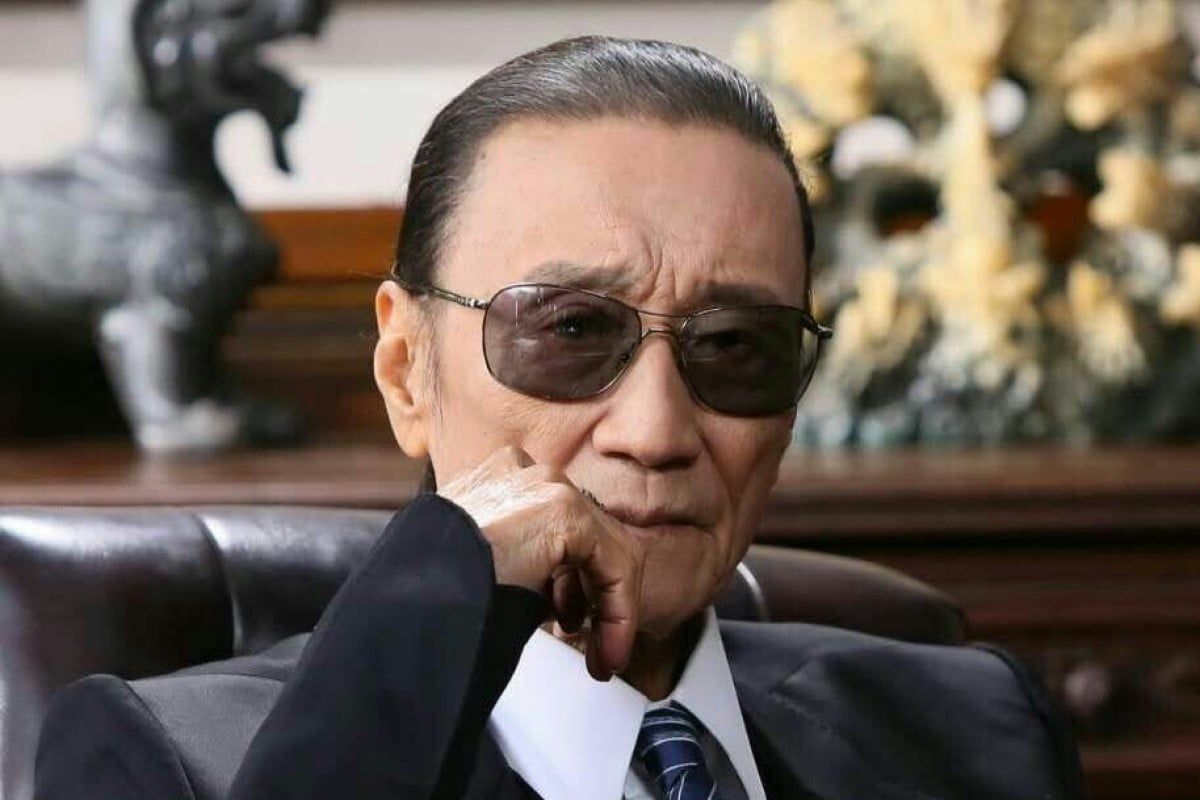
Patrick Tse Yin, the legendary Hong Kong actor who embodied the glamour and sophistication of Cantonese cinema at its peak, has died at the age of 89. His children, Nicholas Tse Ting-fung and Jennifer Tse Ting-ting, announced his death on Monday, bringing to a close the life of one of the last surviving monuments to the city's cinematic golden age. Tse passed away peacefully at a hospital surrounded by family after a period of declining health, according to statements from his family. His passing has resonated deeply within Chinese communities worldwide, underscoring his enduring cultural significance across generations and geographical boundaries.
Born in the 1930s, Tse became instrumental in establishing Cantonese-language cinema as a powerful regional force, helping to shape how modern Hong Kong was portrayed on screen during a transformative period for the city. His work in the mid-twentieth century coincided with the rise of Hong Kong as a major film production hub, rivalling international centres for creative ambition and technical sophistication. Charles Cheung Chi-wai, an associate professor in the department of humanities and creative writing at Baptist University, observed that the constellation of stars flourishing in the 1960s collectively established Hong Kong's reputation as the "Hollywood of the East"—a designation that reflected both the industry's output and its continental reach. Tse's career trajectory exemplified this golden period, during which locally produced films achieved genuine cultural penetration throughout Southeast Asia and beyond.
Jennifer Tse Ting-ting, his daughter and a model in her own right, released a heartfelt statement via Facebook describing her father as someone who had "lived a remarkable and accomplished life, not only as an actor and artist, but as someone who brought joy to everyone around him with his unmistakable spirit." She emphasised that his passion, charisma, and contributions to Hong Kong cinema had touched multiple generations of viewers, and that he would be fondly remembered for the indelible mark he left on the industry. Nicholas Tse, Tse's son who achieved considerable success as a Hong Kong pop star and actor in his own generation, requested that friends and admirers resist sadness and instead preserve his father's "forever charming and smiling image in our hearts." The affectionate nickname "Brother Four" or "Sei Gor" in Cantonese, by which fans knew him, captured something of the persona he had carefully crafted across his long career.
The trajectory of Tse's influence, however, extends far deeper into Hong Kong cinema's structural foundations than conventional tributes typically acknowledge. He belonged to the founding generation of Cantonese-language filmmaking, a cohort that essentially invented the grammar of the form while simultaneously performing it on screen. To observe Tse during his prime is to witness Hong Kong cinema in the act of discovering what it would ultimately become—the stylistic swagger that later directors would systematically refine and canonise was, in Tse's hands, simply an unforced presence, the natural bearing of someone who existed before there was an established school or tradition to join. His work predated the formalisation of Hong Kong's distinctive cinematic identity, making him less a product of that identity than one of its architects.
A particularly revealing moment in Tse's career demonstrates this foundational role with unusual clarity. In 1967, Tse appeared in Patrick Lung Kong's "The Story of a Discharged Prisoner," a crime drama bearing the Chinese title "Ying Hung Boon Sik." Twenty years later, director John Woo would repurpose that very title—along with substantial elements of the film's underlying moral framework, centring on an ex-convict's failed attempt to abandon his criminal past—for "A Better Tomorrow," the 1986 film conventionally credited as establishing Hong Kong's golden age as a distinct cultural phenomenon. The genealogy here is not coincidental: Woo's masterpiece represented not an originary moment but rather a sophisticated reworking of thematic and stylistic elements that had already been developing within the Cantonese cinema Tse had starred in and helped define. The heroic bloodshed aesthetic that the Hong Kong industry would eventually export globally to tremendous commercial and artistic effect was already latent in the earlier tradition Tse exemplified.
While Tse's own directorial work during the 1970s—including films such as "If Tomorrow Comes" and "Love in Hawaii"—has largely faded from critical and popular memory, his on-screen persona transcended any single role or performance. The impeccably vain character known as "Sei Gor," or Fourth Brother, evolved into a self-fashioned mythology that expanded beyond the confines of individual films to become a kind of fixed cultural reference point. Tse's true significance lay less in his activities behind the camera than in his function as a continuity marker—a stable point against which a rapidly evolving and volatile industry could persistently measure itself and track its own transformation. As the film industry underwent waves of stylistic and commercial reinvention, Tse remained a touchstone, a living embodiment of an earlier aesthetic even as the industry moved decisively beyond it.
The conventional narrative surrounding Tse's later career emphasises personal and financial accomplishments—his substantial estate, his grandsons, his celebrated romantic relationships, and particularly the phenomenon of his son Nicholas becoming a bigger commercial star than the father had been. These biographical details are factually accurate but ultimately miss the deeper significance of Tse's continued presence in Hong Kong cinema. To reduce Patrick Tse to the role of Nicholas Tse's father fundamentally inverts the actual lineage: it was the father's cinema, the father's aesthetic vocabulary, and the father's generation's innovations that established the foundational terms within which his son's era inherited, refined, and ultimately monetised the cinematic traditions of Hong Kong.
Tse's final major dramatic role, in the film "Time," came when he was eighty-five years old, and it represented both climax and symptom of Hong Kong cinema's relationship with its own history. In the film, he portrayed an aging contract killer reluctantly drawn back into violence, a role that earned him the distinction of becoming the oldest Best Actor winner in the history of the Hong Kong Film Awards. The industry fashioned this recognition as a triumphant comeback narrative, a celebration of longevity and enduring artistry. Yet the reality reads differently: the fact that such an award generated such surprise and celebration speaks less to Tse's performance than to the profound dislocation of a cinema so bereft of contemporary vitality that it reached back to its founding generation simply to reaffirm the weight and authority of its own past. The award was less a recognition of present achievement than an elegy—a song the industry sang to itself about where it had come from and what it had lost.
When tributes observe that an era closes with Patrick Tse's death, the statement contains truth only if one substantially rewinds the historical clock. The studios that originally built Tse's career and that dominated Southeast Asian film markets have long since ceased production; the volume and global confidence of Hong Kong's cinematic output contracted significantly years ago; the celebrated golden age had already transformed into a nostalgic memory that the contemporary market was living off rather than generating freshly. Tse's death does not terminate an era—it simply confirms, with final definitional clarity, that the termination had already occurred in the decades prior, and that the industry had maintained its narrative lights primarily through accumulated affection and nostalgia for what once was.
Nicholas Tse announced his father's passing with a maxim that had long guided the father's own approach to his career: "the show must go on." While this sentiment captures something true about professional commitment and artistic resilience, it perhaps misjudges the historical situation. The particular show that made Patrick Tse possible—the dynamic, generative Cantonese cinema of the mid-twentieth century that dominated regional markets with genuine creative force—that show had already concluded years before the actor's death. What persists is not the show itself but the remembering, the sustained effort to keep alive the memory of an era and the figures who defined it. In that continuation of memory, Patrick Tse will endure as one of the last and most luminous witnesses to Hong Kong cinema's greatest period.

