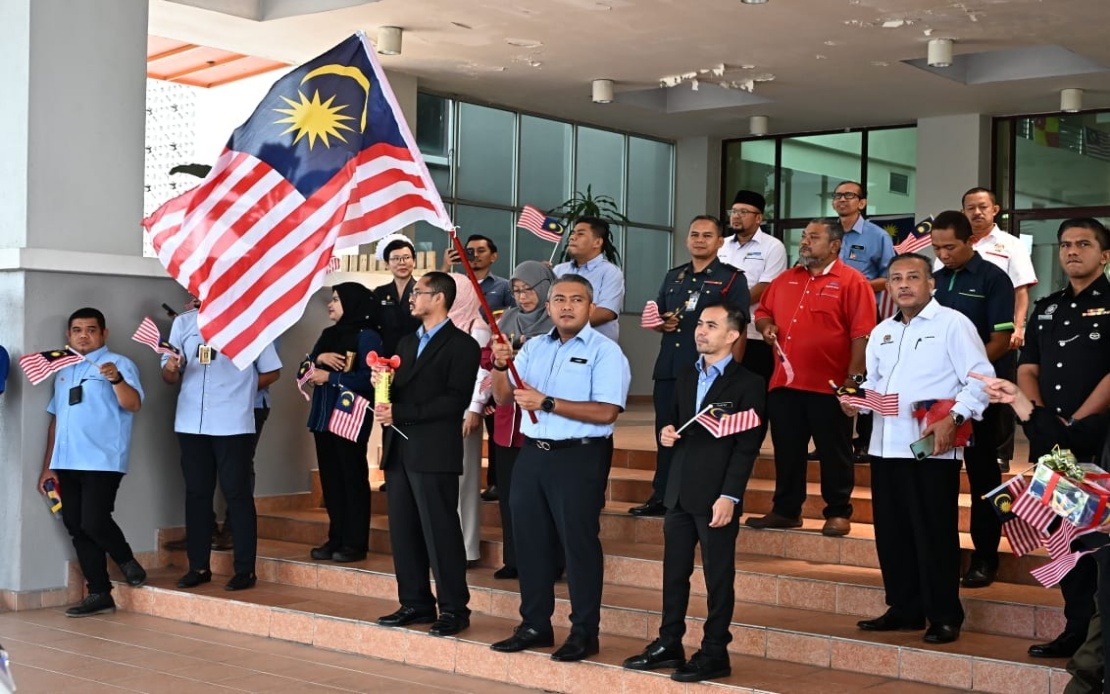
Selangor's push to cultivate national pride has entered a new phase with the launch of an integrated campaign that harnesses cooperation across government and private sectors to amplify patriotic messaging throughout the state. The Kembara Merdeka Jalur Gemilang (KMJG) X Arena Penggerak Komuniti (JAGO) 2026 initiative demonstrates a deliberate strategy to position patriotism as a collective endeavour that transcends institutional boundaries and socioeconomic divisions.
The collaboration, anchored by the Selangor Information Department (JaPEN), reflects a growing recognition among policymakers that fostering national identity requires sustained, coordinated effort rather than isolated campaigns. According to Herlina Ainizawati Zakaria, Assistant Director of JaPEN's Cyber Media Branch, the programme represents the department's commitment to embedding patriotic values throughout the state's National Day and Malaysia Day festivities. This strategic positioning addresses a challenge facing many Southeast Asian nations: maintaining robust national consciousness amid rapid urbanisation and digital fragmentation.
The initiative's architecture reveals sophisticated thinking about how to reach diverse audiences. By combining the traditional Jalur Gemilang relay concept—where the national flag is ceremonially transported between designated locations—with JAGO's community mobilisation framework, organisers have created a dual-channel approach to patriotic engagement. The flag's physical journey through selected sites creates visible symbols of national unity, while community participation mechanisms ensure grassroots involvement rather than top-down messaging alone.
A central pillar of the 2026 campaign is the One House One Jalur Gemilang initiative, which seeks to normalise flag displays as expressions of civic identity during the National Month period. This seemingly straightforward objective addresses deeper questions about how nations sustain patriotic sentiment in increasingly privatised urban environments. By encouraging household-level flag displays, authorities attempt to transform patriotism from abstract principle into tangible domestic practice, embedding national symbols within the intimate geography of family homes.
The inaugural Central Zone pit-stops underscore the campaign's geographic specificity. By selecting Wisma Persekutuan Klang, the District and Land Office, and AEON Bukit Tinggi Shopping Centre, organisers deliberately mixed government administrative spaces with commercial retail environments. This blending signals an attempt to position patriotism as relevant across institutional and commercial contexts, normalising national pride as compatible with everyday shopping and bureaucratic transactions.
The coalition mobilised for this initiative spans an impressive institutional range. Approximately 50 participants representing ten government agencies and private organisations participated in the Central Zone launch, including police headquarters from both Klang Selatan and Klang Utara districts, the Klang Royal City Council, and civil defence personnel. This inter-agency composition suggests recognition that patriotic messaging gains credibility and reach when delivered through trusted institutional channels rather than government information services alone.
For Malaysian readers, particularly those in Selangor, the programme carries practical implications for how national observances will unfold during 2026. The emphasis on inclusivity and creative communication suggests a departure from formulaic patriotic exercises, potentially offering more engaging formats for younger demographics and urban populations traditionally less responsive to conventional flag-waving campaigns. The integration of cyber media elements, as referenced by JaPEN's cyber branch involvement, indicates the campaign will leverage digital platforms alongside traditional community gatherings.
The broader Southeast Asian context renders this Malaysian initiative noteworthy. Regional nations increasingly grapple with balancing globalisation pressures against desires for robust national identity. Selangor's structured approach—combining symbolic gesture (flag relay), household action (home displays), and institutional coordination—offers a replicable model for other states and countries seeking similar outcomes. The emphasis on unity across religious and ethnic lines, implicit in the inclusive language used by organisers, addresses tensions affecting cohesion throughout the region.
From an analytical perspective, the campaign's framing as a "shared responsibility regardless of background" suggests organisers recognise that patriotism cannot be imposed but must emerge from authentic community buy-in. This philosophical positioning diverges from historical approaches emphasising state-mandated nationalism. By positioning patriotism as requiring cross-sector cooperation and individual household participation, the 2026 initiative implicitly acknowledges that contemporary Malaysian identity formation occurs through negotiation between state institutions, corporate entities, and citizen choice rather than through state dictates alone.
The success of KMJG X JAGO 2026 will likely influence how subsequent national campaigns are designed across Malaysia. Should the integrated approach generate measurable enthusiasm and flag displays, state governments may increasingly adopt similar multi-institutional frameworks. Conversely, if uptake remains limited despite coordination efforts, policymakers may need to fundamentally reconsider assumptions about patriotic sentiment among Malaysians navigating complex modern lives. The initiative thus represents not merely a 2026 celebration strategy but a test case for how nation-building functions in contemporary Southeast Asia.

