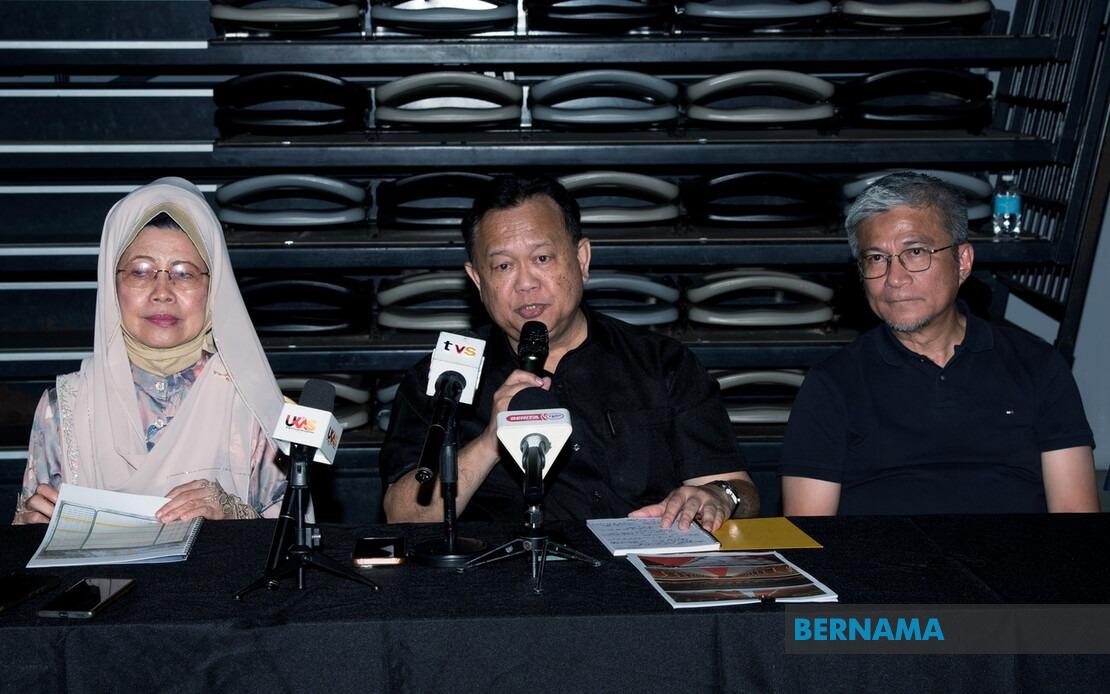
Sarawak's dominant political force, Parti Pesaka Bumiputera Bersatu (PBB), is preparing to host a significant gathering in the state's heartland. The party's central zone special convention, scheduled for July 26 at the Sibu Indoor Stadium, is expected to draw more than 3,000 delegates representing 24 branches across the zone. This substantial turnout underscores the organisational capacity of the party, which has governed Sarawak continuously since the state's independence and remains the linchpin of the state's political establishment.
The convention assumes particular importance as the opening salvo in a series of regional assemblies planned across Sarawak's zones. Datuk Seri Alexander Nanta Linggi, who holds the post of secretary-general within PBB's party hierarchy, confirmed that the central zone will spearhead these proceedings, with the southern, Betong, and northern zones scheduled to hold their own conventions subsequently. This sequencing suggests a carefully orchestrated approach to party mobilisation, allowing the central zone—which encompasses the Sibu division and surrounding areas—to set the tone for broader party discussions.
The mechanics of convention preparation have already commenced in earnest. An organising committee meeting convened in Sibu to map out logistical requirements and ensure that the gathering proceeds without disruption. This preliminary coordination reflects the scale of the undertaking, as accommodating over 3,000 participants requires meticulous planning across registration, seating, audiovisual infrastructure, and catering arrangements within the Sibu Indoor Stadium venue.
Several substantive policy matters are scheduled to occupy the delegates' attention. Among the key presentation topics will be the Malaysia Agreement 1963 (MA63), the constitutional framework that governs Sarawak's relationship with the federation. In recent years, MA63 has become a focal point for Sarawak's political discourse, with both state and federal governments revisiting specific provisions to address longstanding grievances regarding resource rights and state autonomy. By placing this discussion prominently on the convention agenda, PBB signals its continued commitment to championing Sarawak's constitutional interests within Malaysian federalism.
Beyond constitutional matters, the convention will address economic recovery and developmental priorities through presentations on the Post COVID-19 Development Strategy 2030 (PCDS 2030). This framework represents the state's blueprint for rebuilding momentum in key sectors and restoring economic vitality following pandemic-induced disruptions. For Sarawak's leadership, articulating this development vision to party grassroots demonstrates responsiveness to local concerns about livelihoods, employment, and investment opportunities.
The convention agenda also encompasses broader political considerations affecting both the state and national arena. While specific details remain undisclosed, these discussions likely touch on coalition arrangements, electoral positioning, and PBB's strategic interests ahead of future electoral contests. Such internal party deliberations provide opportunities for the leadership to gauge sentiment among delegates and reinforce party unity around strategic priorities.
The ceremonial centrepiece of the convention will be the official opening and keynote address delivered by Tan Sri Abang Johari Tun Openg, who simultaneously holds the offices of Sarawak Premier and PBB president. His dual positions exemplify the fusion of party and state apparatus that characterises Sarawak's political system, where the dominant party leadership effectively controls state governance. Abang Johari's address will likely synthesise themes of party loyalty, state achievements, and forward-looking objectives, serving to reinforce his authority within both party and governmental spheres.
For Malaysian and Southeast Asian observers, this convention reflects broader patterns within state-level politics across the region. Dominant parties that have maintained hegemonic control over extended periods often utilise internal assemblies to orchestrate consent, manage potential dissent, and communicate predetermined policy directions to their membership. The sequencing of zone-based conventions across Sarawak exemplifies this approach, creating forums for controlled discussion while maintaining hierarchical party discipline.
The emphasis on MA63 discussions carries implications extending beyond Sarawak's borders. The agreement represents a template for accommodating regional autonomy within federal frameworks, a concern resonating across Southeast Asia where questions of centre-periphery relations remain politically salient. Sarawak's continued assertion of constitutional rights under MA63 influences how other Malaysian states and regional jurisdictions approach similar federalism questions.
The Post COVID-19 Development Strategy presents another dimension relevant to Malaysian and regional stakeholders. As Southeast Asian economies recalibrate post-pandemic economic strategies, Sarawak's approach—balancing resource extraction, diversification, and sustainability—offers lessons for policymakers across the region confronting similar recovery imperatives. The convention's focus on this agenda suggests PBB's recognition that state legitimacy increasingly depends on demonstrable economic performance and inclusive development outcomes.
PBB's organisational capacity to mobilise over 3,000 delegates underscores the party's entrenched institutional position within Sarawak. This grassroots mobilisation capability, developed across decades of electoral dominance, translates into political resilience and the ability to coordinate state-level initiatives effectively. For analysts tracking Malaysian politics, PBB's continued organisational vitality indicates that despite national-level political shifts, state-based traditional political forces retain substantial influence in peripheral regions.
Looking forward, the convention outcomes may shape PBB's positioning on several pending issues: renegotiation of oil royalty arrangements, infrastructure development priorities, and strategies for addressing demographic changes in Sarawak. These matters affect not only PBB's electoral prospects but also Sarawak's relationship with Kuala Lumpur, making the convention's deliberations consequential beyond the party confines. The gathering thus represents a crucial juncture where party strategy intersects with state governance and federal relations.

