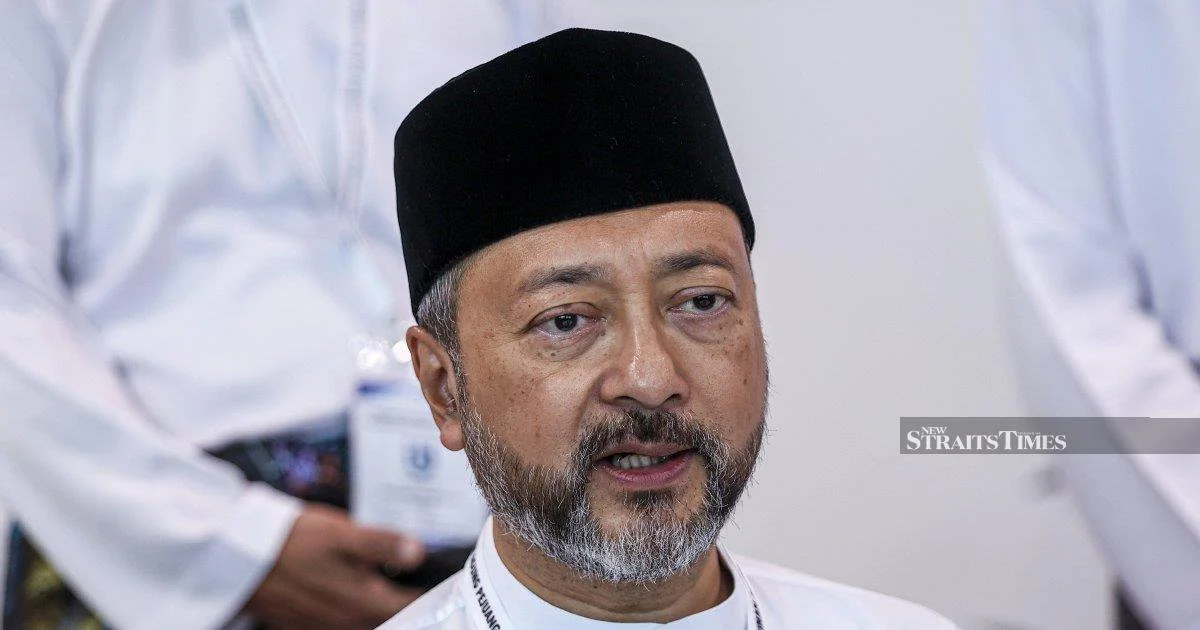
Parti Pejuang Tanah Air's formal entry into Perikatan Nasional signals an important recalibration of Malaysia's opposition landscape, as party president Datuk Seri Mukhriz Mahathir characterised the move as marking the start of a comprehensive consolidation effort aimed at unifying fragmented political forces and confronting mounting economic and social challenges confronting the country.
The admission of Pejuang into the PN coalition represents a significant development in the Malaysian political arena, which has witnessed considerable flux and realignment over recent years. The decision underscores a recognition among opposition figures that stronger coordination may be necessary to mount a more effective counter-narrative to the current government's policies and provide voters with a coherent alternative vision.
Mukhriz Mahathir's framing of the party's entry as emblematic of a "broader effort" reveals an appreciation that Pejuang alone lacks the machinery and voter reach needed to meaningfully challenge Putrajaya. By situating the move within a larger unity narrative, the party leadership appears to be signalling that this is not merely a tactical accommodation but rather the beginning of a more fundamental restructuring of opposition coalitions.
The timing of Pejuang's entry into PN warrants scrutiny in the context of Malaysia's current political temperature. Public sentiment regarding governance, economic management, and institutional reform has remained volatile, creating openings for opposition movements to reshape their positioning. Consolidation at the opposition level could theoretically allow for more efficient resource deployment and a clearer messaging strategy across multiple platforms and constituencies.
Pejuang itself has undergone a notable trajectory since its formation. As a relatively newer entrant to Malaysian politics, the party has struggled to establish a mass membership base comparable to longer-established organisations, making coalition membership a pragmatic pathway to electoral relevance. For the PN coalition, absorbing Pejuang potentially adds ideological diversity and access to networks that might otherwise remain fragmented.
The broader opposition consolidation that Mukhriz referenced must contend with several structural obstacles. Malaysia's multi-party system, combined with first-past-the-post electoral mechanics, creates incentives for coalition formation but also generates tensions over seat allocations, policy compromises, and leadership hierarchy. Successful integration of Pejuang into PN will depend on whether the coalition can manage these internal dynamics while maintaining cohesion in the face of government countermeasures.
Regional observers will likely view this development as part of the ongoing realignment of Malaysian politics since 2018. The collapse of the Pakatan Harapan government, subsequent political volatility, and the emergence of new coalitions have created an environment where opposition parties perceive mutual benefit in closer coordination. For Southeast Asian watchers, Malaysia's opposition dynamics carry implications for how democratic competition functions across the region.
The emphasis on addressing "growing national challenges" signals that PN intends to position itself not merely as an anti-establishment force but as an alternative capable of governance. The coalition has previously articulated positions on fiscal discipline, institutional reform, and religious governance that differentiate it from other opposition formations. Pejuang's integration provides an opportunity to articulate these differentiating points more forcefully.
For Malaysian voters, particularly those in opposition-leaning constituencies, the expansion of PN through Pejuang's admission represents a hardening of the alternative political structure. Electoral choices in the next general election will occur against a backdrop where PN has consolidated additional resources and legitimacy. This development simultaneously reduces the number of viable opposition configurations voters might support, potentially simplifying choice but also narrowing space for political expression.
The question of whether this broader unity effort succeeds depends on factors beyond formal coalitional architecture. Political narratives, leadership personalities, and policy credibility will determine whether consolidated opposition forces can meaningfully threaten incumbent dominance. Mukhriz Mahathir's own political history—including his previous associations and ideological positioning—may influence how PN's expanded coalition is received across different demographic and geographic segments.
Looking forward, observers should monitor whether additional opposition entities consider similar moves. The success or failure of Pejuang's integration into PN could serve as a signpost for other parties evaluating their own coalitional options. If integration proves seamless and the combined entity achieves stronger messaging coherence, similar acquisitions might follow. Conversely, integration difficulties could discourage further consolidation and reinforce existing fragmentation.
The structural implications for Malaysian governance merit attention as well. A more unified and capable opposition could enhance parliamentary scrutiny and legislative debate. Alternatively, a consolidated opposition coalition might concentrate power among fewer political actors, with consequences for minority representation and internal diversity of political expression. These dynamics will unfold as Malaysia approaches its next electoral cycle and political calculations intensify.