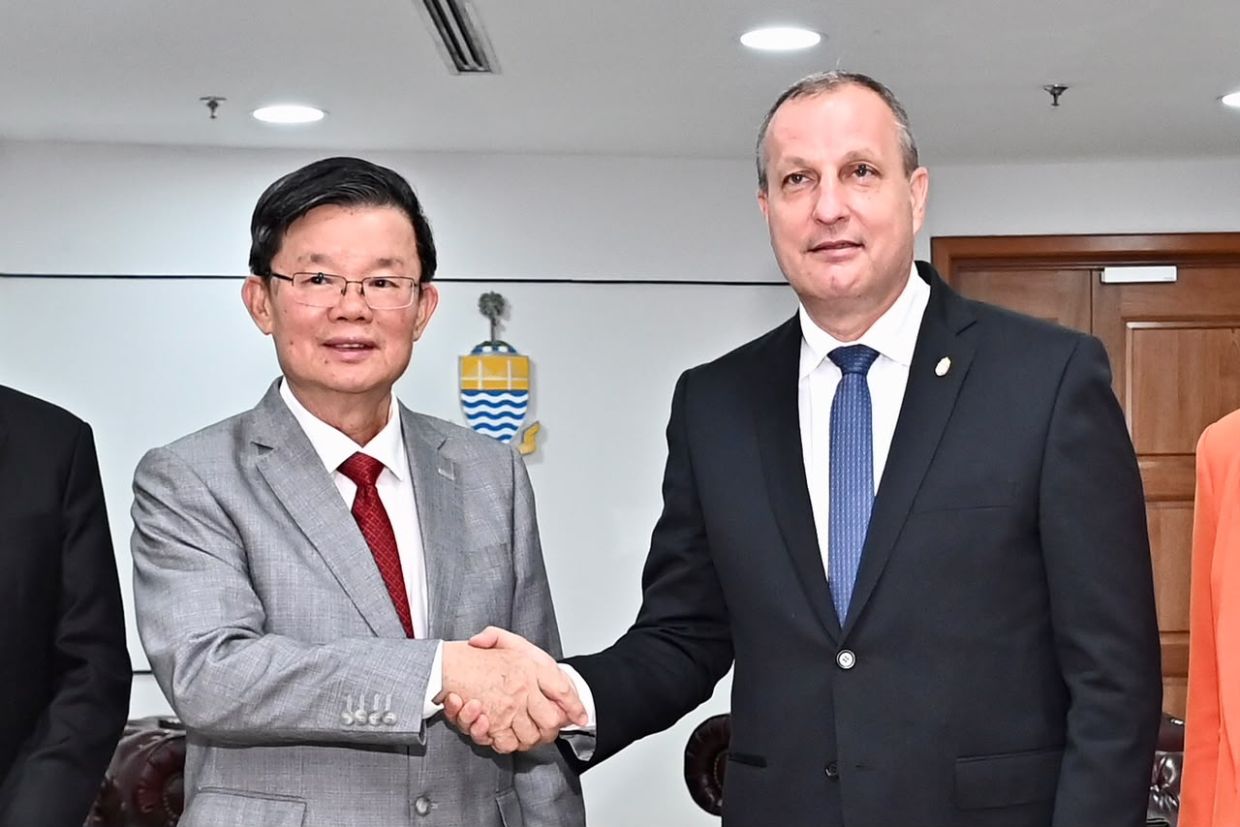
Penang is positioning itself to leverage Hungary's technical expertise and academic resources across multiple sectors, following high-level discussions between state leadership and a visiting Hungarian diplomatic delegation that outlined a comprehensive roadmap for bilateral engagement.
Chief Minister Chow Kon Yeow met with Hungarian Ambassador to Malaysia Dr Sándor Sipos and his team, signalling Penang's readiness to establish substantive partnerships with the Central European nation. The discussions encompassed an ambitious agenda spanning tertiary education, water resource management, renewable energy systems, heritage preservation, research collaboration and cultural exchange programmes. Both sides recognised that their visions for sustainable development aligned closely, creating fertile ground for institutional and business-level partnerships.
Hungary occupies a strategic position within Europe as a hub for technological innovation and environmental solutions, dimensions that hold particular relevance for Malaysia's northern industrial and tourism heartland. Chow emphasised that the state sees immediate opportunities for deepened cooperation in research and development initiatives, water security—a growing concern across Southeast Asia—and renewable energy transitions. The emphasis on talent development signals Penang's recognition that human capital exchange strengthens regional competitiveness and creates lasting diplomatic bonds beyond formal governmental agreements.
The educational dimension proves especially significant given the Hungarian government's existing commitment to Malaysian advancement. The ambassador confirmed that Budapest annually allocates 40 fully funded scholarship positions for Malaysian applicants, removing financial barriers for talented students seeking postgraduate opportunities in Europe. Chow welcomed this sustained programme, framing education mobility as a foundational mechanism for building long-term relations between nations. For Penang specifically, which boasts Malaysia's highest concentration of tertiary institutions, the scholarships create reciprocal value—Hungarian universities gain exposure to Southeast Asian talent whilst Penang's students acquire international qualifications that elevate regional knowledge capacity.
Sipos signalled Hungary's active interest in expanding Penang's participation in the scholarship scheme, explicitly inviting outstanding applicants from the state to apply. This open invitation suggests Budapest views Malaysia, and Penang in particular, as strategically important within its broader Southeast Asian engagement strategy. The amplified focus on youth development reflects both sides' recognition that educational partnerships generate goodwill across generations whilst creating networks that facilitate future commercial and cultural transactions.
Water management emerged as a priority area within the discussions, underscoring shared vulnerabilities across both regions. Hungary possesses considerable expertise in managing complex water systems across the Danube basin, knowledge transferable to Penang's challenges in balancing industrial demand, agricultural needs and residential consumption. Such technical cooperation could translate into infrastructure projects, consultancy arrangements or joint research initiatives addressing water scarcity and quality issues—challenges increasingly relevant throughout Southeast Asia as climate pressures intensify.
The renewable energy component of the partnership holds particular significance for Penang's industrial future. Hungary has invested substantially in solar capacity and biomass utilisation, establishing itself as a Central European leader in green transitions. Penang, as Malaysia's manufacturing hub, faces mounting pressure to decarbonise operations and reduce reliance on fossil fuels. Collaboration with Hungarian firms and research institutions could facilitate technology transfer, investment flows and knowledge sharing that accelerate Penang's green industrial transformation whilst providing Hungarian companies with Southeast Asian market entry points.
Heritage conservation discussions indicate both regions recognise cultural preservation as integral to sustainable development. Penang's Georgetown district, a UNESCO World Heritage Site, shares conceptual ground with Hungary's own preservation efforts. Institutional exchanges between heritage agencies, conservation specialists and tourism authorities could yield best-practice frameworks, funding mechanisms and restoration methodologies benefiting both locations. Tourism development conversations likely centred on leveraging cultural assets to drive sustainable visitor economies that benefit local communities without degrading heritage sites.
Executive Councillor Gooi Zi Sen's commitment to exploring sports cooperation represents an often-underestimated dimension of soft diplomacy. His initiative to conduct detailed studies on suitable sporting disciplines for bilateral exchange signals that Penang sees competitive sports as vehicles for youth development, international exposure and grassroots cultural understanding. Hungary's strong Olympic traditions and expertise in athletics, swimming and other disciplines could provide coaching, training frameworks and competitive opportunities for Penang's emerging talents. Such collaborations frequently generate positive media coverage, enhance city branding and create people-to-people connections transcending formal governmental channels.
The trade and investment discussions with Councillors Goh Choon Aik and Gooi indicate Hungary's potential as a business partner for Penang enterprises seeking European market access. Hungarian companies operating within European Union frameworks could facilitate Penang manufacturers' entry into continental supply chains, whilst Penang might attract Hungarian investment in manufacturing, logistics and technology sectors. Such commercial engagement typically follows educational and cultural groundwork, suggesting the diplomatic visit positions relationship-building for tangible economic collaboration.
For Malaysia broadly, Penang's initiative reflects the state's positioning as an international engagement leader within the federation. By cultivating partnerships beyond traditional markets, Penang diversifies its economic and diplomatic portfolios whilst establishing itself as a model for regional states pursuing similar external partnerships. Hungary's openness signals that Southeast Asian jurisdictions, through proactive diplomacy, can establish meaningful relationships with major European players despite geographic distance.
The concrete outcomes remain contingent on translating diplomatic goodwill into institutional mechanisms—research agreements between universities, memoranda of understanding between state agencies, and commercial contracts between businesses. However, the breadth of discussions and the mutual enthusiasm documented suggest genuine commitment from both sides to moving beyond ceremonial engagement toward substantive collaboration across education, technology and sustainability sectors that offer mutual benefit.

%22%2F%3E%3C%2Fpattern%3E%3C%2Fdefs%3E%3Crect%20width%3D%22100%25%22%20height%3D%22100%25%22%20fill%3D%22url(%23phf3lfg)%22%2F%3E%3Crect%20width%3D%22100%25%22%20height%3D%22100%25%22%20fill%3D%22url(%23phf3lfp)%22%2F%3E%3Ctext%20x%3D%2250%25%22%20y%3D%2250%25%22%20text-anchor%3D%22middle%22%20dominant-baseline%3D%22central%22%20fill%3D%22rgba(255%2C255%2C255%2C0.95)%22%20font-family%3D%22Georgia%2C%20'Times%20New%20Roman'%2C%20serif%22%20font-weight%3D%22700%22%20font-size%3D%22272%22%20letter-spacing%3D%22-0.02em%22%3EAnwar%3C%2Ftext%3E%3C%2Fsvg%3E)