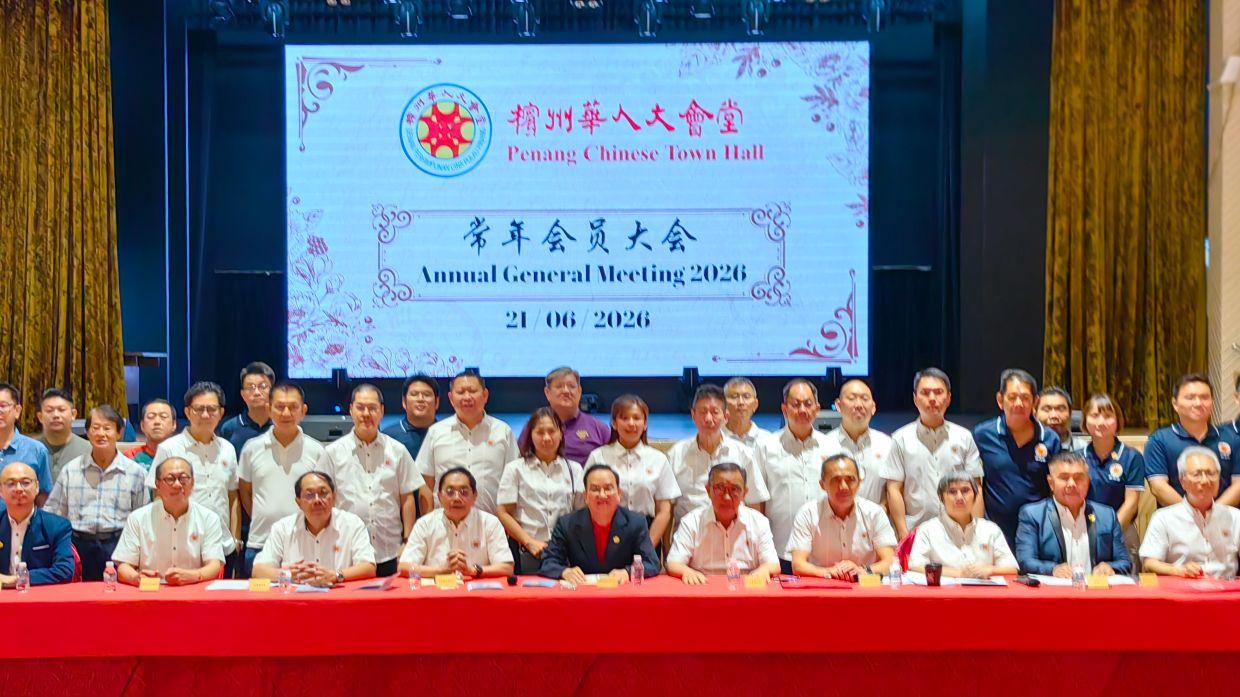
Penang Chinese Town Hall (PCTH) has closed its financial year ended December 31, 2025 with total revenue of RM12.61 million, comfortably managing its operations with expenditure of RM12.55 million and leaving a surplus of RM59,191. The figures, presented at the organisation's annual general meeting earlier this month, reflect a community institution that remains financially stable even as it navigates evolving priorities in an increasingly digital economy.
The organisation's income structure reveals a heavy reliance on philanthropic support. Donations furnished RM11.24 million of the total intake, representing nearly 90 per cent of all revenue. The remaining contributions came from more modest and diversified sources: rental and maintenance fees contributed RM439,671, auditorium rental generated RM361,245, while anniversary-related receipts amounted to RM222,498. This composition underscores the fundamental role played by community members in sustaining PCTH's operations and mission.
On the spending side, donations to external beneficiaries dominated the budget. Charitable disbursements consumed RM11.12 million, accounting for approximately 88.6 per cent of total expenditure during the year. This represents a notable decrease from the RM12.35 million in donations made during 2024, suggesting either more measured philanthropic commitments or a strategic recalibration of giving priorities. In contrast, personnel costs moved in the opposite direction. Salaries and allowances increased to RM502,625 from RM452,761 the previous year, a gain of roughly 11 per cent that reflects either expanded staffing or wage adjustments to retain talent.
Chairman Tan Sri Prof Tan Khoon Hai used the June 21 gathering, which drew approximately 200 members, as a platform to encourage broader civic engagement. With Johor and Negeri Sembilan scheduled to conduct state elections this year, Tan appealed to Malaysians to exercise their voting rights thoughtfully. His remarks emphasised that electoral decisions extend beyond parochial concerns about local infrastructure and amenities; they fundamentally shape the nation's trajectory across multiple dimensions. Voters, he argued, must evaluate party performance records and policy platforms with clear eyes, selecting representatives who can foster national unity, stimulate economic expansion and preserve social harmony.
The timing of Tan's civic exhortations carries particular relevance for Malaysian readers confronting a complex political landscape. State elections function as critical checkpoints in Malaysia's democratic system, offering voters opportunities to signal approval or disapproval of incumbent administrations and competing visions for governance. Tan's framing—that elections are vehicles for shaping national futures rather than mere administrative exercises—resonates with broader regional debates about democratic accountability and inclusive decision-making.
Beyond financial matters and electoral commentary, PCTH has embarked on infrastructure modernisation that signals confidence in its institutional future. The recently completed overhaul of Ping Zhang Hall represents a substantial capital investment in the organisation's physical assets. The renovated space now boasts expanded floor area, enhanced comfort features, and state-of-the-art technical infrastructure including professional-grade sound systems, lighting equipment and LED displays. This upgrade positions the facility as a competitive venue for corporate functions, association gatherings, charitable events and community celebrations—market segments increasingly important to revenue diversification.
More ambitiously, PCTH is positioning itself as a node in emerging regional technology networks. The organisation has partnered with business and technology enterprises from China and across the Association of Southeast Asian Nations to host the 2026 China-Asean Artificial Intelligence Cooperation Forum in Penang this November. This initiative reflects recognition that AI represents not merely a technological frontier but a geopolitical and economic crucible where regional influence will be contested and reshaped.
Penang's historical identity as the Silicon Valley of the East and its status as Malaysia's principal hub for electrical and electronics manufacturing provide tangible foundations for this ambition. Tan articulated a vision of the forum as a high-level convening space where regional experts, corporate leaders and industry specialists can converge to examine advanced AI systems, real-world industrial deployment scenarios and mechanisms for cross-border commercial and technical collaboration. Such forums function as soft power platforms, establishing participating jurisdictions as serious participants in technological governance and innovation ecosystems.
Tan explicitly invited members with relevant technological expertise to participate, framing their involvement as a contribution to Penang's regional standing in AI cooperation networks. This appeal highlights how community organisations increasingly operate at the intersection of local identity, national positioning and regional influence. For Malaysian stakeholders, the significance extends beyond Penang's particular interests. Malaysia as a whole seeks to anchor itself within emerging technology value chains and regional innovation systems rather than remaining a passive consumer of imported solutions.
The PCTH's strategic pivot—from a primarily philanthropic and community-focused institution toward an actor in technology diplomacy—mirrors broader transformations occurring across Southeast Asia. Nations and subnational entities recognise that technological leadership and participation in high-value innovation networks increasingly determine economic competitiveness and geopolitical relevance. By hosting this forum, Penang signals commitment to these objectives, while PCTH positions itself as more than a heritage organisation but rather a bridge between traditional community institutions and contemporary technological aspirations.
The modest financial surplus recorded for 2025, though numerically small, provides the institution breathing room to execute these strategic initiatives without immediate fiscal strain. Yet the figures also underscore a subtle tension: if philanthropic income remains the dominant revenue source and has essentially flatlined in recent years, PCTH must develop alternative income streams or demonstrate returns on current investments in facilities and technology initiatives. The upgraded Ping Zhang Hall and the November forum represent calculated wagers that modernised infrastructure and high-profile technology engagement will attract new revenue sources and secure PCTH's relevance across multiple constituencies—from traditional supporters to technology enterprises seeking regional platform association.
%22%2F%3E%3C%2Fpattern%3E%3C%2Fdefs%3E%3Crect%20width%3D%22100%25%22%20height%3D%22100%25%22%20fill%3D%22url(%23ph4hqahg)%22%2F%3E%3Crect%20width%3D%22100%25%22%20height%3D%22100%25%22%20fill%3D%22url(%23ph4hqahp)%22%2F%3E%3Ctext%20x%3D%2250%25%22%20y%3D%2250%25%22%20text-anchor%3D%22middle%22%20dominant-baseline%3D%22central%22%20fill%3D%22rgba(255%2C255%2C255%2C0.95)%22%20font-family%3D%22Georgia%2C%20'Times%20New%20Roman'%2C%20serif%22%20font-weight%3D%22700%22%20font-size%3D%22272%22%20letter-spacing%3D%22-0.02em%22%3ETrump%3C%2Ftext%3E%3C%2Fsvg%3E)
%22%2F%3E%3C%2Fpattern%3E%3C%2Fdefs%3E%3Crect%20width%3D%22100%25%22%20height%3D%22100%25%22%20fill%3D%22url(%23ph3mmkqg)%22%2F%3E%3Crect%20width%3D%22100%25%22%20height%3D%22100%25%22%20fill%3D%22url(%23ph3mmkqp)%22%2F%3E%3Ctext%20x%3D%2250%25%22%20y%3D%2250%25%22%20text-anchor%3D%22middle%22%20dominant-baseline%3D%22central%22%20fill%3D%22rgba(255%2C255%2C255%2C0.95)%22%20font-family%3D%22Georgia%2C%20'Times%20New%20Roman'%2C%20serif%22%20font-weight%3D%22700%22%20font-size%3D%22320%22%20letter-spacing%3D%22-0.02em%22%3EIran%3C%2Ftext%3E%3C%2Fsvg%3E)