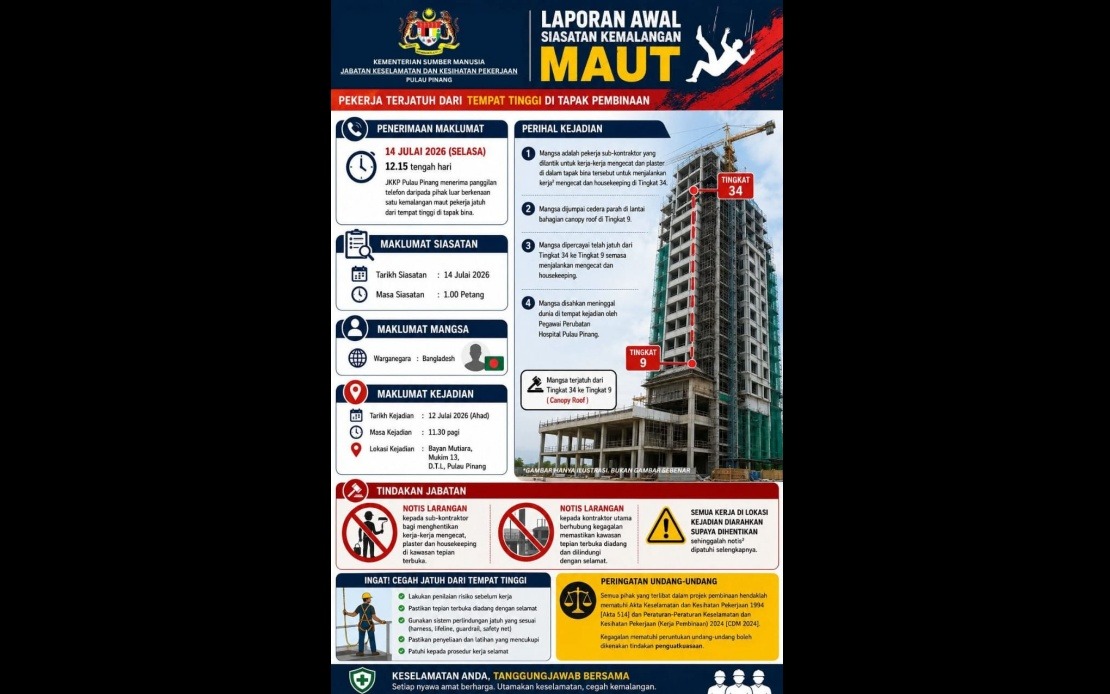
Malaysia's Penang Department of Occupational Safety and Health has opened a formal investigation into the fatal fall of a Bangladeshi construction worker at a building project in Bayan Mutiara. The incident has prompted immediate enforcement action, with regulatory authorities issuing prohibition notices and suspending all related work at the site until safety compliance measures are fully implemented.
The tragedy occurred on a major construction project where the victim, employed by a subcontracting firm, was engaged in painting, plastering, and housekeeping duties. According to Penang DOSH director Hairozie Asri, preliminary evidence suggests the worker fell from the 34th floor while performing duties in an open-edge area, ultimately landing on a canopy roof at Level 9—a vertical drop of approximately 25 floors. The significant height differential underscores the extreme danger posed by inadequate fall protection systems at the site.
Authorities received notification of the incident through an external party at 12.15 pm, triggering a rapid response from DOSH investigating officers who were dispatched immediately. Upon arrival, medical personnel from Penang Hospital conducted an examination and subsequently pronounced the worker deceased at the scene. The speed of the regulatory response, while commendable, highlights a critical incident that should never have occurred with proper workplace safety protocols in place.
The investigation has revealed troubling gaps in occupational safety compliance. The victim was working in an open-edge area—one of the highest-risk zones on any construction site—without apparent adequate protective measures. Subcontractors operating on Malaysian construction sites often manage their own safety protocols, creating a layered responsibility system that can sometimes result in oversight and inadequate safeguarding. In this case, the subcontractor appears to have failed to implement sufficient barriers, harnesses, or other fall-prevention equipment required by Malaysian occupational safety standards.
In response to these deficiencies, Penang DOSH has wielded its enforcement powers decisively. The department issued a prohibition notice specifically targeting the subcontractor, banning all painting, plastering, and housekeeping work in open-edge areas until corrective measures are verified and approved. A second prohibition notice was directed at the main contractor overseeing the entire project, reflecting the regulatory view that primary contractors bear ultimate responsibility for safety management across their worksites, regardless of subcontracting arrangements.
All work activities related to the accident site have been ordered to cease immediately, a measure that, while disruptive to project schedules, reflects the seriousness with which Malaysian authorities treat fatal incidents. This stoppage will remain in effect until every requirement stipulated in the prohibition notices has been satisfied. The main contractor and subcontractor will need to demonstrate comprehensive compliance with the Occupational Safety and Health Act and associated regulations before work can resume.
Foreign workers, particularly those from Bangladesh and other South Asian nations, constitute a substantial portion of Malaysia's construction workforce. This demographic reality makes workplace safety in the construction sector a matter of significant national importance. Bangladeshi workers, often employed through labor brokers and subcontractors, may face additional vulnerability due to language barriers, unfamiliarity with local safety standards, and sometimes limited bargaining power regarding working conditions. The death of this worker raises questions about whether adequate safety induction, supervision, and protective equipment provision extended to all workers regardless of their employment tier.
The incident reflects broader systemic challenges within Malaysia's construction industry. While regulatory frameworks exist—including the OSHA 1994 and various construction safety guidelines—consistent enforcement and industry-wide adoption remain inconsistent. High-rise construction projects in urban areas like Penang, where property development is accelerating, create particular hazards. The complexity of multi-floor structures, the involvement of numerous subcontractors, and the time-sensitive nature of construction schedules can create pressure to cut corners on safety investments.
This fatality will likely generate renewed scrutiny of safety practices across Penang's active construction sector and potentially influence enforcement priorities nationwide. The Department of Occupational Safety and Health may use this case as a catalyst for industry-wide safety audits, particularly at projects involving high-altitude work and open-edge areas. Contractors may also face increased pressure from clients, insurers, and regulatory bodies to demonstrate heightened safety compliance moving forward.
The incident carries broader implications for Malaysia's construction industry and its treatment of migrant workers. As the nation pursues ambitious infrastructure and property development targets, the human cost of workplace fatalities must remain central to industry discourse. The Penang DOSH investigation will likely examine not only the immediate causes of the fall but also systemic issues including worker training, equipment provision, supervisory oversight, and the effectiveness of safety culture within the subcontracting supply chain. The findings may shape future regulatory guidance for the industry.
For Malaysian policymakers and industry leaders, this tragedy underscores the continuing need for robust safety enforcement, worker education, and a cultural shift toward treating occupational safety as non-negotiable rather than an optional cost consideration. Bangladeshi workers and other migrant laborers deserve the same comprehensive protection afforded to local employees, requiring transparent communication, adequate training, and visible enforcement action when standards are breached—precisely the response Penang DOSH has demonstrated in this case.

