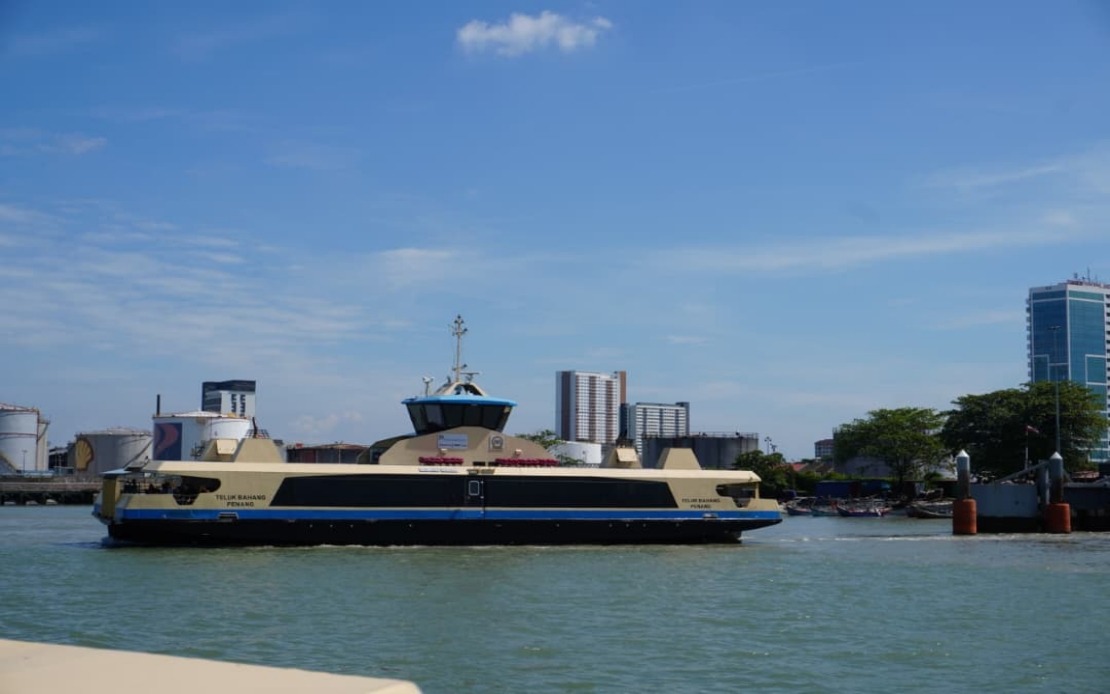
Penang's ferry service will operate free of charge for all Malaysian travellers on Aug 31, a move timed to coincide with the nation's 69th National Day festivities. The Penang Port Commission (SPPP), operating in tandem with Penang Port Sdn Bhd (PPSB), has announced the initiative to enhance accessibility to the cross-strait connection linking Penang Island with Seberang Perai. Datuk Yeoh Soon Hin, chairman of SPPP, unveiled the arrangement, emphasising its role in strengthening national unity through improved public mobility on a significant patriotic occasion.
The complimentary service extends across both terminal facilities serving the Penang Strait route. Passengers embarking from Sultan Abdul Halim Terminal in Seberang Perai or the Raja Tun Uda Terminal on George Town's waterfront will proceed through standard operations without purchasing tickets. Regular ferry schedules remain unchanged, ensuring that commuters and visitors benefit from consistent transit frequencies throughout the day. The arrangement demonstrates coordination between port authorities to streamline what would otherwise involve separate ticketing transactions across the two opposing shores.
The financial relief for users proves substantial across both passenger categories. Pedestrians typically pay RM2 for each one-way crossing, while motorcycle operators are charged RM2.50 per journey. By eliminating these fares for the entire day, the port authority removes barriers to movement for residents and tourists alike, potentially encouraging cross-strait travel during peak National Day festivities. This pricing structure acknowledgment underscores how modest daily transit costs can accumulate significantly for regular commuters, particularly those making multiple journeys.
Historical data from previous National Day celebrations provides insight into expected usage patterns. During last year's festivities, the ferry transported 9,185 foot passengers in both directions, alongside 1,874 two-wheeled vehicle operators making return trips. These figures suggest that free-fare initiatives generate measurable increases in patronage, as cost-conscious travellers opt for the ferry over toll-bearing road crossings. The Penang Second Bridge demands payment, making the ferry a financially attractive alternative when fares are waived, thereby diverting traffic from congested roadways.
Beyond immediate convenience, SPPP frames the initiative within broader sustainability objectives. Port officials contend that encouraging ferry usage addresses Penang's persistent congestion challenges by redistributing traffic away from vehicular routes toward marine transport. Ferries represent inherently efficient mass transit, carrying numerous passengers simultaneously whilst consuming less fuel per capita than individual motor vehicles. Promoting public transport adoption aligns with regional climate commitments and urban planning priorities embraced across Southeast Asia, where congestion and air quality remain pressing concerns.
The 69th National Day celebration provides symbolic backdrop for advancing transportation infrastructure goals. Rather than treating the commemorative occasion as a mere administrative marker, authorities leverage patriotic enthusiasm to encourage behavioural shifts favouring shared mobility. This approach mirrors similar campaigns elsewhere in Malaysia, where public holidays become platforms for promoting desired civic practices. The ferry waiver thus serves dual purposes: immediate celebration enhancement and longer-term advocacy for sustainable commuting patterns.
SPPP has extended its National Day programming beyond transport infrastructure. Recognising its own milestone this year—marking seven decades of continuous operations through its 70th anniversary, or Platinum Jubilee—the commission has partnered with the Penang Ferry Museum to launch a companion promotion. The 'Kids Go Free Merdeka Special' campaign extends from Aug 29 through Aug 31, permitting Malaysian children aged twelve and under to access the museum without admission charges. This three-day window accommodates families celebrating over an extended weekend, maximising potential visitor engagement.
The museum partnership strategy reveals how anniversary celebrations become opportunities for cross-institutional cooperation. SPPP leverages its heritage milestone to enhance cultural engagement, positioning the ferry museum as integral to Penang's identity narrative. For younger Malaysians, complementary museum access encourages learning about maritime heritage and Penang's crucial role in regional commerce and transportation networks. Educational experiences accompanying transport improvements create more holistic National Day observances than single-sector initiatives could achieve.
For Malaysian travellers and Penang residents, the convergence of transport subsidies and cultural programming represents material improvement in holiday accessibility. Families planning Aug 31 outings benefit from eliminated ferry costs, enabling more disposable income for other celebrations or activities. The geographic advantages accruing to Penang become clearer: residents and visitors enjoy seamless cross-strait mobility precisely when festive demand peaks, avoiding the premium costs usually accompanying peak-period travel. This accessibility has knock-on effects for local businesses, restaurants, and attractions awaiting customer patronage across both shores.
The initiative demonstrates how public sector entities use commemorative occasions strategically to advance policy objectives whilst building community goodwill. SPPP positions itself as citizens' advocate, implementing measures that tangibly improve lived experience during national celebrations. For Malaysian policymakers elsewhere, the Penang model offers replicable framework: identifying infrastructure that supports broader sustainability targets, aligning subsidies with patriotic occasions, and coupling transport initiatives with complementary cultural programming. Such coordinated approaches prove more impactful than isolated interventions.
Regional context further illuminates this development's significance. Southeast Asian cities increasingly compete for resident satisfaction through public transport improvements and congestion relief. Penang's ferry network represents established infrastructure differentiating the state from competitors dependent primarily on road transport. By actively promoting ferry usage through strategic incentives, authorities strengthen this comparative advantage whilst potentially attracting talent and investment seeking liveable urban environments. The Aug 31 initiative thus transcends immediate festive relief, advancing longer-term positioning within competitive regional urban hierarchies.

