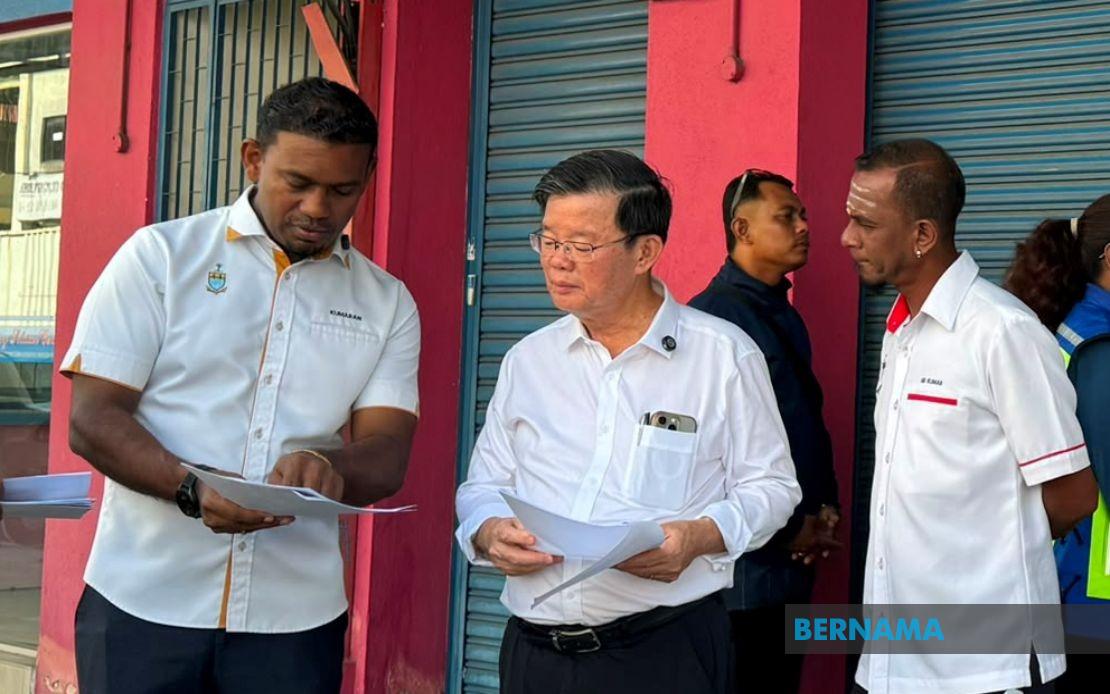
Penang will not defer its newly implemented water tariff despite mounting pressure for a delay, Chief Minister Chow Kon Yeow declared on July 17, signalling the state's determination to proceed with rate increases that have sparked public concern and opposition from certain quarters. The tariff structure, which became effective on July 1, represents a carefully calibrated decision by the state government to balance consumer affordability with infrastructure demands, though it has drawn criticism from lawmakers including Bagan Member of Parliament Lim Guan Eng, who publicly appealed for a one-year postponement.
The Penang government's commitment to the tariff reflects the magnitude of investment required to secure the state's water future. Chow emphasised that the Penang Water Supply Corporation requires nearly RM2 billion in capital expenditure dedicated solely to water supply security initiatives, with additional billions needed for the Perak water supply project, which will augment Penang's own water sources. Against this backdrop, the estimated RM20 million in additional annual revenue generated by the new tariff structure becomes not merely a budgetary convenience but a practical necessity for financing these transformative infrastructure undertakings.
The decision to implement the tariff on July 1 itself represented a concession to public sentiment, as the National Water Services Commission had originally mandated July 30, 2025 as the implementation date. Chow pointed out that the state had already deferred the increase for nearly a year, affording consumers extended preparation time. This phased approach underscores the government's recognition of the tariff's impact on household budgets while maintaining resolve on the fundamental requirement for funding water infrastructure.
The tariff mechanism operates within a national framework established by the Federal Government through SPAN, which sets standards adopted across all states. Water operators across the nation are permitted to petition for tariff reviews every three years, grounding any adjustments in documented operating costs and identified development needs rather than arbitrary increases. This standardised approach prevents individual states from operating in isolation and ensures consistency across the country's water management landscape.
Penang's domestic consumers continue to benefit from cross-subsidisation arrangements that shield household water bills from the full cost of production. While the actual expense of delivering water has surpassed RM1 per cubic metre, domestic users pay approximately 65 sen per cubic metre under the new structure, with the shortfall compensated by higher charges imposed on industrial and commercial users. This intentional pricing disparity reflects a social policy decision to ensure water affordability for ordinary households while generating revenue from those with greater consumption capacity.
The practical impact on household finances, while significant for some, remains modest for the majority. Penang Water Supply Corporation chief executive officer Datuk K. Pathmanathan noted that approximately 82 per cent of households consuming 35 cubic metres or less monthly would face an additional cost of merely RM2.55 monthly, equivalent to about 8 sen daily. For perspective, commercial consumers utilising 500 cubic metres monthly would absorb RM77.70 additional monthly charges, illustrating the progressive burden-sharing embedded in the tariff structure.
The Water Contingency Plan 2030 represents the foundational strategy guiding Penang's water infrastructure investment. Revenue generated from the tariff increase will finance construction of new water treatment plants at Mengkuang Dam and Sungai Perai, critical facilities designed to expand treatment capacity and resilience. Simultaneously, the corporation will acquire land and conduct upgrading works at the Sungai Dua facility while progressing land acquisition for the Sungai Muda treatment plant, collectively representing a diversified portfolio of supply-side improvements.
One project of particular regional significance is the Macallum-Bukit Dumbar pipeline, which will enhance interconnectivity within Penang's water distribution network and improve the state's capacity to respond to localised supply disruptions. These infrastructure enhancements are not luxury additions but fundamental requirements for a state grappling with growing population pressures and the imperative to achieve genuine supply resilience in an era of climatic unpredictability.
For Malaysian readers beyond Penang, this decision carries instructive implications about the economics of water management. Other states contemplating tariff adjustments will observe Penang's commitment to the difficult but necessary work of aligning pricing structures with infrastructure requirements. The principle that domestic consumers should not bear the full production cost, while non-domestic users contribute disproportionately, offers a model for balancing social equity with financial sustainability in essential services.
The broader context reflects tension between public expectations for affordable utilities and the genuine fiscal constraints facing water corporations tasked with modernising ageing infrastructure and anticipating future demand. Chow's willingness to withstand postponement appeals signals that Penang's leadership has assessed the long-term consequences of deferring necessary investment as exceeding the short-term political costs of implementing unpopular tariff increases. Whether this calculation proves correct will depend substantially on whether the promised infrastructure projects materialise on schedule and deliver measurable improvements in water security and reliability for consumers across the state.

