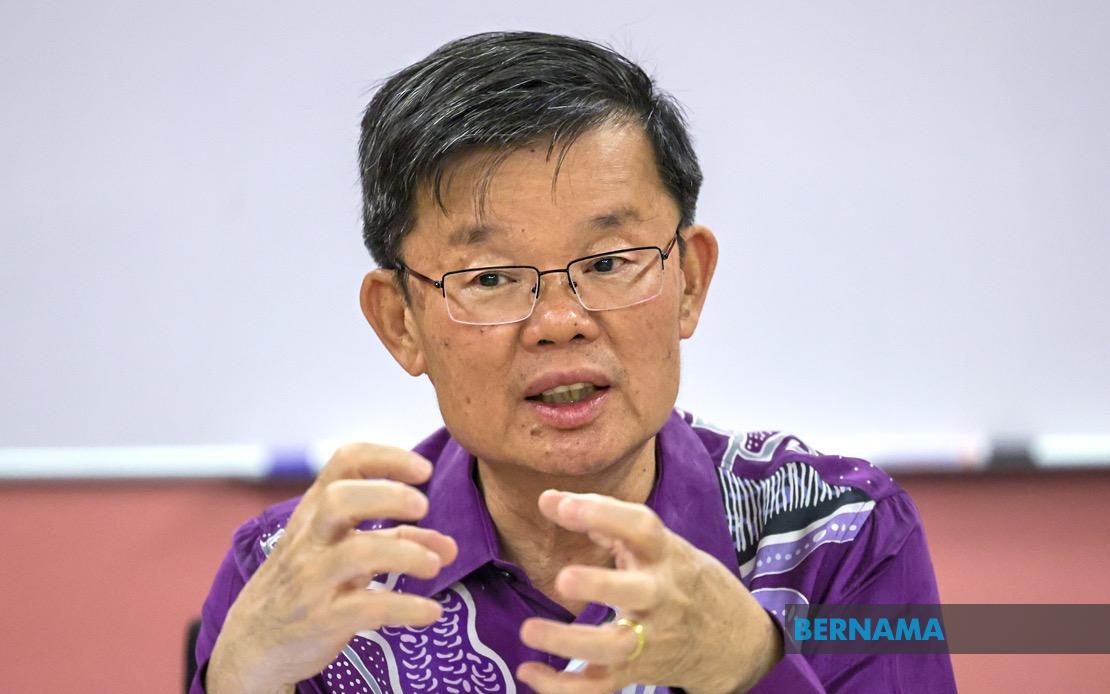
Penang's Pakatan Harapan coalition has reaffirmed its commitment to retaining the state's Barisan Nasional executive councillor as part of the ongoing Unity Government arrangement, according to a decision announced by the coalition's chairman Chow Kon Yeow in George Town on Thursday. The Penang Chief Minister disclosed that the decision emerged from a recent gathering of PH party leadership and reflects the electoral alliance negotiated during the 2023 state election contest. Speaking at the Wisma DAP headquarters following the meeting, Chow framed the move as part of a broader strategy to maintain momentum in the state administration while preparing for national polls expected within the next 18 months.
The retained position belongs to Datuk Rashidi Zinol, who chairs the State Rural Development, Agrotechnology and Food Security Committee and represents BN's continued stake in Penang's governance structure. This arrangement emerged from the 2023 election outcome, when Pakatan Harapan and Barisan Nasional jointly secured 29 of the 40 contested state assembly seats, establishing what became known as the Unity Government model. The decision to preserve this cross-coalition representation underscores how Malaysia's political landscape has shifted towards broader power-sharing arrangements at the state level, a pattern that mirrors the federal structure established following the 2022 general election.
Chow articulated the rationale for maintaining the status quo, suggesting that preserving the BN executive councillor position offers strategic advantages as the coalition prepares for the 16th general election. He emphasized that continued cooperation among component parties—comprising DAP, PKR, Amanah, and BN—remains essential for strengthening Penang's reform initiatives and advancing the shared policy agenda that underpins the Unity Government framework. This stance reflects pragmatic coalition management, acknowledging that fractious internal disputes over representation could weaken the administration's effectiveness at a critical juncture.
Penang's experience offers instructive lessons for understanding the broader trajectory of Malaysian coalition politics. The 2023 state election delivered overwhelming dominance to Pakatan Harapan within Penang, with DAP capturing all 19 seats it contested, PKR securing seven, and Amanah winning one seat. Despite commanding such numerical superiority, the coalition's leadership elected to share executive power with BN, which won merely two seats. This decision reflects calculations beyond simple arithmetic—considerations of national-level stability, the desire to demonstrate genuine unity rather than majoritarian dominance, and pragmatism about the need for multi-ethnic representation in key policy areas.
The timing of this announcement carries significance given recent electoral outcomes in neighbouring states. Chow explicitly referenced lessons drawn from the Johor and Negeri Sembilan state elections, indicating that Penang's PH leadership has adopted a reflective posture towards recent electoral performance across the country. Rather than assuming Penang's strength will automatically translate into national success, coalition strategists are conducting granular analysis of each state assembly seat from multiple angles, recognizing that voter preferences, demographic shifts, and campaign effectiveness vary considerably across constituencies.
Beyond internal coalition management, Chow highlighted organizational imperatives that will shape PH's approach to the impending general election. The coalition plans to strengthen its political messaging by incorporating honest assessments of organizational weaknesses rather than relying exclusively on claims of achievement. This acknowledgment reflects a growing recognition that Malaysian voters increasingly demand nuanced narratives and are skeptical of purely celebratory political discourse. Furthermore, Penang's PH leadership intends to substantially expand its engagement with digital platforms and youth voters, specifically targeting the Undi18 demographic—young citizens aged 18 to 20 who voted for the first time in the 2023 state election.
The Undi18 cohort represents a significant electoral variable that coalitions across the political spectrum are beginning to prioritize. These voters were largely absent from previous electoral contests and bring distinct values, communication preferences, and policy concerns shaped by digital-native upbringings and contemporary social movements. For PH, cultivating stronger engagement with this demographic could yield substantial returns, though it requires adapting messaging strategies and prioritizing issues such as climate action, educational accessibility, and economic opportunity that resonate with younger voters.
Chow's assessment of the coalition's competitive position balanced confidence with appropriate caution. He pointed to tangible achievements in state administration—organizational stability, financial integrity, economic development initiatives, and employment generation—as factors contributing to PH's electoral strength in Penang. The state government has pursued visible development projects and policy reforms that have become part of its public narrative. However, the Chief Minister simultaneously cautioned against complacency, observing that public perception and sentiment often shift more rapidly than underlying economic or governance metrics. This observation reflects a sophisticated understanding of electoral dynamics, acknowledging that voter behaviour responds to emotional and symbolic messaging as much as to objective policy outcomes.
The retention of the BN executive councillor through the next general election also provides organizational stability for specific policy portfolios at a time when agricultural development, rural economic diversification, and food security have assumed heightened importance across Southeast Asia. These are not peripheral concerns but touch on fundamental questions of rural livelihoods, supply chain resilience, and national self-sufficiency. By maintaining continuity in this key committee leadership, Penang's coalition maintains institutional memory and prevents the policy disruptions that can occur with sudden transitions in responsibility.
Looking forward, Penang's arrangement illuminates broader questions about how Malaysian coalitions will organize themselves between now and the next federal election. The decision to retain cross-coalition representation suggests that Unity Government concepts, far from being temporary expedients, may be settling into more durable institutional patterns. This reflects a substantive shift in Malaysian politics away from winner-take-all competition towards power-sharing models that recognize the complexity of multi-ethnic governance. For national political observers, the Penang model offers an important indicator of how coalition politics is evolving at the state level and what frameworks may eventually influence federal-level arrangements.

