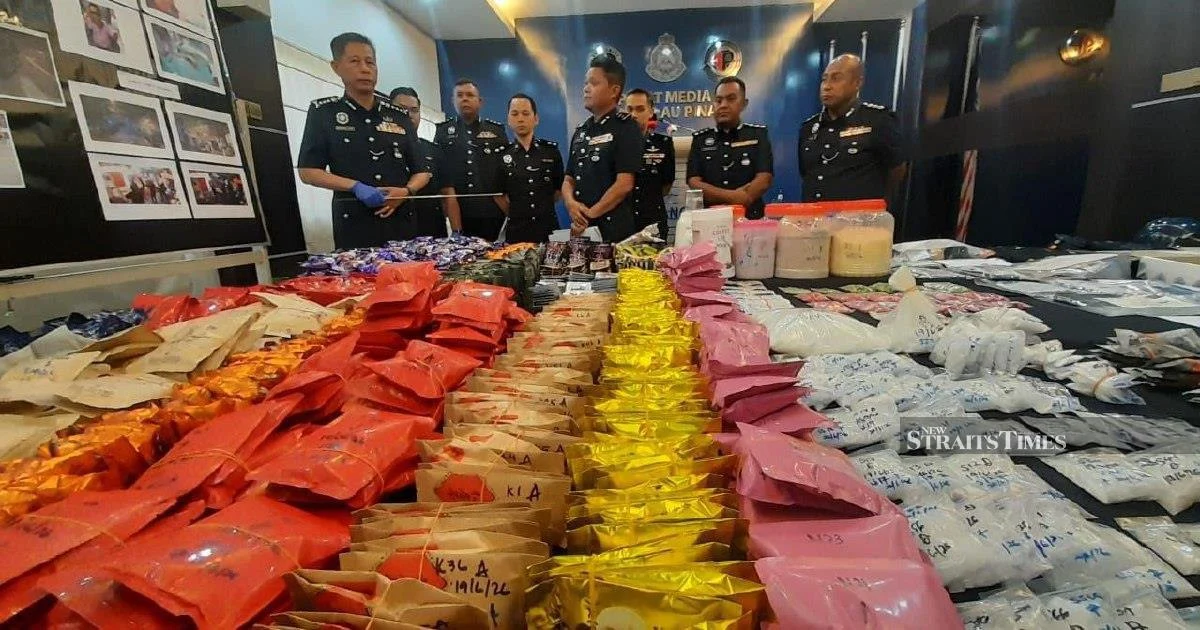
Police in Penang have dealt a substantial blow to organised drug trafficking following the discovery and dismantling of a major manufacturing and distribution hub hidden within a residential condominium complex in Butterworth. The operation, which culminated in the arrest of a couple and the recovery of nearly RM10 million in controlled substances, represents one of the more significant recent enforcement actions by state narcotics units targeting transnational drug networks operating across northern Malaysia. The successful interception of this operation signals intensified police vigilance in monitoring high-value drug trafficking activities throughout the Klang Valley and surrounding urban centres where such operations typically flourish.
The breakthrough came as officers executed a meticulously planned raid on the condominium unit, where they uncovered extensive evidence of large-scale drug processing infrastructure. The substances recovered, totalling RM9.7 million in street value, included various controlled narcotics that had been prepared for distribution across multiple markets within the region. The discovery of processing equipment and manufacturing paraphernalia at the scene pointed to a sophisticated operation far exceeding simple possession or retail-level dealing. Such findings underscore the escalating complexity of drug manufacturing networks in Malaysia, where criminal organisations increasingly establish discrete processing facilities within seemingly legitimate residential settings to evade detection.
The arrest of both individuals linked to the operation raises important questions about criminal collaboration and trust networks within trafficking hierarchies. Romantic relationships between co-conspirators often feature prominently in organised crime structures, particularly in drug distribution chains where personal loyalty substitutes for formal governance. The fact that authorities targeted a couple suggests investigators had conducted substantial preliminary intelligence work, building a profile of the operation's scope and identifying key personnel before executing the raid. Such methodical groundwork typically precedes major narcotics busts and reflects enhanced capabilities within state police drug enforcement units.
From a regional perspective, this seizure reflects broader patterns of drug production and trafficking affecting Southeast Asia. The region has become increasingly attractive to transnational criminal organisations seeking to establish manufacturing bases closer to consumption markets in developed economies. Malaysia's geographic position along trafficking corridors connecting source countries in the "Golden Triangle" to end-user markets in Australia, Singapore, and Hong Kong makes it a strategic location for processing operations. The establishment of such facilities within urban residential areas complicates enforcement efforts, as criminal networks exploit the anonymity and accessibility of condominium complexes to avoid suspicion.
The magnitude of the recovered narcotics demonstrates the considerable financial stakes involved in high-level trafficking operations. A RM9.7 million seizure represents not merely a loss of product but a disruption of substantial criminal income flows. For trafficking organisations that typically operate with profit margins exceeding 500 percent at street level, such losses translate into operational setbacks and reduced capacity to supply downstream distribution networks. However, enforcement experts caution that single seizures, however substantial, rarely dismantle entire networks; rather, they prompt reorganisation, shifting of personnel, and adaptation of operational procedures within surviving command structures.
The role of modern residential architecture in facilitating criminal enterprises deserves consideration. Condominium complexes, particularly those with transient populations and multiple access points, provide ideal concealment for illicit operations. The anonymity afforded by urban living, combined with frequent turnover of residents and minimal neighbour engagement, creates environments where suspicious activities can persist undetected. Property developers and condominium management companies increasingly face pressure from authorities to implement enhanced security screening and monitoring protocols, yet such measures remain inconsistently applied across the property sector.
Police methodology in identifying and infiltrating such operations typically involves sustained intelligence gathering, financial tracking of suspicious transaction patterns, and undercover operations in distribution networks. The fact that officers possessed sufficient evidence to execute a successful raid suggests coordination between federal narcotics units and state police, as major operations often involve inter-agency taskforces. The recovery of processing equipment and finished products indicates forensic evidence that will support prosecution, with the physical contraband alone providing compelling courtroom testimony regarding operation scale and sophistication.
For Malaysian law enforcement, this operation reinforces the criticality of maintaining enhanced pressure on manufacturing operations rather than focusing exclusively on street-level dealers. Disrupting production facilities eliminates supply sources and inflicts substantial financial damage on trafficking hierarchies. The Penang Narcotics Unit and Royal Malaysia Police have progressively shifted emphasis toward such upstream enforcement in recent years, recognising that eliminating supply reduces downstream harm more effectively than conventional street policing.
The implications for Penang's broader drug control strategy extend beyond this singular operation. The state, serving as a primary entry point for precursor chemicals and finished narcotics destined for Australian and Singaporean markets, faces persistent pressure from trafficking organisations. Enhanced vigilance at ports, airports, and residential areas remains essential to preventing network re-establishment. Community reporting mechanisms and inter-agency intelligence sharing will prove crucial to maintaining enforcement momentum and preventing criminal reorganisation around current disruptions.
Both suspects now face prosecution under the Dangerous Drugs Act, with potential sentencing reflecting the quantities involved and manufacturing apparatus discovered. Successful prosecution requires meticulous handling of evidence chain procedures and expert testimony regarding substance composition and market valuation. The case will likely proceed through magistrate courts before potential elevation to higher tribunals depending on identified suspect roles within the hierarchy.