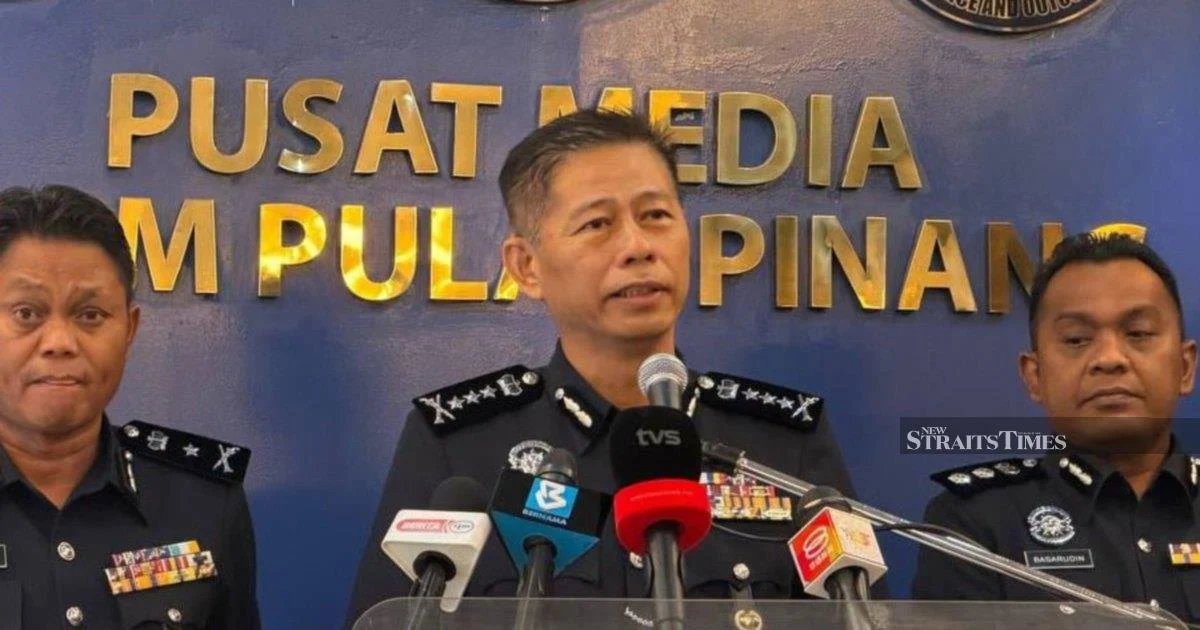
Law enforcement authorities in Penang have achieved a significant breakthrough in their ongoing battle against illicit drug manufacturing by successfully shutting down a criminal syndicate specialised in the production and distribution of liquid methamphetamine. The operation, which took place in the Nobong Tebal area, resulted in the apprehension of a 40-year-old man and the recovery of narcotics with an estimated street value exceeding RM450,000—a haul that underscores the scale of methamphetamine operations flourishing in the northern state.
The dismantling of this drug syndicate represents a critical victory for the Penang Police Department in their multi-pronged campaign to disrupt supply chains that funnel illicit substances throughout Malaysia and the broader Southeast Asian region. Liquid methamphetamine, colloquially known as liquid syabu, has emerged as a particularly troublesome variant of the stimulant drug across Malaysia in recent years. Its clandestine nature—being easily transportable and capable of being concealed in innocuous-looking containers—has made it an increasingly attractive product for traffickers seeking to circumvent border checkpoints and police detection efforts.
The suspect's age, reportedly 40 years old, suggests this was likely an operation managed by individuals with considerable experience in the illicit drug trade. Organised methamphetamine manufacturing operations typically require technical knowledge of chemical processes, reliable supply chains for precursor chemicals, and established distribution networks. The fact that authorities were able to identify and move against the operation indicates either intelligence-led policing efforts or, alternatively, that the activities had become visible enough to trigger community awareness.
The recovery of drugs valued at more than RM450,000 indicates that the operation had accumulated significant inventory—whether for imminent distribution or as a working stock for ongoing production. At typical Malaysian street prices for methamphetamine, this seizure represents quantities that would have affected a considerable number of users had the drugs reached their intended market. The financial value of the haul also underscores the profitability of methamphetamine manufacturing, which motivates criminal syndicates to continue operations despite enforcement risks.
Liquid methamphetamine presents particular enforcement challenges compared to its crystalline counterpart. The liquid form allows traffickers to utilise deceptive packaging methods, disguising the drug as beverages, cleaning solutions, or pharmaceutical products. This characteristic has necessitated enhanced training for narcotics officers and investment in more sophisticated detection technologies. Penang, with its position as a major trading hub and transit point, has been identified by law enforcement agencies as particularly vulnerable to drug manufacturing operations that exploit the state's commercial infrastructure and port facilities.
The operation demonstrates the continued commitment of the Penang Police Department to proactive drug enforcement. Such operations, whether emerging from specific intelligence or from systematic surveillance of known high-risk areas, require careful coordination between detective units, special operations teams, and forensic laboratories. The seizure of operational equipment alongside the drugs themselves typically provides investigators with insights into the sophistication of the operation and potential connections to other criminal networks.
Investigators will now focus on tracing the supply chain backwards to identify the sources of precursor chemicals and forwards to determine which distribution networks the seized drugs were destined for. The 40-year-old suspect will face interrogation regarding his role within the syndicate, whether he operated independently or as a subordinate within a larger organisation, and the identities of other individuals involved in manufacturing, warehousing, or distribution functions.
For the broader Malaysian drug enforcement community, this seizure reinforces the reality that methamphetamine manufacturing continues to represent a significant threat despite years of intensive anti-drug campaigns. The variety of methamphetamine variants in circulation—from powder to crystal to liquid forms—suggests that clandestine laboratories have adapted their production methodologies to evade detection and to cater to evolving market preferences. The presence of liquid methamphetamine operations in Penang particularly warrants concern given the state's strategic geographic position and international connectivity.
The implications for Southeast Asia extend beyond Malaysia's borders. Methamphetamine manufacturing syndicates operating in the region have repeatedly demonstrated their ability to source precursor chemicals from international suppliers, establish production facilities in remote locations, and distribute finished products across multiple countries. A single successful operation in Penang, whether its production was destined entirely for domestic consumption or for regional distribution, represents merely one node in a network of illegal manufacturing that persists throughout the region despite coordinated law enforcement efforts by multiple national authorities.

