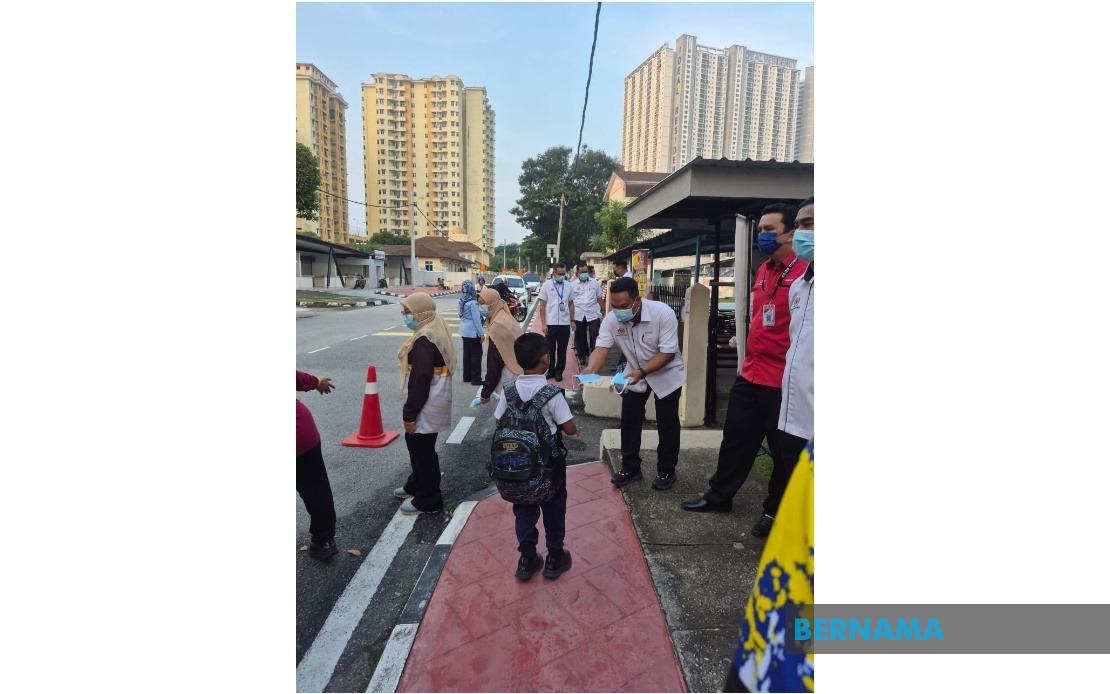
Penang's education authorities have established a systematic response framework to protect students from hazardous air quality, with plans to transition all schools to home-based teaching and learning—known locally as PdPR—once the Air Pollutant Index climbs to 200. The move reflects growing urgency around transboundary haze pollution that periodically blankets Malaysia and neighbouring Southeast Asian countries, particularly during dry seasons when agricultural burning across the region intensifies.
Director of the Penang Education Department (JPNPP) Mohamad Dziauddin Mat Saad outlined the protocol during a haze preparedness assessment at Sekolah Kebangsaan Sungai Gelugor, emphasizing that the threshold-based approach aligns with comprehensive guidelines jointly formulated by the Ministry of Education, Ministry of Health, and National Disaster Management Agency. This inter-agency coordination represents a maturing approach to managing environmental health crises that transcend traditional departmental boundaries, acknowledging that air quality deterioration poses simultaneous threats to education, public health, and community welfare.
The department's monitoring infrastructure spans four strategically positioned API stations across Penang—at Minden, Balik Pulau, Seberang Jaya, and Perai—providing geographic coverage essential for accurate regional assessment. Rather than relying on singular readings, JPNPP analysts will evaluate trend data collected at either 6 pm or 8 pm each evening to forecast conditions for the following school day, allowing administrators sufficient lead time to communicate decisions to district education offices and individual institutions. This anticipatory approach contrasts sharply with reactive crisis management, reducing logistical chaos and giving families time to arrange childcare or adjust work schedules.
Recognizing the critical importance of rapid communication, JPNPP established a dedicated operational war room on August 13 to maintain continuous haze surveillance and coordinate real-time information dissemination to schools in cascading stages. The institutional architecture demonstrates heightened awareness that delay in announcing such decisions amplifies confusion and undermines public confidence. By deploying dedicated personnel to monitor developments constantly and maintain direct communication channels with district offices, the department removes bureaucratic friction from emergency response pathways.
For parents and school communities, the transition to PdPR represents both logistical adjustment and reassurance. Mohamad Dziauddin sought to calm concerns by emphasizing the department's specialized monitoring capacity and prioritization of student safety, health, and comfort. He encouraged parents and educators to prepare students mentally and materially for remote learning sessions, particularly highlighting vulnerable populations including children with respiratory conditions who face heightened medical risks from sustained air pollution exposure. This targeted messaging acknowledges that haze responses must account for differential vulnerability within school populations.
The haze contingency planning extends beyond routine classroom operations into Penang's major sporting events scheduled for late August. The Malaysia Schools Sports Council (MSSM) Football Championship and the 15th Malaysian Scout Jamboree (MYJAM15), both commencing around August 28, fall directly within the haze season window. JPNPP has engaged the Ministry of Education's Sports, Co-Curriculum and Arts Division to develop adaptive scheduling strategies, including the possibility of shifting football matches to early morning slots when API readings typically register lower values due to reduced atmospheric mixing and calmer overnight conditions.
The Malaysian Scout Jamboree represents a particularly significant undertaking, drawing more than 5,000 domestic scouts alongside over 450 international participants from eleven nations including South Korea, Indonesia, Singapore, and Sri Lanka. Prime Minister Datuk Seri Anwar Ibrahim is scheduled to officiate the opening on August 29, lending high-level political attention to the event. The national scouting organization has established its own operations room to monitor air quality and implement protective measures throughout the program, reflecting coordination across multiple institutional actors facing shared environmental constraints.
For Malaysia and the wider Southeast Asian region, haze episodes underscore the persistent transboundary nature of air pollution. During peak seasons, atmospheric circulation patterns carry smoke and particulates from source regions in Indonesia and neighbouring areas across borders, affecting millions of people across multiple jurisdictions. Educational institutions serve as visible frontline responders, implementing visible shifts in operations that signal environmental deterioration to the broader public. When schools close or transition to remote learning, citizens encounter tangible evidence of environmental degradation, potentially amplifying political pressure for regional cooperation on emissions control.
Penang's systematic approach positions the state as an institutional leader in environmental response coordination. By establishing clear numeric thresholds, predetermined decision timelines, and communication cascades, JPNPP reduces ad-hoc decision-making and accusations of inconsistency. The department's willingness to adjust major sporting events based on air quality metrics further demonstrates recognition that environmental health takes precedence over scheduled programming. Such prioritization, though operationally disruptive, signals institutional commitment to long-term welfare over short-term convenience.
The effectiveness of Penang's framework ultimately depends on implementation consistency and genuine enforcement of thresholds. Administrators face recurring pressure to permit activities or maintain schedules despite deteriorating conditions, particularly when high-profile events attract political and financial stakes. The department's public commitment to monitoring and threshold-based decision-making creates accountability mechanisms—repeated failures to follow protocols invite scrutiny and criticism. As climate variability intensifies and haze seasons potentially lengthen, this institutional framework may require expansion and refinement, potentially extending beyond schools to encompassing workplaces, public spaces, and transportation networks.

