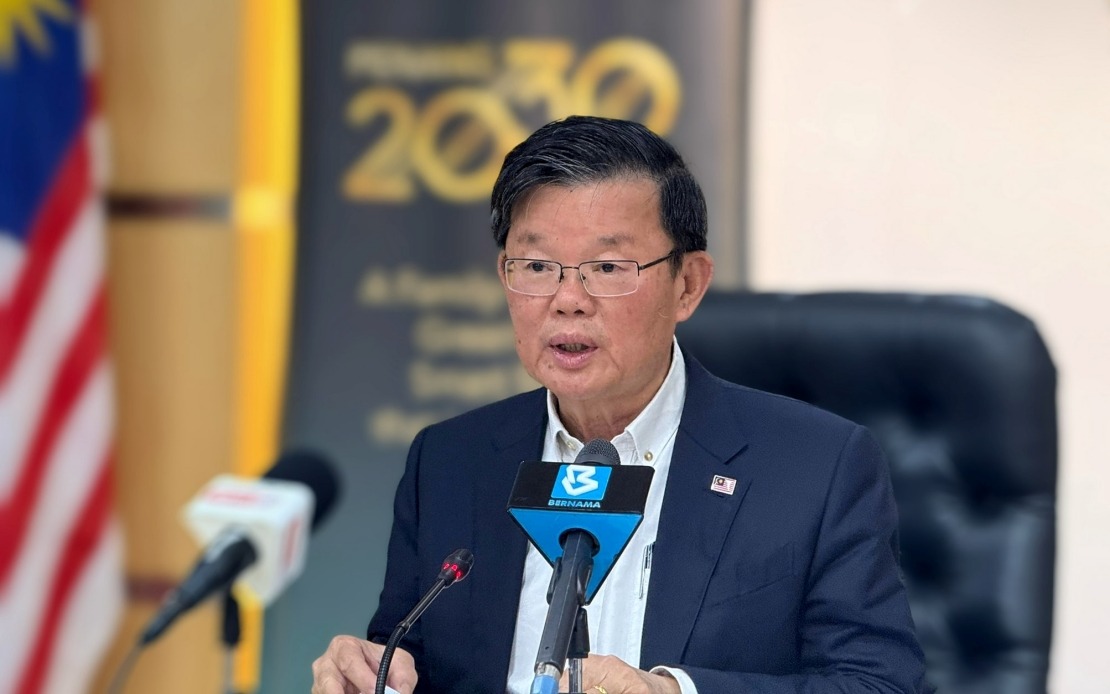
Penang's ambition to establish itself as a financial powerhouse in Southeast Asia has taken a concrete step forward with the appointment of PricewaterhouseCoopers Advisory Services Sdn Bhd to chart the course for the Penang International Financial Centre (PIFC). Chief Minister Chow Kon Yeow announced that the PIFC Special Task Force Committee formally approved PwC's engagement, with the appointment letter issued in mid-June and a 20-week timeline to deliver three critical documents that will form the initiative's intellectual scaffolding.
The scope of PwC's assignment is ambitious and multifaceted. Beyond preparing a White Paper that articulates the strategic logic and regulatory environment for PIFC, the consultancy must also develop a comprehensive Strategic Blueprint and Action Plan detailing governance structures, physical and digital infrastructure requirements, fiscal incentives, and a phased rollout schedule. This layered approach reflects Penang's determination to build a credible, implementable proposition rather than announcing aspirations without substance.
What distinguishes this effort from generic financial centre promotion is its deliberate anchoring to Penang's existing economic foundations. According to preliminary findings presented at the task force's July 17 meeting, the PIFC concept builds squarely upon the state's established dominance in the global electrical and electronics supply chain. Rather than attempting to create a financial sector in isolation, planners recognize that a viable international financial centre should emerge organically from where real economic activity already concentrates, lending the initiative credibility among both investors and regulators.
The strategic opportunity extends well beyond finance itself. Penang's leadership sees the PIFC as a catalyst for driving innovation and value-addition across related industries—software development, fintech, advanced manufacturing logistics, and supply chain financing all represent natural extensions of the state's electronics ecosystem. By positioning financial services as an enabler of these adjacent sectors rather than as an end unto itself, Penang distinguishes its proposal from commodity financial centre models that have struggled globally in an era of digital disruption and regulatory consolidation.
Stakeholder engagement emerges as a critical pillar of PwC's mandate, reflecting hard-won lessons from financial centre development elsewhere in Asia. The consultancy has been explicitly tasked with convening strategic partners, both domestic and international industry representatives, regulators, academic institutions, and other relevant parties. This inclusive approach serves multiple purposes: it surfaces practical constraints early, builds constituency support, identifies regulatory hurdles before they become insurmountable obstacles, and ensures alignment between Penang's ambitions and Malaysia's broader technology ecosystem strategy—a particularly important consideration in a federal system where national coordination determines viability.
The timeline compressed into the 20-week window suggests genuine urgency. The state government originally targeted completion of the White Paper by end-July or early August, indicating these are not theoretical exercises but documents intended to animate decision-making and mobilise capital. Penang's leadership understands that in the competitive landscape of financial centre development, momentum matters; delays breed scepticism, and the window for first-mover advantage in positioning the Northern Region as a technology-finance hub may not remain open indefinitely.
From a regional perspective, Penang's initiative addresses a genuine gap in Southeast Asia's financial infrastructure. While Singapore dominates as the region's undisputed financial centre, the vast growth markets of Malaysia, Thailand, Indonesia, and Vietnam remain underserved by infrastructure specifically designed to finance technology-driven enterprises. A credible PIFC could position Malaysia as an alternative node within Southeast Asian financial networks, particularly appealing to companies and investors seeking regulatory efficiency, lower cost of capital deployment, and proximity to major supply chain concentrations in the region.
Chow Kon Yeow's framing emphasizes the initiative's role in catalysing a technology-driven financial ecosystem rather than simply replicating conventional banking functions. This distinction is crucial. Legacy financial centres built around foreign exchange trading or securities settlement increasingly face structural headwinds from automation and regulatory consolidation. A purpose-built financial centre explicitly oriented toward funding innovation, managing supply chain finance, and supporting the digital economy has far greater resonance with long-term macroeconomic trends shaping Southeast Asia's development trajectory.
The involvement of PwC—a firm with extensive experience in financial centre feasibility and regulatory framework design across multiple jurisdictions—signals Penang's commitment to international credibility standards. PwC's reputation and networks can validate the proposal's viability to both institutional investors and supranational regulators, while its global perspective ensures the final documents reflect best practices and avoid provincial dead-ends. This choice of consultant arguably matters as much as the strategic direction itself, as skeptical external investors will weigh heavily the quality and independence of underlying technical analysis.
For the Malaysian federation, Penang's PIFC initiative represents a calculated bet that geographic agglomeration and industrial complementarity can generate competitive advantage even within a country already home to a global financial centre. Rather than viewing Singapore's dominance as final, Penang's strategy assumes that specialization and focus on particular segments—technology finance, supply chain innovation, electronics ecosystem support—can carve out defensible niches. This philosophical posture differs markedly from earlier Malaysian approaches that often attempted full-service imitation of established financial centres.
The coming months will test whether PwC's analysis yields a genuinely distinctive and implementable vision or produces a document that, however professionally executed, fails to articulate a compelling reason for international capital to engage with Penang's offering. The preliminary findings suggesting alignment with the E&E supply chain provide a promising foundation, but converting that foundation into regulatory frameworks, institutional arrangements, and incentive structures that attract sustained international participation represents a far more demanding proposition. Success requires not just a sound strategic vision but the political coherence and administrative capacity to execute it—qualities that remain the true scarcity in Malaysia's development landscape.

