Penang's water authority has unveiled an ambitious infrastructure programme to address surging demand in Seberang Perai Selatan, announcing plans for a new 80 million litres-per-day treatment facility by 2027. The Penang Water Supply Corporation (PBAPP) is racing to keep pace with rapid industrial and residential development in the southern district, where consumption has climbed to approximately 116.8 MLD across 87,611 registered users in 2025. This represents a substantial 13.5 per cent of Penang's total water usage, and projections suggest demand will balloon significantly over the next several years.
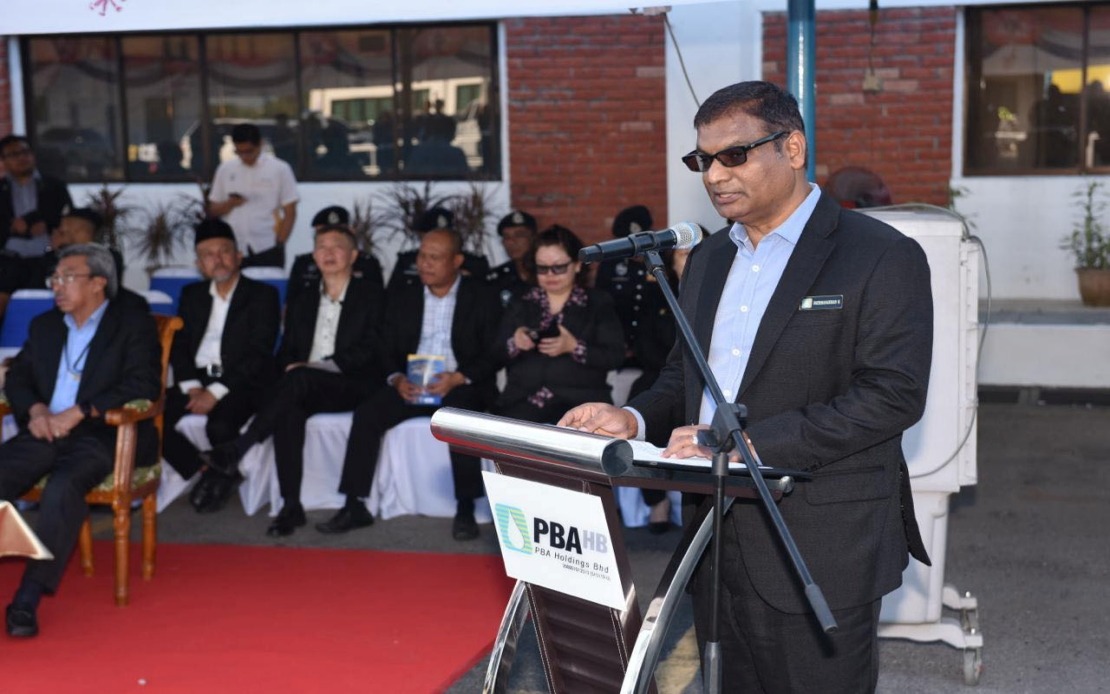
PBAAPP Chief Executive Officer Datuk K. Pathmanathan outlined the three-phase strategy during an announcement in George Town. The corporation will develop the new facility under a Build-Operate-Transfer model, drawing raw water from Sungai Kerian to produce treated supplies for the district. The executive positioned this 80 MLD plant as a critical medium-term intervention, designed to bridge the gap between current capacity and future needs driven by population expansion and aggressive industrial diversification in the region. The company currently operates a smaller RM8.1 million compact treatment facility that has been functional since March 2024, generating up to 6.4 MLD and serving approximately 4,000 users over a temporary three-year period.
The scale of anticipated demand becomes clearer when examining the major projects already underway or in advanced planning stages across Seberang Perai Selatan. The RM2.2 billion Batu Kawan Industrial Park 3 development alone will sprawl across 165 hectares and is projected to require around 220 MLD by the 2030s. Simultaneously, residential and mixed-use developments including SkyWorld Cassia continue to materialise, while major semiconductor manufacturing capacity through Siliconware Precision is poised to dramatically reshape the district's industrial footprint. These competing demands for water have compelled authorities to develop a layered response rather than relying on any single infrastructure project.
The PBAPP strategy extends beyond the 80 MLD facility set for 2027. By 2030, the corporation expects to bring online the Sungai Kerian LRA with 114 MLD capacity as part of the Water Contingency Plan 2030. This facility will provide additional buffer capacity to ensure supply stability continues despite economic volatility or unexpected consumption spikes. The staggered approach reflects lessons learned in water management across the region, where single-point infrastructure failures have occasionally disrupted supply to industrial and residential users. By distributing capacity across multiple facilities and water sources, PBAPP intends to create a more resilient network that can absorb operational disruptions without compromising supply to critical users.
The most transformative element of the plan emerges by 2031, when the Perak-Penang Water Project is expected to commence operations. This inter-state initiative will channel between 300 and 500 MLD of treated water from Perak into Seberang Perai Selatan while simultaneously supporting Seberang Perai Tengah. The magnitude of this supply augmentation cannot be overstated—it represents a quantum leap in available water resources, effectively tripling or quadrupling the supply available from current sources. For the broader Penang economy, this project signals confidence that water scarcity will not become an artificial brake on growth and development during the critical decade ahead.
Datuk Pathmanathan framed the investment programme within Chief Minister Chow Kon Yeow's broader vision for sustainable and resilient water infrastructure. Rather than treating water supply as a constraint on development, the administration is positioning reliable water access as a prerequisite for attracting investment and sustaining socio-economic expansion. This philosophy marks a departure from previous eras when water limitations occasionally forced difficult choices between competing demands from agricultural, industrial, and residential users. By substantially expanding supply capacity ahead of peak demand, PBAPP is attempting to avert the chronic shortages that have periodically affected other Malaysian states.
The timing of these announcements reflects growing awareness within government circles that Penang's manufacturing base cannot be taken for granted. Competition from other Southeast Asian states for semiconductor fabrication, precision electronics, and petrochemical investments has intensified. Water security represents one of several factors that multinational corporations evaluate when deciding where to establish major facilities. A government that can credibly guarantee uninterrupted water supply at competitive rates enjoys a significant advantage in attracting such investments. PBAPP's announcements effectively constitute a public commitment to international investors that Penang will not experience the water constraints that might force production curtailments or impose premium pricing.
The financial implications of this strategy merit attention for Malaysian policymakers across other states. The infrastructure costs involved in the 80 MLD plant, the Sungai Kerian expansion, and the Perak-Penang Water Project run into hundreds of millions of ringgit. These expenditures occur against a backdrop of competing demands for state government resources in healthcare, education, and transportation. Yet PBAPP's willingness to commit substantial capital reflects a calculation that the economic returns from sustained industrial growth will ultimately exceed the upfront infrastructure investments. Whether this gamble proves justified will become apparent over the next decade as these facilities come online and serve growing demand.
The reliance on Sungai Kerian as a primary water source across multiple facilities raises questions about sustainability and climate resilience. While the river has historically provided reliable supply, Malaysia's monsoon patterns have grown increasingly unpredictable in recent years, with prolonged dry spells occasionally straining water supply across northern states. PBAPP's decision to supplement this source with Perak-originated supplies by 2031 suggests recognition that no single source can be considered entirely secure. The geographic diversification embedded in the strategy—drawing from both Penang and Perak sources—provides a hedge against regional drought or temporary reductions in any single river's flow.
Industrial users in Seberang Perai Selatan, who collectively consume a disproportionate share of available supply, will likely view these announcements with cautious optimism. The expanded capacity should reduce competitive pressure among users and potentially stabilise tariffs over the medium term. However, the corporation will need to carefully manage pricing to recover the substantial capital invested while remaining competitive relative to other Malaysian locations. Manufacturers considering Penang as a potential investment site will scrutinise both the promised water availability and the rate structures PBAPP applies to large industrial consumers. The corporation's ability to balance cost recovery with economic competitiveness will partly determine whether the investment successfully attracts the industrial growth that justifies the expenditure.
For the broader Malaysian context, Penang's approach to water infrastructure offers both lessons and cautionary notes. The state has demonstrated the willingness to make long-term infrastructure commitments based on realistic demand projections rather than waiting for supply crises to force reactive responses. This proactive planning contrasts sharply with other regions where water bottlenecks have occasionally stalled development. Conversely, the enormous capital outlays required raise questions about fiscal sustainability and the opportunity costs of competing priorities. Whether other Malaysian states will adopt similar strategies depends partly on whether Penang's calculated investment in water security demonstrably succeeds in attracting and retaining the industrial base it anticipates.

