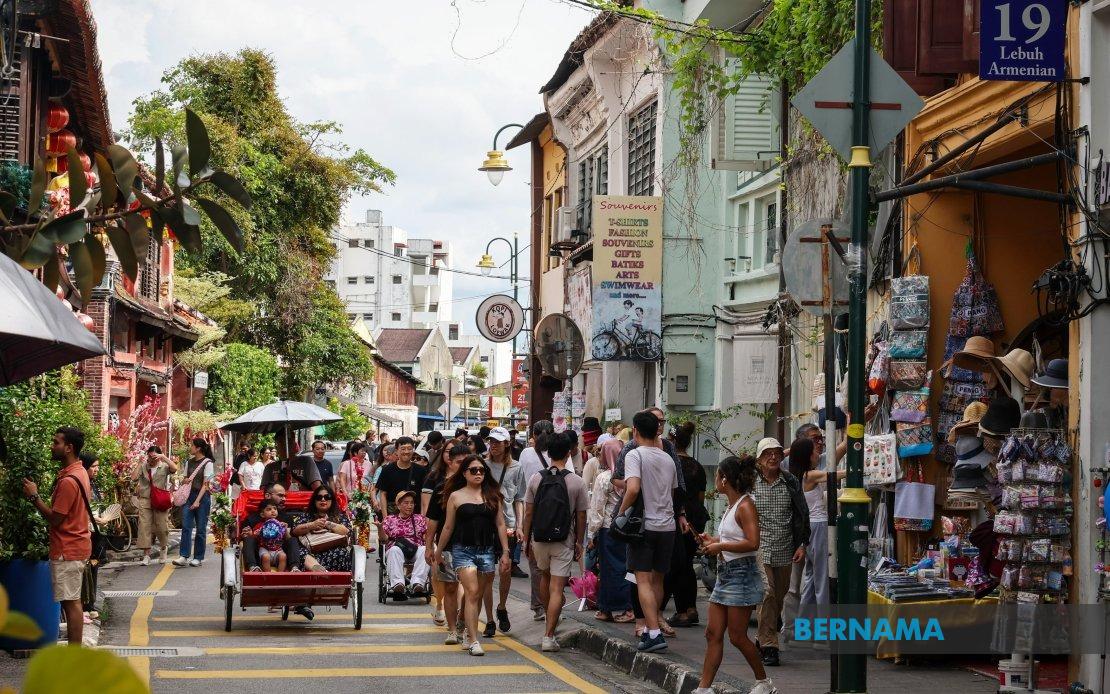
Penang's state government has initiated a comprehensive safety review of its heritage building stock following a structural failure on Armenian Street in George Town that left two foreign visitors injured. The incident, which saw wooden beams and concrete debris cascade from a heritage shophouse, has prompted authorities to rethink how the state balances preservation imperatives with the fundamental need to protect public safety in its iconic World Heritage district.
The collapse occurred with little warning, affecting two Sri Lankan tourists identified as Mohamad Ammtar, aged 66, and Fatimah, aged 55. Both received emergency treatment at the scene before being transported to Penang Hospital for further care. Preliminary investigations attributed the structural failure to termite infestation that had compromised the wooden components of the building, a common vulnerability affecting older structures throughout the historic enclave. The male victim was subsequently discharged after treatment, while his companion underwent further diagnostic imaging to assess the full extent of her injuries.
Jason H'ng Mooi Lye, the state's Local Government and Town and Country Planning Committee chairman, announced that Penang would collaborate with the National Heritage Department to engage an independent structural engineer. This specialist will undertake a systematic evaluation across all heritage properties in the state, identifying buildings that present immediate safety risks or require urgent intervention. The scope of this assessment reflects the scale of the challenge facing George Town, which contains hundreds of buildings designated for heritage protection, many of which have not been subject to modern safety evaluations.
The findings from this engineering study will form the basis for enforcement action by the Penang Island City Council, which retains authority to issue formal notices to building owners. These directives will mandate restoration and repair works necessary to bring identified structures into compliance with contemporary safety standards. This regulatory approach acknowledges that voluntary compliance has proven insufficient to address the deterioration affecting many properties in the heritage district, where economic constraints and unclear ownership have sometimes hindered maintenance.
H'ng articulated a nuanced position on heritage conservation that recognises the tension between authenticity and safety. While he acknowledged that restoration efforts must strive to retain original architectural features and materials characteristic of George Town's built heritage, he advocated for pragmatic substitution when original materials prove unsuitable for modern conditions. Wood, which features prominently in many 19th-century shophouses, presents particular challenges as it remains vulnerable to biological degradation from termites and wood-boring organisms. Modern durable alternatives that can replicate the visual appearance of original materials without compromising structural integrity may offer a viable middle path.
The incident has prompted coordinated action across multiple government bodies responsible for tourism and heritage stewardship. Wong Hon Wai, chairman of the State Tourism and Creative Economy Committee, confirmed that both George Town World Heritage Incorporated and the Penang Island City Council have been directed to issue public advisories to owners of heritage properties. This communication strategy aims to raise awareness among the building-owning community about their maintenance obligations and the legal consequences of allowing structures to deteriorate to dangerous conditions.
For Malaysia's tourism sector, which derives significant revenue from heritage attractions, the Armenian Street incident carries broader implications. George Town's status as a UNESCO World Heritage Site represents one of Southeast Asia's most distinctive cultural and architectural assets, drawing international visitors who expect to move safely through the historic streetscape. Any repeated incidents risking visitor safety could damage the destination's reputation and deter the premium tourism market that sustains local businesses dependent on heritage tourism.
The termite damage that precipitated this collapse underscores a persistent challenge affecting heritage buildings throughout tropical Southeast Asia. Unlike temperate climates where wood-destroying organisms operate seasonally, Malaysia's year-round warm and humid environment provides ideal conditions for termite colonies and other destructive organisms to thrive. Heritage building owners must implement systematic pest management protocols as routine maintenance, yet many lack the technical knowledge or financial resources to do so effectively.
Penang's decision to commission an independent structural assessment through a collaborative arrangement with the National Heritage Department represents a sensible allocation of responsibility that combines technical expertise with heritage protection mandates. However, the effectiveness of this initiative will ultimately depend on implementation capacity and the resources available for remedial works. Building owners facing expensive repairs may resist compliance notices, potentially leading to protracted disputes that slow the restoration process.
The incident also raises questions about liability and accountability in cases where heritage building neglect results in public injury. The current regulatory framework places primary responsibility on property owners, yet enforcement mechanisms are often constrained by limited local authority resources and competing municipal priorities. Establishing clearer liability standards and providing targeted financial incentives for heritage building maintenance could accelerate compliance and reduce the risk of future incidents.
Looking forward, Penang's experience offers lessons for other Southeast Asian jurisdictions managing substantial historic precincts. A proactive, systematic approach to safety assessment, combined with flexibility regarding materials and methods, appears more sustainable than passive regulatory oversight. The state's commitment to completing a comprehensive study within a defined timeframe, coupled with willingness to consider modern alternatives for failed original materials, suggests a government attempting to navigate the complex intersection of heritage preservation, public safety, and economic sustainability that characterises conservation in the modern era.
For Malaysian property owners with heritage-listed buildings, the Penang initiative signals that government scrutiny of maintenance standards is intensifying. State and federal heritage authorities are moving beyond advisory approaches toward more assertive enforcement, meaning owners can no longer assume that nominal preservation of original features will satisfy official requirements if structural safety remains compromised. The Armenian Street incident has effectively elevated heritage building maintenance from an aesthetic concern to a public safety imperative that carries legal and financial consequences.

