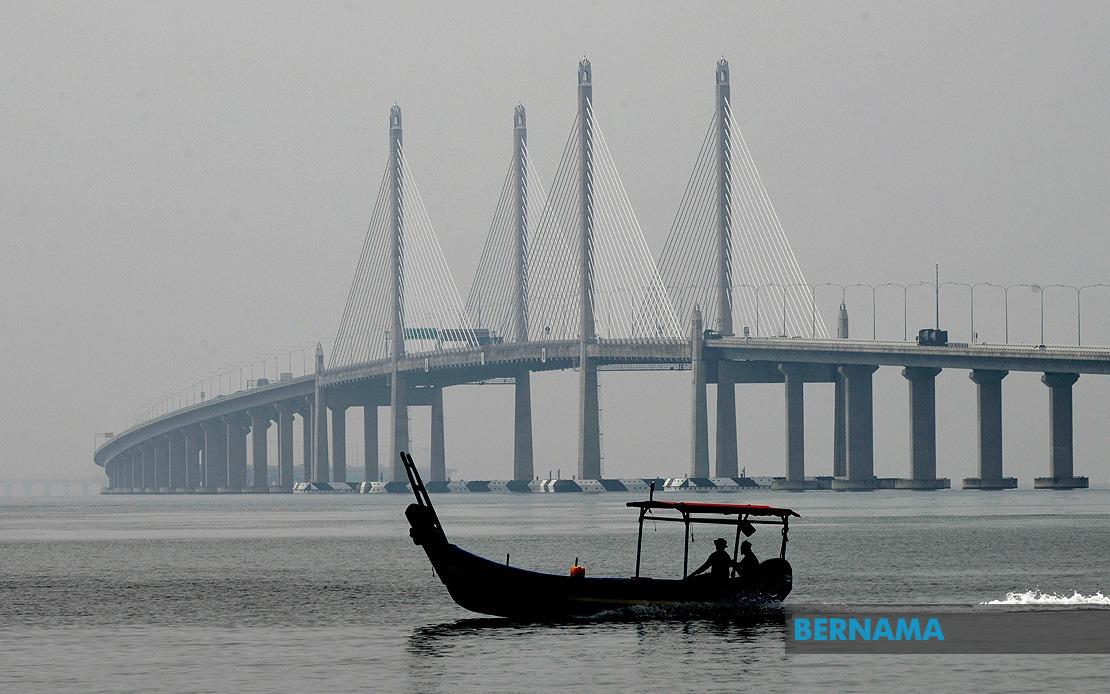
The Penang state government is preparing to navigate a delicate policy tension between safeguarding critical infrastructure and protecting the economic interests of maritime workers. Datuk Rashidi Zinol, chairman of the Rural Development, Agro-technology and Food Security and Entrepreneurship Committee, announced plans for comprehensive discussions with stakeholders to chart a workable path forward on the contentious issue of fishing restrictions beneath the Penang Bridge and the Sultan Abdul Halim Mu'adzam Shah Bridge. These consultations, scheduled for the following week, aim to develop what officials describe as a balanced framework that honours both security imperatives and community welfare.
The backdrop to this initiative involves the designation of waters beneath both bridges as restricted zones under national security legislation. These areas fall under the Protected Areas and Protected Places Act 1959, rendering them National Key Points with heightened protective protocols. The regulatory framework reflects longstanding counterterrorism and infrastructure protection measures intended to prevent unauthorised activities that could jeopardise the structural integrity or operational security of these vital transport corridors. For Penang's maritime economy, however, these designations have translated into operational constraints that ripple across multiple sectors.
Both tourist boat and fishing boat operators raised their concerns directly with state leadership, presenting a compelling case for policy recalibration. These maritime entrepreneurs reported that the enforcement of fishing bans has substantially contracted their business operations and demand for their services. The repercussions extend well beyond the operators themselves, creating what economists call upstream and downstream economic effects throughout interconnected supply chains. Equipment suppliers, ice manufacturers, food processors, and numerous small enterprises dependent on fishing sector activity have experienced corresponding revenue declines.
Rashidi's acknowledgement of these broader economic ramifications signals governmental recognition that blanket restrictions, while straightforward to administer, may carry disproportionate costs for particular communities. The committee chairman framed the upcoming discussions as an opportunity to examine the policy through multiple lenses simultaneously: maintaining safety standards, ensuring regulatory compliance, and preserving viable livelihoods for affected workers and small business owners. This multidimensional approach reflects a more sophisticated understanding of the trade-offs inherent in security policy implementation.
For Malaysian policymakers beyond Penang, this situation underscores a recurring challenge in balancing competing public goods. Infrastructure protection remains genuinely essential, particularly for assets as strategically important as major bridge corridors. Yet rigid application of security measures without consideration for economic consequences can generate backlash, undermine community cooperation with authorities, and create hardship without proportionate security gains. The Penang administration appears to recognise that stakeholder buy-in for security measures improves when legitimate livelihood concerns receive serious consideration.
The fishing and tourism sectors contribute meaningfully to Penang's economy and employment landscape. Restricting access to traditionally productive fishing grounds eliminates income sources that many households have relied upon for generations. The region's maritime heritage and fishing traditions represent cultural capital as well as economic assets. Communities with deep roots in these industries face particular difficulty adapting to sudden operational restrictions, especially when alternative employment options remain limited in their geographic areas.
The upcoming consultations will need to grapple with several practical questions. Can designated windows for fishing activity be established that accommodate operational needs while maintaining security? Might alternative zones nearby provide comparable productivity without compromising sensitive infrastructure? Could enhanced monitoring protocols permit controlled access under specific conditions? These technical questions require input from security specialists, fisheries experts, maritime engineers, and affected communities working collaboratively rather than in opposition.
The international context provides instructive examples of how nations manage comparable tensions. Many countries maintain restricted zones around critical infrastructure yet employ nuanced approaches that distinguish between genuine security threats and routine civilian maritime activities. Risk-based protocols, time-limited access windows, and community liaison mechanisms represent tools that other jurisdictions have deployed with measurable success. Whether such models could translate effectively to Penang's particular circumstances warrants serious exploration during the announced discussions.
For Southeast Asian policymakers more broadly, the Penang situation illustrates how globalisation and security consciousness have reshaped traditional economic activities. Fishing communities throughout the region face analogous pressures as maritime security regimes proliferate. The solutions developed in Penang could offer relevant lessons for similar challenges elsewhere in the region, particularly in areas where strategic infrastructure passes through established fishing zones or where maritime heritage industries have long historical presence.
The tenor of Rashidi's public statements suggests that state leadership intends these discussions to produce substantive outcomes rather than performative gestures. The acknowledgement of supply chain impacts beyond immediate operators, coupled with explicit commitment to seeking balanced approaches, indicates a willingness to examine creative solutions. Success will depend partly on whether security agencies demonstrate flexibility in reconceptualising how safety objectives might be achieved through means less economically disruptive than comprehensive prohibitions.
Weeks ahead will prove pivotal in determining whether Penang can develop a framework that genuinely accommodates multiple legitimate interests or whether security considerations will ultimately prevail with limited concessions to livelihood concerns. The resolution matters not merely for the immediate stakeholders affected but for how Malaysian governance approaches the recurring challenge of threading needles between security imperatives and economic welfare. Maritime communities throughout the nation will watch closely to see whether this case establishes precedent for inclusive policymaking or reinforces perceptions that security logic automatically trumps livelihood considerations.

