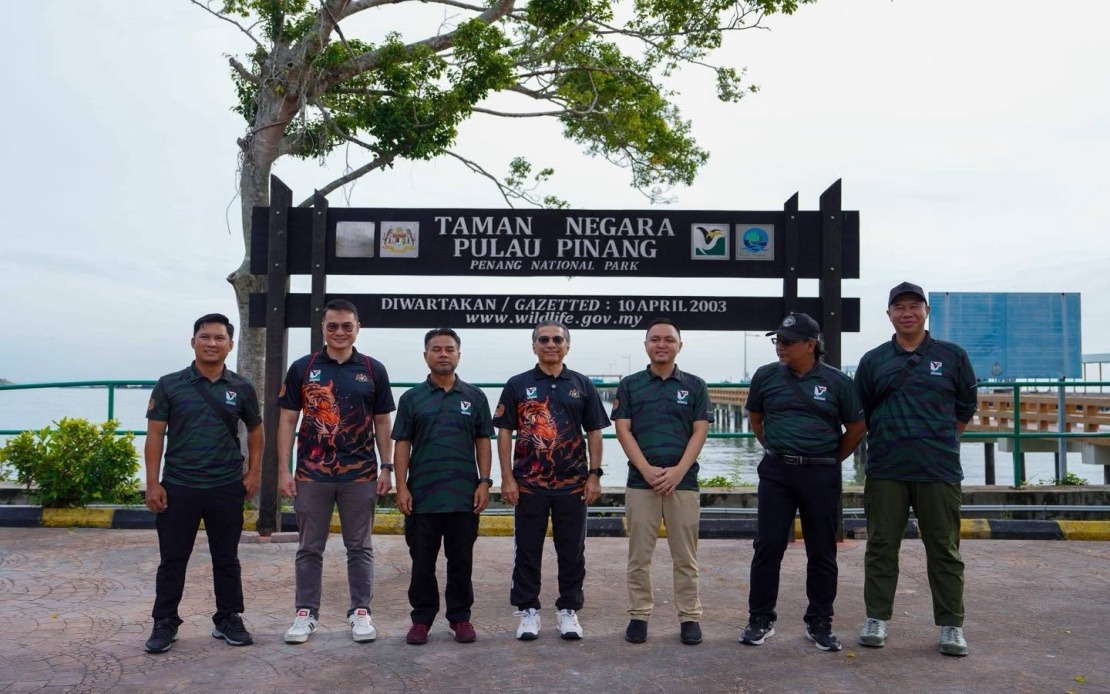
Penang National Park's complex ecosystem—spanning tropical forests, mangrove coastlines, wildlife sanctuaries and the rare meromictic lake at Teluk Bahang—faces mounting pressure from development and human activity. Yet preserving this natural asset hinges not simply on restricting access but on fundamentally reshaping how Malaysians understand and value biodiversity, according to Deputy Minister of Natural Resources and Environmental Sustainability Syed Ibrahim Syed Noh, who recently toured the park's conservation operations.
During his inspection visit, Syed Ibrahim emphasized that environmental stewardship cannot succeed when confined to government agencies and scientists working in isolation. Instead, he argued, effective conservation demands that ordinary Malaysians—particularly younger generations—develop genuine connections with nature and understand why protecting forests, beaches and wildlife matters beyond abstract environmental principles. This philosophy represents a notable shift from traditional command-and-control conservation models that have often alienated local communities from resource management decisions affecting their regions.
The Turtle Conservation Centre at Kerachut Beach exemplifies this integrated approach. Managed by the Department of Fisheries Malaysia, the facility protects Green Turtles and Olive Ridley Turtles during critical nesting seasons whilst simultaneously welcoming visitors to observe conservation work directly. Rather than treating the centre as merely a breeding facility, programme designers have recognised that allowing public engagement transforms casual observers into advocates. When visitors witness researchers protecting turtle eggs or witness hatchlings returning to the ocean, emotional connections form that text-based environmental education rarely achieves.
The meromictic lake represents another dimension of Penang's ecological value requiring explanation and protection. This geological curiosity—where freshwater and saltwater layers remain permanently separated rather than mixing—demonstrates the intricate interconnections within a single natural system. Understanding such phenomena helps communities appreciate that ecosystems are not random collections of trees and animals but precisely balanced networks where disrupting one element cascades through others. Syed Ibrahim's deliberate inclusion of the meromictic lake in his tour itinerary signals that conservation messaging must address the specific, unique characteristics distinguishing Penang's natural heritage.
Entopia Penang's educational initiatives represent another conservation strategy gaining traction across Southeast Asia. By offering interactive, direct experiences rather than relying on pamphlets or lectures, such facilities accommodate how contemporary visitors—especially children and teenagers accustomed to digital engagement—actually absorb information. When individuals can observe insect behaviour firsthand or walk through reconstructed habitats, learning becomes memorable rather than perfunctory. This educational approach positions conservation as an experience rather than a restriction, fundamentally altering public perception.
Responsibly managed ecotourism emerges in Syed Ibrahim's statements as a potential bridge between preservation and economic activity. This concept directly addresses a persistent tension in Malaysian environmental policy: how to maintain natural areas when surrounding communities depend on extracting resources for income. If properly designed, ecotourism generates revenue streams that reward local stakeholders for maintaining forests and wildlife rather than harvesting them unsustainably. A boatman guiding tourists through mangroves earns income only if those mangroves remain intact, creating alignment between economic interest and conservation outcome.
Yet ecotourism carries substantial risks if inadequately regulated. Poorly managed visitor flows can damage sensitive habitats, disturb nesting turtles or compact soil in ways that prevent forest regeneration. The Malaysian example must therefore incorporate strict carrying capacity limits, mandatory environmental impact assessments and penalties for operators who prioritise short-term revenue over long-term ecosystem health. Countries throughout Southeast Asia have learned difficult lessons about ecotourism degrading the very attractions it exploits.
For Malaysia broadly, Penang's conservation model reflects evolving understanding that biodiversity protection requires moving beyond fortress conservation—the approach of simply creating protected areas and excluding human activity. Instead, contemporary conservation recognises that expanding populations and limited land area mean humans and nature must increasingly coexist. The practical question becomes not whether coexistence occurs but whether it happens destructively or sustainably. Community engagement and education represent crucial mechanisms for steering toward sustainable coexistence.
The Ministry of Natural Resources and Environmental Sustainability's emphasis on grounding conservation in field realities suggests growing awareness that top-down, centralised environmental management often fails. When policies are designed without consulting affected communities or incorporating local ecological knowledge, implementation suffers and resentment accumulates. Conversely, when conservation approaches arise from genuine dialogue between scientists, government officials, local residents and business operators, compliance improves and innovation accelerates as stakeholders feel ownership over outcomes.
Penang's geographic position as a major population centre and tourism destination creates particular urgency for innovative conservation approaches. Unlike remote protected areas where human presence remains minimal, Penang National Park exists within a densely populated island where economic development continuously encroaches. This context makes community education and ecotourism not merely supplementary conservation tools but fundamental necessities. Without building broad-based commitment to preservation among Penang residents and visitors, legal protections alone will prove insufficient against mounting development pressure.
The intergenerational framing that Syed Ibrahim repeatedly invoked—the concept of environmental stewardship as passing intact heritage to descendants—reflects values increasingly prominent in Malaysian environmental discourse. Younger Malaysians demonstrate greater concern about climate change and biodiversity loss than previous generations, suggesting receptiveness to conservation messaging that emphasises long-term sustainability. Leveraging this generational shift requires institutions like Entopia Penang and the Turtle Conservation Centre that make conservation tangible and personally meaningful rather than distant and abstract.
Moving forward, Penang's experience offers lessons applicable across Malaysia's diverse ecosystems. Whether addressing mangrove loss in Selangor, orangutan habitat fragmentation in Sarawak or coral bleaching in Sabah, the fundamental principle remains constant: lasting conservation depends on communities understanding why natural areas matter and feeling invested in their protection. Government policies and protected area designations establish necessary frameworks, but genuine preservation emerges only when millions of individual Malaysians choose to value and defend biodiversity as integral to national identity and personal wellbeing.

