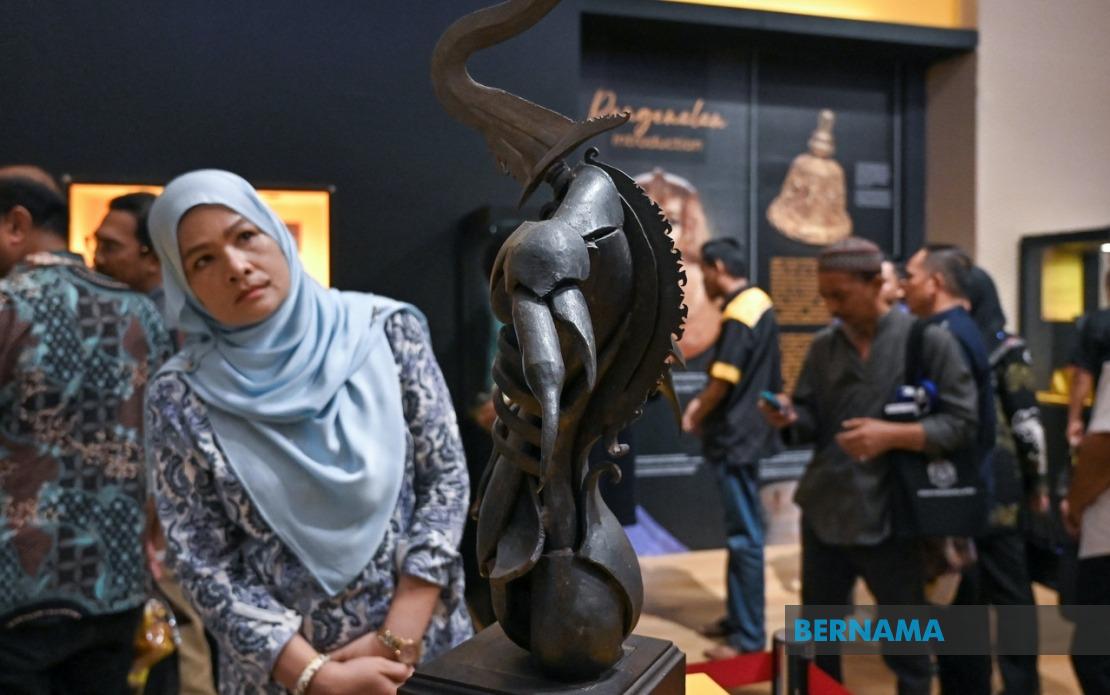
Taiping's Perak Museum has launched a major cultural initiative with the opening of 'Magic and Metal: Spirit, Power and Art', an ambitious exhibition that draws together 140 metal heritage treasures spanning centuries of Malay artistic and historical achievement. The showcase, running from June through December 31, represents a watershed moment for Malaysian museum curation, bringing together for the first time the institution's early metal-based collections in a thematic framework that explores the profound spiritual and symbolic dimensions embedded in these objects.
The curatorial approach adopted by the Perak Museum director Mohd Nasrulamiazam Mohd Nasir reflects a sophisticated understanding of how metalwork functioned within traditional Malay society. Rather than presenting the artefacts as mere decorative objects or historical curiosities, the exhibition organizes its 140 pieces around three interconnected concepts—spirit, power and art—that illuminate how metal was understood and deployed as a medium carrying mystical properties, social authority and aesthetic refinement. This thematic architecture allows visitors to appreciate not only the technical craftsmanship but also the worldview that animated these objects within their original cultural contexts.
The institutional reach of the exhibition extends well beyond the museum's own holdings. Strategic partnerships have enriched the display with significant loans from private collectors and heritage organizations, creating a more comprehensive narrative of Malay metallurgical traditions. Sculpture collections sourced from Raja Syahriman Raja Aziddin complement the museum's core acquisitions, while silver ornaments contributed by Yayasan Al-Amin and Malay weaponry from Nor Azahar Ibrahim's personal collection add layers of chronological and functional diversity to the exhibition's overall scope. This collaborative model represents contemporary best practice in heritage preservation, enabling institutions to mount ambitious displays while distributing curatorial responsibility and financial risk across multiple stakeholders.
Among the exhibition's most notable pieces are objects with direct connections to Perak's royal lineage and Southeast Asian history. A 19th-century Malay traditional weapon featuring an intricate snail-shell hilt once belonged to Sultan Abdullah Muhammad Shah II, the 26th ruler of Perak, and carries the weight of princely patronage and martial tradition. An 18th-century suit of Bugis warrior armor documents the cross-cultural exchange and military sophistication of the broader Malay archipelago during a period of significant regional upheaval. A silverware set—a spoon and fork—that belonged to Raja Laut Ibni Sultan Muhammad Shah, second son of Selangor's third sultan, reveals the refinement of daily material culture among the nobility and hints at the complex genealogical networks binding together the peninsula's historical kingdoms.
The exhibition's ambitious visitation target of 100,000 visitors by year's end reflects confidence in public interest and speaks to the growing appetite among Malaysian audiences for immersive cultural experiences. The nearly 20,000 visitors recorded in the initial weeks following the official opening by Department of Museums Malaysia director-general Datuk Kamarul Baharin A. Kasim suggest that this projection may be attainable, particularly given the exhibition's extended run through the final day of the year. For a regional museum competing for public attention in an era of digital entertainment, such numbers would represent a significant success and validate the investment in developing sophisticated thematic exhibitions.
Within the broader Malaysian museum landscape, this exhibition serves an important function beyond its immediate curatorial objectives. The Perak Museum's initiative demonstrates how regional institutions can position themselves as essential repositories of national heritage while also serving as platforms for research, knowledge dissemination and community engagement. By foregrounding the symbolic and spiritual dimensions of metalwork, the exhibition invites contemporary audiences to reconsider relationships between material culture, spirituality and historical identity—questions that resonate powerfully within Malaysia's multicultural society and growing interest in Indigenous and traditional knowledge systems.
The thematic emphasis on 'spirit, power and art' also suggests a curatorial intention to challenge Orientalist frameworks that have historically dominated Western scholarship on Asian material culture. By centering Malay epistemologies—the indigenous conceptual frameworks through which these objects were understood and valued—the exhibition asserts an intellectual sovereignty over the interpretation of local heritage. This approach aligns with contemporary global movements toward decolonizing museums and ensuring that communities maintain authority over how their cultural productions are presented and analyzed.
For Malaysian audiences, the exhibition offers an opportunity to engage with historical layers of national identity that often remain obscured by the contemporary focus on multiethnic harmony and modern development. The artefacts on display are material evidence of sophisticated kingdoms, refined artistic traditions and complex social hierarchies that predated European colonial presence in the peninsula. Such historical consciousness can enrich contemporary understanding of regional difference and cultural specificity while reinforcing the intellectual and aesthetic sophistication of pre-modern Malay societies.
The Department of Museums Malaysia's support for the exhibition, evident in the director-general's participation in the opening ceremony, signals official commitment to strengthening museums as repositories of knowledge and sites of heritage preservation. This institutional backing provides legitimacy and potentially facilitates future collaborations, acquisitions and conservation efforts that might otherwise be constrained by limited resources at the regional level. As Malaysian museums continue to evolve their roles within an increasingly competitive cultural marketplace, exhibitions like 'Magic and Metal' demonstrate how thoughtful curation and thematic coherence can create powerful educational and experiential value for diverse audiences.

