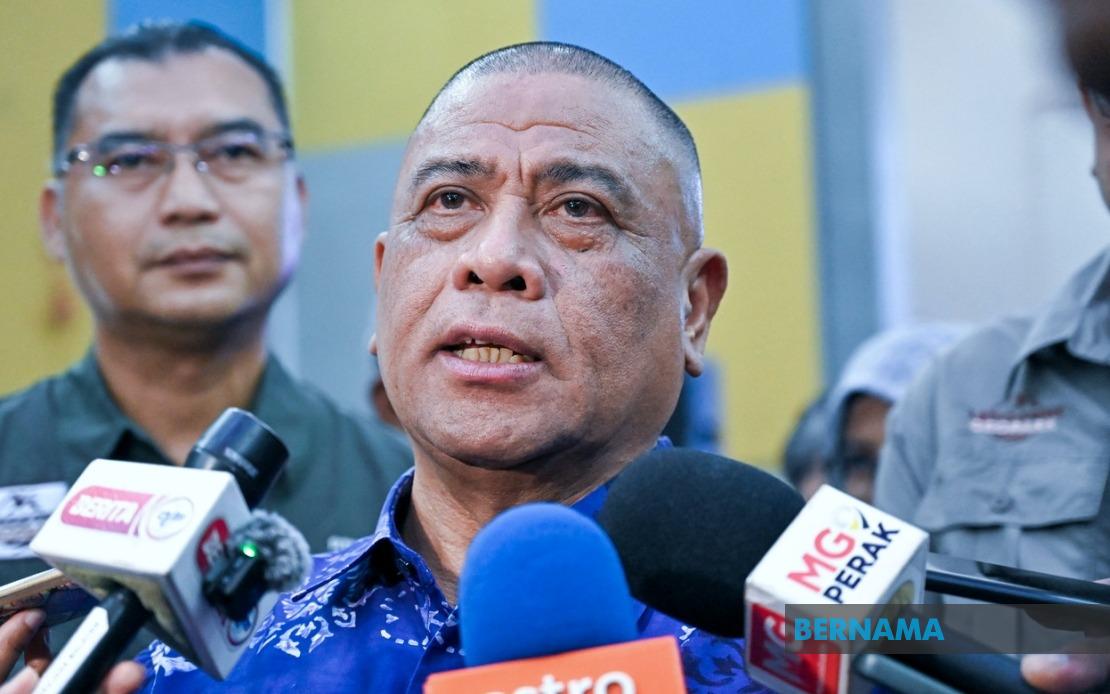
Perak's political leadership has assured the public that efforts to contain unorthodox Islamic teachings within the state remain effective, even as these movements increasingly exploit digital channels and transnational networks to amplify their message. Menteri Besar Datuk Seri Saarani Mohamad made this assertion in Ipoh on July 16, emphasising that state authorities maintain vigilant surveillance through established governance structures to prevent further proliferation of what officials characterise as doctrinally misaligned teachings.
The monitoring apparatus Saarani described involves multiple tiers of oversight, with the State Security Committee—which he chairs—serving as the coordinating body. Complementing this structure are the Perak Islamic Religious Department (JAIPk) and the office of the state Mufti, both of which feed intelligence and assessments to political leadership. This layered approach reflects broader concerns across Malaysian states about religious heterodoxy, though Perak's administration has positioned itself as proactive in tackling the phenomenon before it gains grassroots momentum.
Underscoring the significance of this governance approach, Sultan Nazrin Shah, who holds constitutional authority as Perak's head of religion, receives regular briefings on developments. Recent consultations involved Deputy Mufti Datuk Zamri Hashim and JAIPk Director Datuk Harith Fadzilah Abdul Halim apprising the Sultan of current situations and enforcement trajectories. This reporting line to royal leadership signals the seriousness with which state officials treat religious heterodoxy, reflecting Malaysia's constitutional framework where sultans function as custodians of Islamic orthodoxy within their realms.
At the federal tier, Minister in the Prime Minister's Department (Religious Affairs) Senator Datuk Zulkifli Hasan echoed concerns about the evolving challenge posed by unorthodox teachings. His remarks highlight a critical problem confronting Malaysian authorities: the shift in dissemination patterns from clandestine physical meetings to openly accessible digital spaces. This transition has fundamentally altered enforcement dynamics, requiring agencies to operate across platforms where traditional containment measures prove less effective.
The Department of Islamic Development Malaysia (JAKIM), operating in concert with state religious departments, has accordingly adjusted its methodology. Rather than focusing solely on raids and prosecutions of underground groups, authorities must now contend with teachings embedded within seemingly innocuous activities—personal development seminars, humanitarian projects, alternative wellness treatments, and informal religious study circles. This morphing of presentation formats presents operational difficulties for regulators seeking to distinguish between genuinely heterodox content and legitimate diversity of Islamic thought and practice.
The cross-border dimension adds further complexity to Perak's enforcement landscape. Teachings originating in other states or countries circulate instantaneously through messaging applications and social media networks, rendering geographic containment strategies largely obsolete. Malaysian authorities lack straightforward mechanisms to prevent international propagation of materials they deem problematic, creating asymmetries where suppression efforts domestically prove insufficient without corresponding interventions at regional and global scales.
Saarani indicated that investigative protocols remain in place to evaluate citizen complaints or concerns regarding teachings perceived as inconsistent with Islamic orthodoxy. The JAIPk and Mufti's Department process these reports according to established procedures before initiating formal enforcement action. This approach theoretically permits proportionate responses calibrated to genuine doctrinal concerns rather than blanket suppression, though critics argue ambiguity persists regarding what constitutes legitimate theological diversity versus actionable deviation.
The digital transformation of religious teaching dissemination poses particular challenges for JAKIM and state departments accustomed to physical-world enforcement. Groups operating virtual communities, streaming religious content, and maintaining encrypted communication networks can operate with relative opacity to authorities. The platform-mediated nature of this activity also complicates jurisdictional boundaries, as content flows across state and national frontiers beyond traditional enforcement reach.
For Malaysian businesses and civil society organisations, these regulatory efforts carry practical implications. Religious teaching classifications can influence operational environments, particularly for enterprises in education, publishing, telecommunications, and community services sectors. The broad characterisation of certain activities as potentially problematic—encompassing self-help programmes and wellness initiatives alongside explicitly religious content—creates residual uncertainty about which activities might attract scrutiny.
Perak's public assurance of control reflects broader Malaysian governmental communication strategy regarding religious matters, balancing transparency about emerging challenges with confidence statements designed to prevent public anxiety. The explicit acknowledgment of digital and cross-border dissemination suggests authorities recognise the problem's magnitude while maintaining that current institutional arrangements remain adequate for management.
The emphasis on Sultan Nazrin Shah's involvement and regular briefings underscores how Malaysian states integrate Islamic governance with political leadership, distinguishing this approach from secular regulatory models. The constitutional status of sultans as religious heads provides formal authority that potentially strengthens enforcement legitimacy among religiously observant populations, even where specific enforcement decisions might prove controversial.
Moving forward, Perak's framework appears to rely on sustained coordination between multiple agencies, maintained vigilance through digital monitoring capacity, and continued reporting to religious and political authorities. Whether this architecture sufficiently addresses challenges posed by rapidly evolving digital communication technologies and transnational doctrinal networks remains an open question for policymakers across Malaysia's states.

