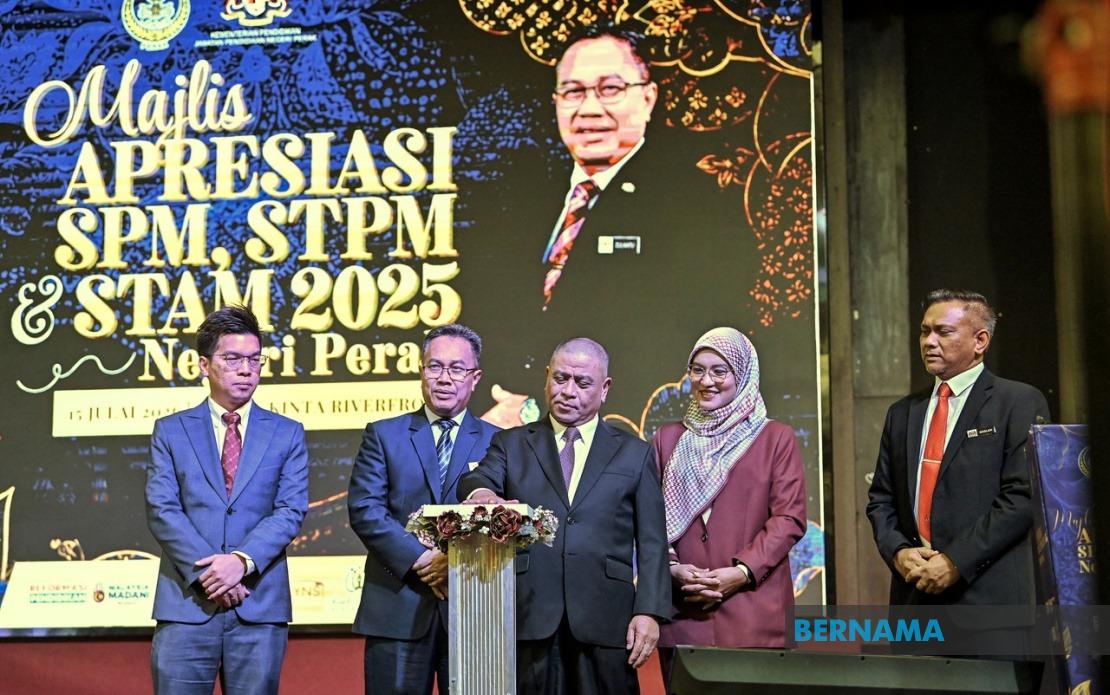
The Perak state government's Menteri Besar Scholarship programme continues to deliver measurable results for Malaysian students navigating the escalating costs of secondary and tertiary education. At a state-level appreciation ceremony held in Ipoh on July 15, education officials and scholarship recipients highlighted how financial assistance ranging from RM1,000 to RM1,200 per semester is reshaping educational opportunities across the state, particularly for families with modest incomes struggling to support gifted children through expensive examination preparation and university entry.
Yoong Lam, a 20-year-old recipient from Sekolah Menengah Kebangsaan Sultan Yussuff who achieved a perfect 4.00 cumulative grade point average in the Sijil Tinggi Persekolahan Malaysia (STPM), exemplifies the programme's impact. Her biannual RM1,200 allocation covers essential educational expenses including examination fees, reference materials, and supplementary tuition classes—costs that would otherwise compress household budgets. As the eldest of two children with a self-employed father shouldering family finances, Lam acknowledged that the scholarship meaningfully lightens domestic financial strain while enabling her to maintain focus on academic pursuits without the distraction of economic uncertainty.
The financial relief extends beyond individual recipients to broader family circumstances, particularly in middle-income households where educational aspirations collide with constrained resources. Muhammad Haziq Hafit, 19, a scholarship recipient from Al-Ulum Al-Syar'Iyyah Religious Secondary School in Bagan Datuk who achieved distinction in the Sijil Tinggi Agama Malaysia (STAM), views his RM1,000 assistance as crucial preparation for university entry at the University of Malaya. Similarly, Muhammad Taufiq Ikwan Mohammad Asri, also 19 and from the same institution, characterised the assistance as particularly meaningful for middle-income families, enabling him to accumulate necessities before pursuing further studies in Egypt.
Perak's educational infrastructure improvements have generated demonstrable results in recent examination performance. The state achieved a Grade Point Average of 4.49 for 2025 Sijil Pelajaran Malaysia (SPM) results, representing the strongest performance in thirteen years and marking three consecutive years of improvement. Critically, the achievement gap between urban and rural candidates narrowed to merely 0.04 points, suggesting that educational quality and excellence opportunities are becoming more equitably distributed across Perak's communities.
Menteri Besar Datuk Seri Saarani Mohamad attributed these gains partly to comprehensive support programmes extending beyond financial assistance. The Tuisyen Cikgu Saarani (TCS) Programme, spearheaded by Yayasan Perak in collaboration with the Perak State Education Department, has emerged as a significant intervention targeting students requiring additional academic guidance. The initiative prioritises mastery of core examination subjects through structured learning materials developed by experienced educators based on empirical analysis of state-specific student needs.
The TCS reference book component has achieved substantial distribution across Perak's schools. Educational authorities distributed 63,567 copies of supplementary SPM reference materials to secondary school candidates, directly benefiting approximately 25,000 students preparing for 2026 examinations. These materials emphasise conceptual understanding and examination technique development, addressing persistent gaps between high-achieving and struggling candidates across the state's diverse educational landscape.
Recognising religious education's importance within Malaysian secondary schooling, programme administrators have intentionally expanded the TCS initiative to tahfiz schools and religious institutions. Sekolah Menengah Tahfiz Darul Ridzuan and Sekolah Menengah Agama Rakyat students now access identical reference materials under supervision of the Perak Islamic Religious Department, ensuring religious scholars receive comparable support to conventional school counterparts. This expansion reflects understanding that educational excellence and support mechanisms should transcend institutional boundaries and religious distinctions.
Perak's approach demonstrates how targeted state-level intervention can simultaneously address financial barriers and academic performance gaps. By combining direct financial assistance for examination and university preparation costs with systematised academic support through curriculum-aligned reference materials, the state addresses both the immediate affordability crisis confronting low-to-middle income families and the broader pedagogical challenge of standardising educational quality across diverse school types and geographic locations.
The programme's significance extends beyond Perak's borders, offering insights for other Malaysian states managing comparable educational equity challenges. As Malaysian households navigate escalating education expenses—from tuition fees to examination preparation—state governments increasingly recognise that scholarships represent investments in human capital development with long-term economic implications. Recipients like Yoong Lam, Muhammad Haziq, and Muhammad Taufiq exemplify how removing financial obstacles enables talented students to channel energy toward academic achievement rather than household financial management.
However, the scholarship amounts, while meaningful, remain modest relative to university tuition fees and living expenses in Malaysia's major centres. Recipients and educational administrators implicitly acknowledge that the RM1,000 to RM1,200 allocations constitute partial support rather than comprehensive coverage, requiring families to contribute substantially and necessitating further support systems such as government loans, institutional financial aid, and parental investment. This limitation suggests that while Perak's scholarship initiative meaningfully addresses secondary education costs, comprehensive solutions to educational affordability demand integrated approaches spanning multiple support mechanisms and stakeholder contributions.
The programme's expansion to religious schools and tahfiz institutions reflects Perak's recognition that Malaysia's diverse educational ecosystem requires inclusive support strategies. Religious education streams, serving substantial student populations pursuing alternative career trajectories in Islamic scholarship and education, historically faced resource disparities compared to conventional schools. Extending systematic reference materials and recognition ceremonies to these institutions signals government commitment to educational equity across institutional boundaries, potentially encouraging stronger performance among historically underserved student populations.

