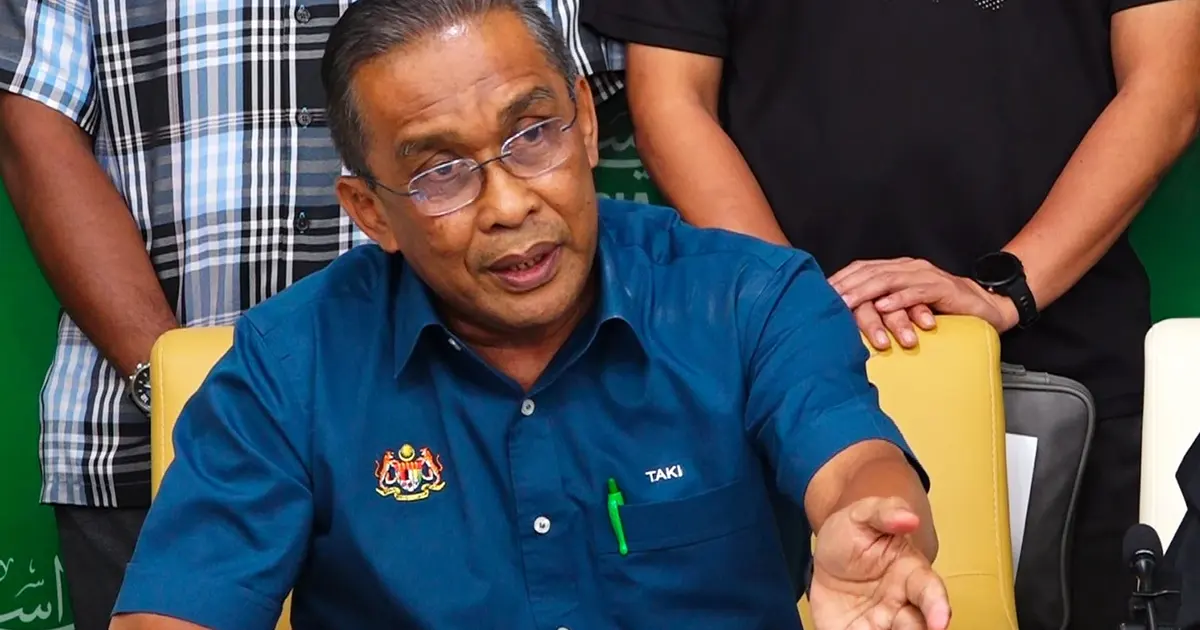
Perikatan Nasional secretary-general Takiyuddin Hassan has clarified that discussions between PN and Barisan Nasional over the upcoming Melaka state elections will proceed without Bersatu's participation, marking a significant development in Malaysian coalition politics and potentially reshaping the electoral landscape in the crucial southern state.
While negotiations have not yet formally commenced, Takiyuddin indicated that substantive talks are expected to take place in the coming weeks. The deliberate exclusion of Bersatu from these discussions signals deeper fractures within the broader PN alliance structure, which has been under considerable strain since the formation of the federal government in November 2022. This separation reflects the complex and shifting dynamics that have characterised Malaysian political coalitions over the past two years.
The distinction drawn between PN proper and Bersatu carries particular weight given that Bersatu has been a foundational member of the Perikatan alliance. By removing the party from these crucial state-level negotiations, PN leadership appears to be drawing a line between the broader coalition framework and individual party interests. This development suggests that PN's core components—principally PAS and Umno's breakaway faction under Muhyiddin Yassin—are charting a course that differs markedly from Bersatu's strategic positioning.
Melaka represents a battleground of significant symbolic and practical importance in Malaysian politics. The state has been pivotal in determining federal government stability and composition, with its state assembly serving as a barometer of coalition health. Recent years have witnessed multiple transitions of state government as different alliances have sought to secure its crucial seats. The exclusion of Bersatu from PN-BN discussions suggests that the two coalitions are exploring arrangements that might alter Melaka's political configuration without Bersatu's input or agreement.
For Barisan Nasional, engagement with PN carries strategic implications given that BN has been rebuilding its parliamentary influence since 2018. Melaka provides an opportunity to strengthen BN's position in a state where it has historical roots and existing organisational structures. The willingness of PN to negotiate bilaterally with BN on Melaka affairs indicates that pragmatic electoral considerations may be overriding broader coalition loyalty.
The timing of these discussions remains fluid, with Takiyuddin offering no specific timeframe beyond the coming weeks. This vagueness likely reflects ongoing internal consultations within both PN and BN camps, as various factions assess the political benefits and risks of potential agreements. Such negotiations in Malaysian politics typically involve complex trade-offs regarding seat allocations, candidate selection, and campaign strategies.
Bersatu's exclusion from these talks raises questions about the party's broader strategic position within Malaysian politics. Once a significant political force following the 2020 elections when it spearheaded the PN coalition, Bersatu has faced declining political fortunes and internal instability. By formally excluding the party from high-level negotiations between PN and BN, Takiyuddin's statement essentially confirms what has been an emerging reality: Bersatu's influence over major PN decisions has diminished considerably.
For Malaysian voters and observers tracking coalition developments, this shift underscores the fluid and transactional nature of contemporary political alliances in the country. Rather than durable organisational structures with consistent membership, coalitions increasingly function as flexible arrangements negotiated issue-by-issue and state-by-state. This pragmatism has advantages in enabling parties to secure electoral advantages, but it also contributes to voter uncertainty about stable governance frameworks.
The Melaka negotiations also carry implications for how Umno and PAS—the dominant PN components—are recalibrating their political strategies. Both parties have incentives to strengthen their positions ahead of the next general election, and state-level arrangements serve as important building blocks for federal negotiations. Discussions with BN may reflect attempts to create favourable electoral conditions while maintaining flexibility in larger national-level coalitions.
Meanwhile, Bersatu faces an important moment in determining its political future. The exclusion from these discussions may prompt the party to reassess its alignment with PN, potentially repositioning itself toward other coalitions or focusing its efforts on specific geographic constituencies. The party's response to this development will likely shape political alignments across multiple Malaysian states.
Observers expect that once formal negotiations begin, details will emerge regarding specific seat allocations and candidate arrangements for Melaka's electoral divisions. These negotiations typically involve detailed discussions about which party receives which seats, how resources are distributed, and what concessions each coalition partner agrees to make. The outcome could significantly influence Melaka's governance composition and potentially create precedents for negotiations in other states.
The broader context of Malaysian politics suggests that coalition partnerships will continue to evolve based on electoral calculations and power dynamics. The PN-BN-Bersatu configuration serves as another illustration of how traditional party loyalties have given way to more fluid political arrangements driven by immediate strategic interests. Understanding these developments is crucial for predicting both state-level and federal political outcomes in the months ahead.

