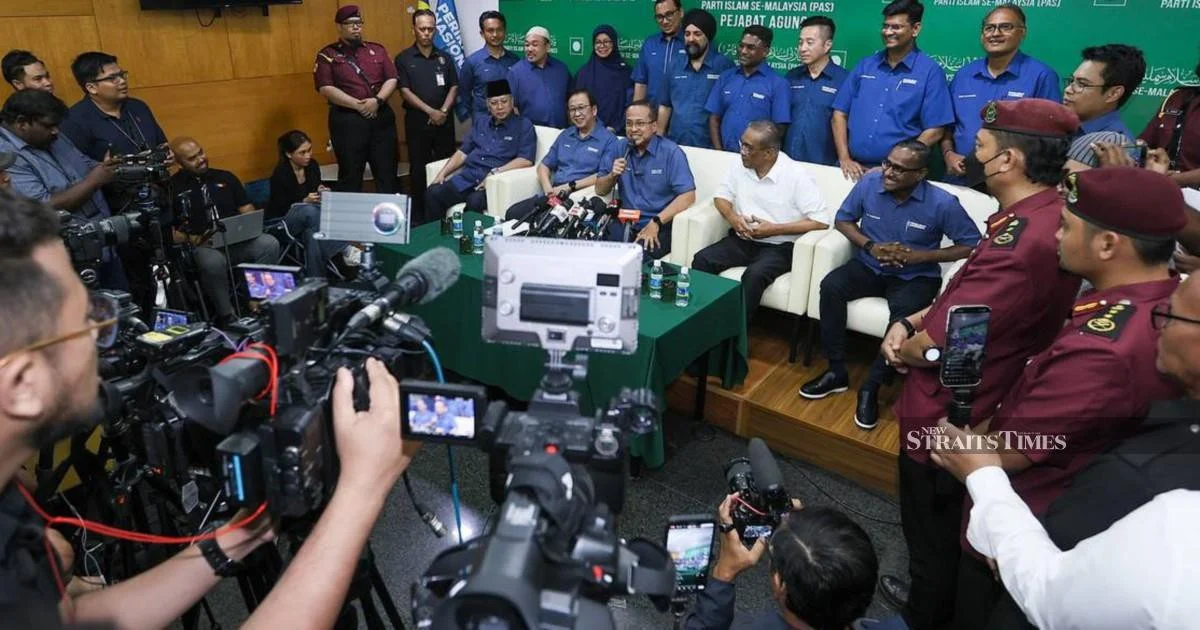
The Perikatan Nasional coalition will move forward today with formalising its allocation of state assembly seats for the forthcoming Johor election, concluding weeks of negotiations among the constituent parties that comprise the opposition bloc. This special convening in Kuala Lumpur represents a pivotal moment in the coalition's electoral preparation, as PN seeks to present a unified front in one of Malaysia's most politically significant states.
Johor holds considerable weight within Malaysia's political landscape. As the nation's southernmost peninsula state, it serves as a crucial battleground for any coalition aiming to strengthen its parliamentary standing. The state's economic importance, combined with its substantial number of representatives in the Dewan Rakyat, makes the success of PN's campaign here essential to the broader opposition strategy. The completion of the seat allocation process signals that PN leadership believes it has resolved outstanding disputes and reached consensus among its partners.
The allocation of contested seats frequently proves contentious within multi-party coalitions, as each constituent party seeks to maximise its representation and potential gains. PN comprises several significant political entities, each with its own electoral interests and organisational base. The fact that negotiations have progressed sufficiently to warrant finalisation suggests that party leaders have found acceptable compromises that balance the ambitions of larger parties against the aspirations of smaller coalition members.
The Johor state assembly comprises 56 seats, making it one of Malaysia's larger state legislatures. The distribution decided today will determine which PN parties contest which constituencies, directly influencing the coalition's ability to maximise its representation in the state government. The outcome of these negotiations will indicate whether PN has managed to present a sufficiently cohesive electoral strategy or whether underlying tensions between coalition partners remain visible to observers.
For Malaysian voters monitoring PN's activities, today's decision represents an important indicator of the coalition's operational capability and internal harmony. Successful seat allocation demonstrates that PN can manage the complex logistics of multi-party cooperation, while delays or disagreements would suggest internal friction that could undermine voter confidence. The speed with which PN has reached this point, compared to historical timelines in Malaysian politics, may signal either improved coordination or pressure to present unity ahead of broader electoral contests.
The timing of this announcement also reflects broader Malaysian political dynamics. With the federal government shaped by coalition arrangements following the 2022 general election, state-level contests increasingly serve as testing grounds for the electoral viability and organisational competence of various political blocs. Johor's position as an economically vital state means that control of its government carries symbolic and practical significance beyond the immediate legislative seats at stake.
For Johor's residents, the completion of PN's seat allocation moves the state closer to an election cycle. Voters will soon face campaign messaging from the unified opposition bloc, and today's decision determines which local party figures and candidates will represent PN in their constituencies. The allocation likely reflects calculations about which PN parties possess the strongest grassroots presence or candidate quality in particular areas.
The broader context of Southeast Asian politics adds another dimension to these proceedings. As Malaysia navigates its post-2022 electoral terrain, opposition coalitions across the region observe how PN manages internal coordination. The coalition's ability to finalise seat allocations smoothly contributes to perceptions of political stability in Malaysia and the region more broadly, while visible internal discord would raise questions about institutional resilience.
Party leaders will use today's meeting not only to announce the seat distribution but also to project confidence and momentum heading into what will likely be a competitive election. The formal conclusion of allocation negotiations allows PN to shift focus toward campaigning and public messaging. For supporters and members of PN's constituent parties, today marks a transition from internal jostling to external electoral competition.
The implications for Malaysia's political trajectory remain significant. Johor's electoral outcome will provide insight into voter sentiment regarding the opposition coalition's direction and appeal. Whether PN can translate its internal unity into electoral gains will shape discussions about potential future political configurations at both state and federal levels. Today's seat allocation decision represents a technical step, but one with considerable downstream consequences for Malaysian politics.