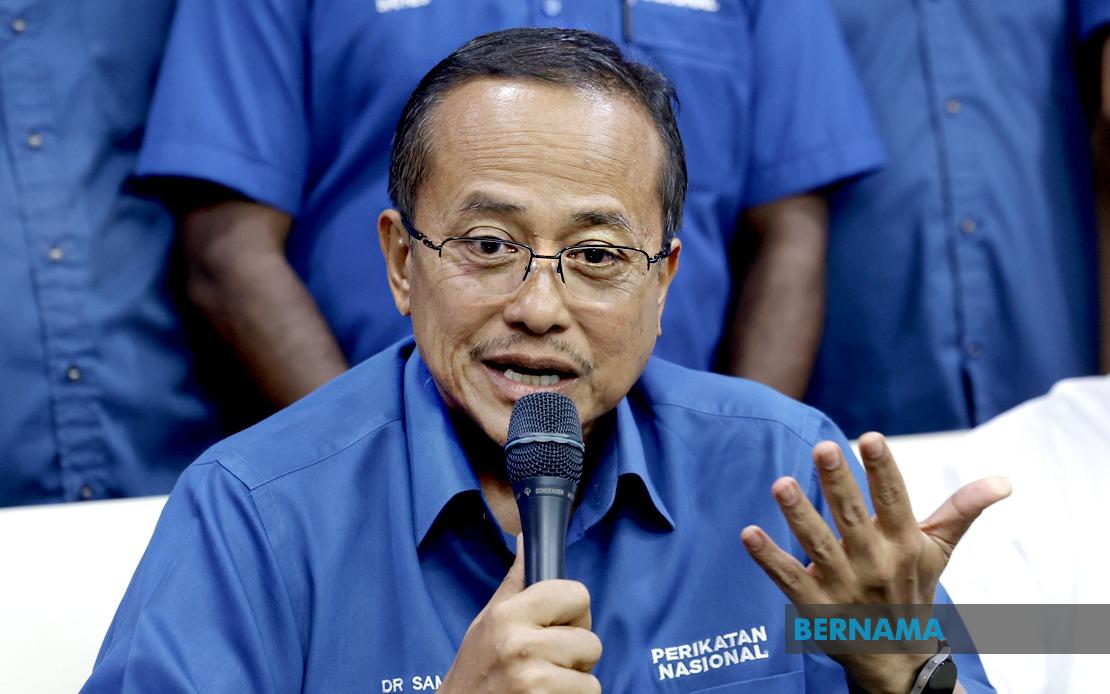
Perikatan Nasional unveiled its campaign platform for the 16th Negeri Sembilan State Election on Thursday, presenting a comprehensive policy framework built around six interconnected strategic areas. The manifesto, introduced by PN chairman Datuk Seri Dr Ahmad Samsuri Mokhtar in Seremban, carries the unifying theme 'PN Sepakat Hebatkan Negeri Sembilan', reflecting the coalition's promise to strengthen the state through coordinated effort and shared commitment.
The coalition's policy pillars reveal its prioritisation of institutional effectiveness, demographic engagement, financial development, community support systems, learning institutions and labour market dynamics. By structuring its platform across these six dimensions, PN attempts to address both immediate citizen concerns and longer-term state-building objectives that span governance infrastructure through to youth engagement and economic competitiveness. This broad-based approach suggests the coalition is positioning itself as a comprehensive alternative capable of managing both constitutional matters and everyday service delivery.
The governance pillar represents PN's commitment to institutional reform and administrative transparency, issues that carry particular weight in Malaysian state elections where questions of accountability frequently dominate voter discourse. By elevating governance as a foundational element rather than a secondary concern, the coalition signals its recognition that electoral competitiveness increasingly depends on demonstrating commitment to ethical administration and efficient public sector operations. This positioning may resonate particularly among urban and semi-urban Negeri Sembilan voters who have grown more vocal about institutional standards.
The youth and family dimension addresses demographic realities in Negeri Sembilan, where younger populations seek economic opportunity and social stability. By bundling youth empowerment with family-centred policies, PN acknowledges that these constituencies are interconnected—young people's career prospects affect family financial security, while family support structures influence young adults' life outcomes. This integrated approach differs from treating youth and family concerns as separate policy domains, suggesting a more sophisticated understanding of generational interdependencies.
Economic policy features prominently within PN's manifesto framework, reflecting the reality that Negeri Sembilan residents' voting behaviour is substantially shaped by employment prospects, business conditions and household income stability. The state's economy, while traditionally anchored in tin mining heritage and palm oil production, increasingly depends on manufacturing, services and technology sectors. PN's economic pillar presumably addresses this sectoral transition, though the manifesto's specific policy instruments remain publicly undetailed at this stage.
Social welfare provisions occupy an explicit position in the manifesto, signalling PN's engagement with vulnerable populations including elderly citizens, persons with disabilities and low-income households. In Malaysian state elections, welfare promises carry substantial electoral weight, particularly in rural and semi-rural constituencies where social safety nets directly affect living standards. The coalition's explicit commitment to this pillar suggests it recognises the political necessity of demonstrating concern for citizens beyond working-age economically active populations.
Education policy functions as both immediate service delivery matter and long-term human capital investment. Negeri Sembilan's education sector encompasses primary and secondary institutions alongside vocational training facilities and links to tertiary institutions, creating multiple pressure points where policy effectiveness directly affects constituent satisfaction. By featuring education prominently, PN indicates understanding that educational quality and accessibility represent durable electoral concerns across demographic groups.
Employment policy represents perhaps the most immediately consequential pillar for working-age Negeri Sembilan residents facing structural economic transitions. Job creation, skills development, wage competitiveness and labour market access shape household economic security in ways that citizens experience directly and frequently. The coalition's emphasis on employment suggests recognition that governance and welfare improvements prove insufficient without demonstrable capacity to deliver economic opportunity.
The election timeline compresses the remaining campaign period considerably. Early voting commences July 28, with general polling scheduled for August 1, providing limited opportunity for sustained public engagement with manifesto details. This condensed schedule favours candidates with established voter recognition and political infrastructure, potentially advantaging incumbent or previously contesting PN candidates over newcomers. Voters interested in detailed policy examination face time constraints that may push decision-making toward party affiliation and local personality factors rather than comprehensive manifesto review.
Negeri Sembilan's state election holds significance beyond the immediate state context, functioning as a bellwether for coalition performance and policy resonance across comparable Malaysian constituencies. Electoral outcomes in the state, which encompasses urban, semi-urban and rural areas with mixed demographic composition, offer insights into Perikatan Nasional's broader electoral viability and the effectiveness of its campaign messaging. Results may influence coalition confidence and policy emphasis heading into potential future electoral contests at state or federal levels.
The manifesto's comprehensive structure across six pillars suggests PN's attempt to position itself as a holistic governance alternative rather than a single-issue force. Whether this integrative approach succeeds in mobilising voters depends substantially on local campaign execution, candidate quality and comparison with opposing coalition platforms. The coming weeks will test whether PN's strategic framework translates into electoral advantage in Negeri Sembilan.

