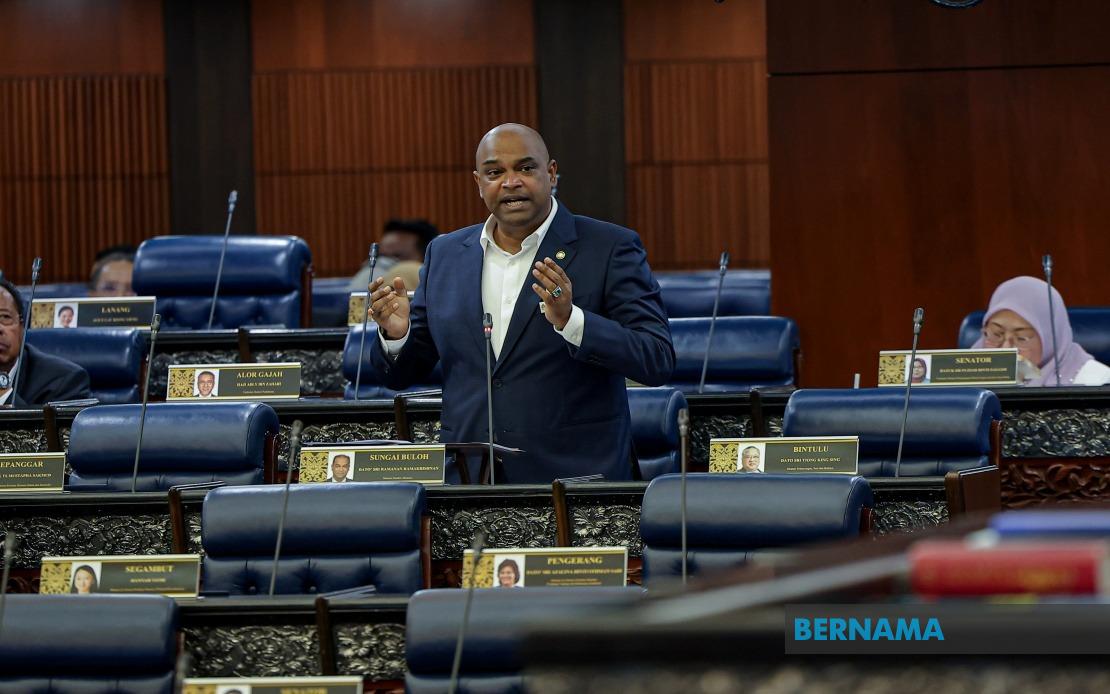
The Social Security Organisation (PERKESO) has demonstrated substantial progress in meeting its service delivery obligations, recording compliance rates surpassing 96 per cent in claims processing and benefit payments throughout the previous financial year. This performance metric, disclosed by Human Resources Minister Datuk Seri R. Ramanan in Parliament, underscores the agency's commitment to streamlined administration and contributor satisfaction across Malaysia's social security landscape.
The organisation's enhanced performance stems from the implementation of more rigorous Customer Charter standards introduced last year, which now govern all benefit categories within PERKESO's three primary schemes: LINDUNG Pekerja, LINDUNG Kendiri, and LINDUNG Kasih. These standards establish specific processing timelines that vary according to claim complexity. Funeral Benefit and Temporary Disablement Benefit claims now face a two-day processing window, while more complex determinations such as Permanent Disablement Benefit, Invalidity Pension, Survivor's Pension, and Dependant's Benefit claims operate under a three-day processing framework, provided applicants have submitted complete documentation from the outset.
For the newly established LINDUNG Kerjaya scheme, PERKESO has set even more ambitious targets within its 2025 Customer Charter, mandating two-day processing across all benefit categories from the date of complete application receipt. Under this scheme, PERKESO has achieved a remarkable 99.68 per cent compliance average, indicating that the organisation is successfully meeting or exceeding its self-imposed deadlines in the vast majority of cases. This performance gap between the broader portfolio and the newer scheme suggests that operational refinements and learning curves are yielding tangible results.
Central to these improvements is PERKESO's sustained investment in digital infrastructure and technological modernisation. The organisation has deployed the LINDUNG Faedah PERKESO portal to facilitate online submissions and tracking, reducing the need for physical documentation handling and associated delays. More substantially, PERKESO has implemented the 1Best system as its backbone processing infrastructure this year, representing a comprehensive overhaul of internal benefits administration capabilities. These technological enhancements address a persistent challenge in social security systems: the friction between legacy administrative processes and contemporary service expectations.
Beyond portal-based solutions, PERKESO has introduced the PRIHATIN application, designed to democratise access to information regarding the organisation's services and eligibility criteria. This tool addresses an information asymmetry problem common across government benefit systems, where contributors often struggle to navigate entitlements and procedures. By centralising service information within a mobile-accessible platform, PERKESO reduces confusion and improves the initial stages of the claims journey, likely contributing to faster downstream processing.
Recognising that digital access alone cannot address all contributor needs, PERKESO has established the Prihatin Squad (SPP), a dedicated advisory service providing in-person guidance to contributors, beneficiaries, and insured persons. This hybrid approach, combining self-service digital tools with human support, acknowledges that claims procedures remain complex and intimidating for many Malaysians, particularly those in lower-income segments or with limited digital literacy. The squad's direct assistance likely reduces incomplete submissions and associated reprocessing delays.
For accident-related claims, which often carry urgency and complexity, PERKESO has strengthened coordination mechanisms through the INSPIRE System, which creates direct electronic linkages between hospitals and PERKESO's claims division. This integration eliminates manual data transfer steps and enables medical facilities to transmit accident notification and preliminary medical documentation in real time. Emergency procedures have been further streamlined to completion within 24 hours, recognising that accident victims and their families face immediate financial pressures requiring rapid benefit disbursement.
Fraud prevention remains a significant operational concern within social security systems, and PERKESO employs a multi-layered assessment architecture to address this challenge. While artificial intelligence systems conduct preliminary screening of incoming claims, identifying patterns and anomalies that warrant deeper investigation, manual verification procedures operate as a secondary checkpoint. This dual-verification approach balances the efficiency gains offered by automation against the risk of false positive rejections and the importance of human judgment in complex cases involving legitimate claims that deviate from statistical norms.
For Malaysian contributors and beneficiaries, these developments carry practical significance. Faster processing times and clearer procedures reduce financial hardship during periods of disablement or after worker deaths, when families depend on benefit payments most acutely. Improved digital accessibility accommodates the growing segment of contributors who prefer online interactions, while the human support infrastructure ensures that no contributor segment is disadvantaged by technological advancement. The 96 per cent compliance rate, while impressive, also implies that approximately 4 per cent of claims face processing delays, suggesting room for continued refinement and investment.
These improvements also have implications for Malaysian employers and the broader social security ecosystem. Faster benefit processing improves workforce morale and retention, as employees gain confidence that PERKESO will respond promptly to claims. Clearer processing timelines reduce administrative uncertainty for employers managing workplace accidents and coordinating with PERKESO. The digital infrastructure investments position Malaysia's social security system more competitively within Southeast Asia, where countries increasingly benchmark social protection systems against technological sophistication and processing speed.
Moving forward, PERKESO's trajectory suggests that sustained investment in digitalisation, coupled with appropriate human-centred service design, can yield meaningful performance improvements in large-scale government administration. The organisation's willingness to establish specific performance metrics and publicly report against them creates accountability mechanisms that incentivise continued optimisation. As Malaysia's workforce continues to evolve and social security demands increase, PERKESO's demonstrated capacity for systematic improvement offers reassurance that the system can adapt to emerging challenges while maintaining accessibility for all contributors across the economic spectrum.

