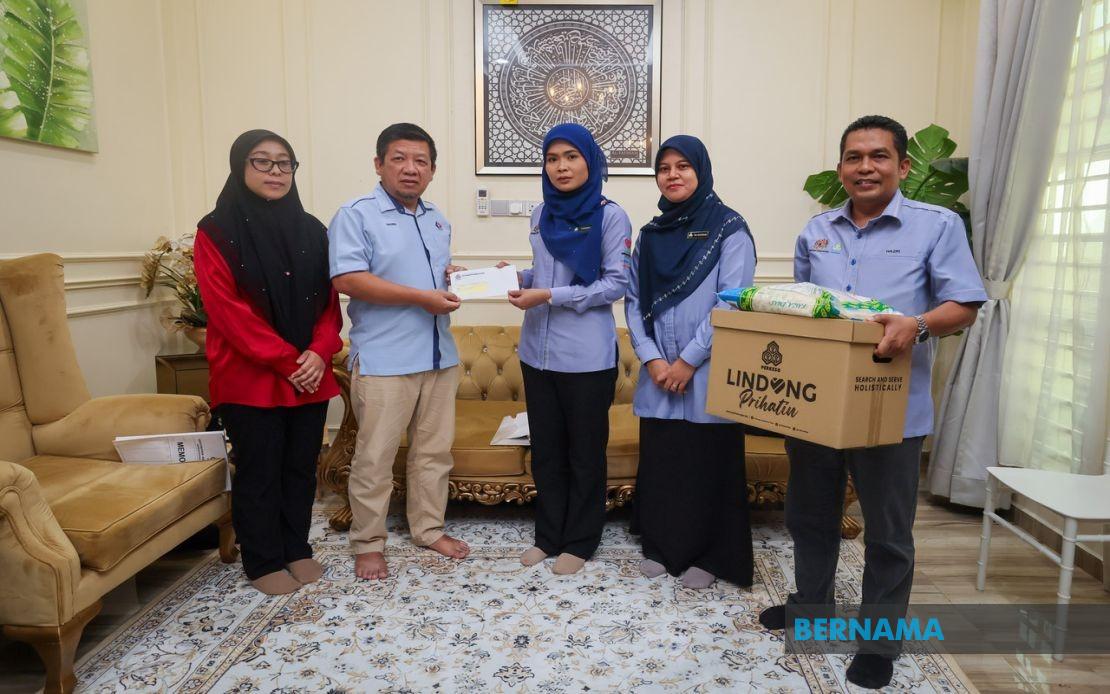
The Social Security Organisation (PERKESO) has channeled nearly RM3.5 million in benefits to workers and their beneficiaries across Kelantan during the opening six months of 2024, providing critical financial support to employees grappling with workplace injuries and their dependants. The distribution reflects the organisation's commitment to its core mandate of protecting the nation's workforce against occupational hazards, a particularly vital function in a state with significant manufacturing and agricultural sectors. The scale of disbursements underscores both the frequency of workplace incidents requiring intervention and PERKESO's active role in administering Malaysia's employment injury protection framework.
Temporary Disablement Benefit payments formed the overwhelming majority of the funds distributed, totalling RM2.388 million across the half-year period. According to Nor Aziemah Ismail, PERKESO's Kelantan deputy director, this benefit category addresses situations where workers sustain job-related injuries that leave them temporarily unable to perform their regular duties. The substantial volume of such claims suggests that workplace accidents remain a persistent challenge within the state's industrial landscape, necessitating robust compensation mechanisms to prevent injured workers from facing immediate financial hardship during their recovery periods.
Beyond temporary disablement support, PERKESO allocated RM73,000 specifically for Dependants' Benefits, ensuring that the families of workers who perished due to employment-related accidents received financial assistance. This category of benefit proves particularly critical in Malaysia's context, where many households depend heavily on a single primary earner. By providing compensation to next-of-kin, PERKESO helps mitigate the devastating economic impact that workplace fatalities would otherwise inflict on bereaved families, particularly those in lower-income brackets where alternative income sources may be limited.
The organisation disbursed an additional RM1 million under its Funeral Benefit scheme during the same period, providing standardised payments of RM3,000 to eligible families of deceased workers. What distinguishes PERKESO's approach to this benefit is its commitment to rapid processing, with the organisation prioritising claim approvals within 24 hours whenever applicants submit complete documentation. This expedited timeline proves significant in Malaysian cultural context, where funeral arrangements typically occur within days of death and families often face time-sensitive expenses that cannot await extended bureaucratic processing.
The 24-Hour Employment Injury Scheme represents a more recent expansion of PERKESO's protective mandate, extending coverage beyond traditional workplace settings to encompass accidents occurring during personal time. This progressive approach recognises that occupational injuries do not always occur neatly within standard working hours or office premises. In Kelantan, the scheme had approved nine claims by the midpoint of 2024, disbursing RM1,300 in sick leave benefits to eligible recipients. The approved cases illustrate the practical scope of this expanded coverage, encompassing incidents ranging from motorcycle convoy participation to transporting children to educational facilities.
The inclusion of motorcycle convoy accidents within the scheme's protective scope reflects a particular reality for Malaysian workers, given the widespread reliance on two-wheeled transportation as both personal and commuting means. Similarly, the coverage of accidents occurring while fulfilling parental duties, such as ferrying children to tuition classes, demonstrates PERKESO's recognition that modern employment relationships involve workers juggling multiple responsibilities beyond their formal job descriptions. This broader conceptualisation of employment-related injury protections appears designed to capture the reality of contemporary Malaysian working life rather than adhering to rigid geographic or temporal definitions.
Kelantan's distribution levels offer meaningful insights into the regional employment landscape and occupational safety conditions. As a state with substantial manufacturing capacity alongside traditional agricultural and small-scale trading sectors, the variety and volume of benefit claims suggest that workplace hazards remain commonplace across diverse economic activities. The concentration of temporary disablement claims particularly highlights sectors where workers face elevated injury risks, whether through machinery-related incidents in factories, handling agricultural products, or other occupational exposures.
PERKESO's operational efficiency in processing these claims becomes particularly significant given the organisation's expanded responsibilities and the growing complexity of benefit categories. The stated commitment to 24-hour processing for funeral benefits and the relatively rapid progression of 24-Hour Scheme approvals indicate that the organisation maintains adequate staffing and administrative capacity in Kelantan to meet the needs of its contributor base. This operational efficiency carries real consequences for workers and families, as delays in benefit payments can force individuals into unsustainable financial positions during genuinely difficult periods.
The distribution patterns also invite reflection on whether current benefit payment levels remain adequate for contemporary living costs in Kelantan. While specific individual compensation amounts for temporary disablement benefits were not disclosed, the funeral benefit standardised rate of RM3,000 has remained constant for an extended period. Whether such fixed amounts sufficiently cover actual funeral expenses, particularly in an inflationary environment, warrants periodic review to ensure that families do not face unexpected financial pressure when attempting to provide dignified funeral arrangements for deceased workers.
For Malaysian policymakers and employers, these Kelantan figures provide concrete evidence of ongoing employment injury incidence across the state's economy. The data suggests that investment in occupational safety improvements could yield substantial returns by reducing injury rates and the resulting social security expenditures. Enhanced workplace safety training, equipment upgrades, and hazard management protocols might prove cost-effective compared to the ongoing disbursement of injury benefits, while simultaneously reducing human suffering among affected workers and their families.
Looking forward, PERKESO's evolving benefit structure and expanded coverage under the 24-Hour Scheme signal the organisation's responsiveness to changing workforce dynamics and modern employment realities. Whether these innovations sufficiently address the protection needs of contemporary workers, particularly those in informal or precarious employment arrangements, remains an area warranting ongoing assessment. For workers and employers in Kelantan specifically, understanding the full scope of available benefits and the requirements for qualifying claims could encourage greater uptake of protections to which many contributors are entitled.

