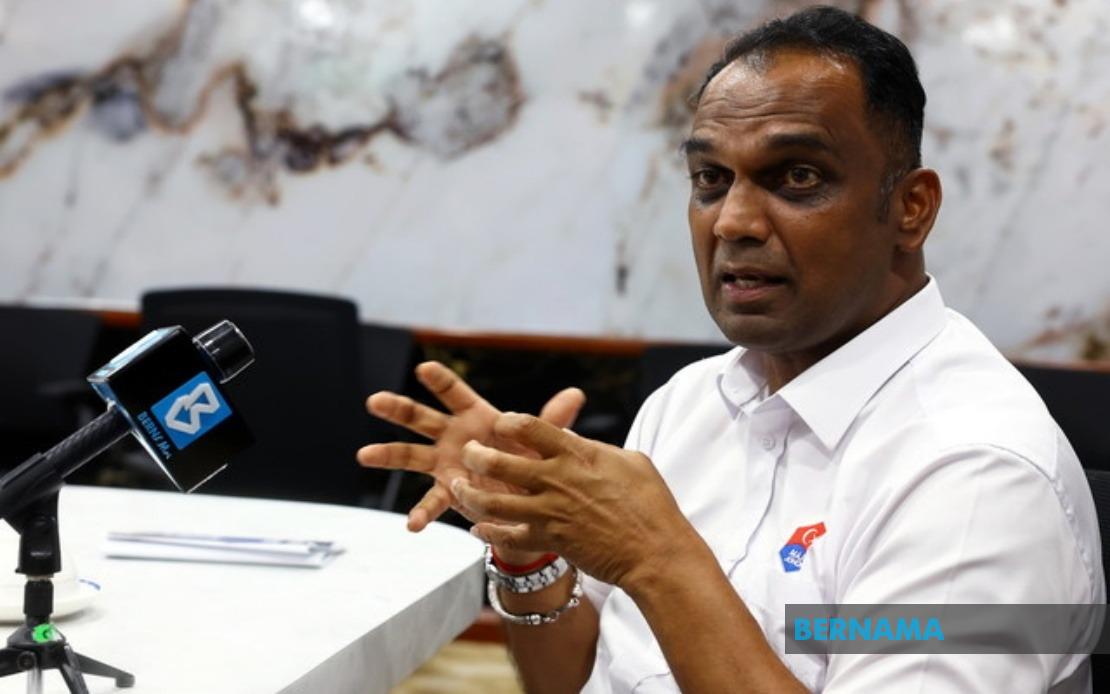
In a deliberate return to ground-level politics, Pannir Selvam, the Barisan Nasional candidate contesting the Perling seat in the 16th Johor State Election, has structured his entire campaign strategy around what he terms "pocket talks"—intimate, small-group conversations with voters across the constituency. Making his maiden foray into state-level politics, Pannir Selvam is betting that this old-school, personal approach will prove more persuasive than the digital campaigns increasingly dominating Malaysian electoral contests.
The candidate's philosophy reflects a broader tension in modern electoral strategy: while acknowledging the undeniable reach and influence of social media platforms, Pannir Selvam contends that face-to-face interaction creates a qualitatively different impact on voter sentiment. He argues that direct engagement through small gatherings allows candidates to establish genuine rapport, demonstrate accessibility, and project authenticity in ways that algorithmic feeds cannot replicate. This distinction matters particularly in state elections, where constituency-level contests often hinge on localised issues and community trust rather than national narratives.
Through these pocket talk sessions conducted across the Perling district, Pannir Selvam aims to accomplish multiple strategic objectives simultaneously. The forums serve as mechanisms for him to introduce himself to voters in a measured, personalised manner—crucial for a political newcomer seeking to establish credibility. More importantly, these gatherings function as listening posts, enabling him to identify, document, and understand the specific grievances affecting residents in ways that polling data and focus groups sometimes miss. By framing himself as responsive to community concerns from the outset, Pannir Selvam seeks to build a foundation of legitimacy before election day.
According to Pannir Selvam's own assessment, the voter response to his grassroots strategy has been substantially positive, providing him confidence to expand and intensify these efforts as the July 11 polling date approaches. This feedback matters not merely for morale but as a practical indicator of whether traditional engagement methods retain efficacy in contemporary Malaysia. The encouraging reception suggests that even in an era of digital saturation, many voters still value the opportunity to interact directly with candidates and feel heard rather than merely targeted.
A significant dimension of Pannir Selvam's political positioning centres on his family legacy. His father, Datuk KS Balakrishnan, is a substantial political figure in his own right: a five-term former assemblyman for Permas and a former member of the Johor state executive council. At 84 years old, Balakrishnan remains actively involved in his son's campaign, physically attending events and ground visits regardless of weather conditions. This intergenerational political partnership carries symbolic weight, suggesting continuity of experience and political commitment across decades.
For Pannir Selvam, his father's involvement transcends mere electoral support. He characterises it as access to mentorship in the deeper arts of public service—lessons about serving constituents equitably across communal lines, handling controversies with grace, and approaching criticism as feedback rather than attack. These attributes matter considerably in Malaysian politics, where racial and religious sensitivities remain potent, and where legislators must navigate diverse constituencies with competing interests. Balakrishnan's guidance, shaped by his own lengthy tenure in office, represents practical wisdom about how to govern with integrity and inclusivity.
Before contesting at state level, Pannir Selvam accumulated experience in local government, serving on the Johor Bahru City Council (MBJB). This background informs his policy platform, which prioritises practical urban governance issues over abstract ideological positions. Specifically, he identifies traffic congestion and inadequate parking facilities around Taman Perling Public Market as priority concerns requiring intervention. His campaign narrative posits that his municipal administration experience uniquely positions him to tackle these infrastructure and service-delivery challenges more effectively than candidates lacking similar local government background.
The Perling constituency presents Pannir Selvam with a competitive electoral environment. With 109,992 registered voters, the district represents a substantial and diverse electorate. The contest itself is three-cornered, pitting the BN candidate against Alan Tee Boon Tsong of Pakatan Harapan and Boo Wei Han representing Parti Bersama Malaysia. This triangular configuration means that victory margins could prove narrow, and voter mobilisation becomes critical; every portion of the electorate matters significantly when votes are fractionalised across three candidates.
The broader Johor election context frames the Perling contest within a larger narrative of electoral competition and political realignment. Across the state's 56 seats, 172 candidates are competing, representing multiple political formations seeking to shape Johor's governance trajectory. Early voting occurs on July 7, with main polling day on July 11, providing candidates like Pannir Selvam with defined timelines to peak their campaign intensity. In this compressed electoral cycle, the cumulative impact of pocket talks, personal encounters, and word-of-mouth generated through grassroots engagement can prove decisive.
Pannir Selvam's campaign strategy also reflects generational evolution within the Barisan Nasional structure. Rather than relying exclusively on the machinery and incumbency advantages that traditionally benefited BN candidates, he is repositioning the party as accessible and responsive to grassroots concerns through direct engagement. This approach implicitly acknowledges that traditional BN dominance cannot be assumed, particularly among younger voters who may harbour scepticism toward established political structures. By personalising his candidacy and emphasising his father's integrity-focused legacy, Pannir Selvam attempts to rebrand BN as forward-thinking yet grounded in reliable values.
The success or failure of Pannir Selvam's pocket-talk strategy will provide insights into the resilience of personal politics in Malaysia's increasingly digital electoral environment. If his approach succeeds in Perling, it may vindicate those within BN who argue that technology cannot wholly replace traditional grassroots mobilisation. Conversely, should his effort fall short despite apparently positive feedback, it might suggest that voter sentiment captured in casual settings does not translate reliably to voting behaviour. The Johor election thus represents a natural experiment in contemporary Malaysian electoral dynamics, with Pannir Selvam positioned at the intersection of tradition and modernity.

