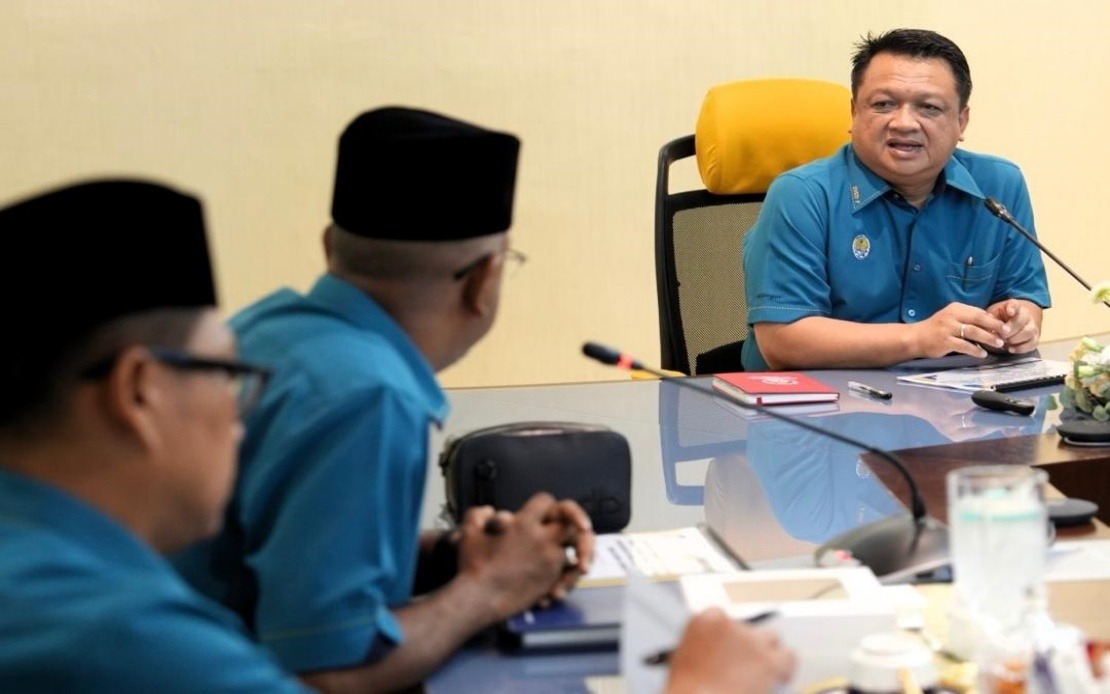
The Raja Muda of Perlis, Tuanku Syed Faizuddin Putra Jamalullail, has called for the state to pioneer a comprehensive sustainability framework that could position it as Malaysia's premier laboratory for environmental innovation. During an official audience with the Kangar Municipal Council at the Arau Royal Gallery, His Royal Highness articulated a vision for Perlis to become a 'Green Smart State' by systematically testing and deploying sustainability policies that could eventually be replicated across the nation and the broader Southeast Asian region.
The proposal centres on capitalising on Perlis's geographic and demographic advantages. As the nation's smallest state by land area and population, it presents a more manageable canvas for implementing large-scale environmental initiatives than would be feasible in more densely populated regions. This scalability factor is crucial for policymakers seeking to validate approaches before national rollout, offering valuable data and practical insights that could inform Malaysia's broader climate adaptation strategy.
Under the envisioned framework, renewable energy adoption would form a cornerstone. Tuanku Syed Faizuddin Putra specifically highlighted the potential for solar and biomass technologies to substantially reduce the state's carbon footprint. The emphasis on multiple renewable sources reflects a sophisticated understanding that no single technology suffices for comprehensive energy transformation, and the combination of solar infrastructure with biomass utilisation creates redundancy and resilience in the energy supply chain. Successfully achieving zero-carbon operations would demonstrate tangible progress toward Malaysia's climate commitments and position Perlis as an active participant in global climate action efforts.
The practical roadmap for this transformation materialised through the Green City Action Plan (GCAP), which was officially approved by the Kangar Municipal Council on February 10. This strategic document represents a collaborative effort spanning multiple stakeholders including the Ministry of Economy, the IMT-GT Joint Business Council, ICLEI - Local Governments for Sustainability, and the Asian Development Bank. The involvement of international development institutions and local government networks indicates that Perlis's sustainability agenda is not isolated domestic policymaking but rather integrated into regional and global frameworks for urban environmental management.
The GCAP methodology balances economic development with environmental stewardship, recognising that sustainability initiatives must not come at the expense of livelihood opportunities. This equilibrium between the three pillars of sustainable development—economic growth, social equity, and environmental protection—remains essential for public acceptance and long-term viability. The plan explicitly aligns with Malaysia's commitment to the Sustainable Development Goals and the nation's greenhouse gas emissions reduction targets, creating a direct link between local action in Perlis and international environmental obligations.
Five priority projects have been identified as catalysts for implementation. The first involves installing solar photovoltaic systems across government, public, and private buildings throughout the state. This diversified approach, rather than limiting solar development to government facilities, creates market incentives for private sector participation and demonstrates that sustainability represents a shared responsibility rather than an exclusively government-led initiative. Such broad-based deployment accelerates technology adoption while building public familiarity with renewable energy infrastructure.
Transport decarbonisation constitutes the second pillar, with planners developing a comprehensive Low Carbon Transport Plan alongside dedicated Micro-Mobility Zones and Non-Motorised Transport facilities. Given Southeast Asia's rapid urbanisation and the region's dependency on motorised transport, Perlis's focus on alternative mobility systems offers valuable lessons. Creating dedicated infrastructure for walking and cycling, coupled with integrated public transport planning, addresses the root causes of urban emissions rather than merely treating symptoms.
Solid waste management receives particular attention through an 80-tonne-per-day Material Recovery Facility designed to strengthen recycling capabilities and reduce landfill dependency. This capacity figure, while modest compared to larger states, provides a realistic implementation scale while generating operational data on collection logistics, processing efficiency, and market linkages for recovered materials. The facility's design reflects both environmental and economic considerations, as increased recycling rates create secondary raw material supplies for local industries.
Water resource management and disaster preparedness have been integrated into the sustainability framework, recognising that climate resilience encompasses multiple dimensions. A comprehensive rainwater harvesting system would support long-term water security, particularly important for agricultural communities in Perlis. Simultaneously, strengthening the Perlis Integrated Command Centre and developing a state-level disaster management plan acknowledges that climate change increases extreme weather frequency and intensity, requiring institutional readiness alongside mitigation efforts.
The broader significance of Perlis's sustainability pathway extends beyond state boundaries. As a relatively small jurisdiction with distinct governance structures, successful implementation could provide replicable models for other Malaysian states of similar size. The detailed documentation of successes and challenges would contribute to regional knowledge on adapting environmental policies to tropical Southeast Asian contexts, where factors such as monsoon patterns, agricultural economies, and rapid urbanisation differ substantially from the global north, where many sustainability frameworks originated.
Implementation of the Green City Action Plan positions Perlis to contribute meaningfully to Malaysia's climate commitments while creating tangible environmental and health benefits for its residents. Cleaner air quality, enhanced water security, improved waste management, and reduced transport congestion represent quality-of-life improvements that extend beyond abstract environmental metrics. These concrete improvements help build public support for sustainability initiatives, creating political momentum for more ambitious future policies.
The Raja Muda's endorsement carries particular weight within Malaysian governance structures, signalling royal support for innovation within the state. This backing typically facilitates stakeholder coordination, resources allocation, and political legitimacy for administratively complex initiatives that might otherwise face bureaucratic friction. The combination of clear strategic vision, concrete project identification, international partnership, and executive support suggests that Perlis possesses the institutional framework to advance from planning to effective implementation over coming years.

