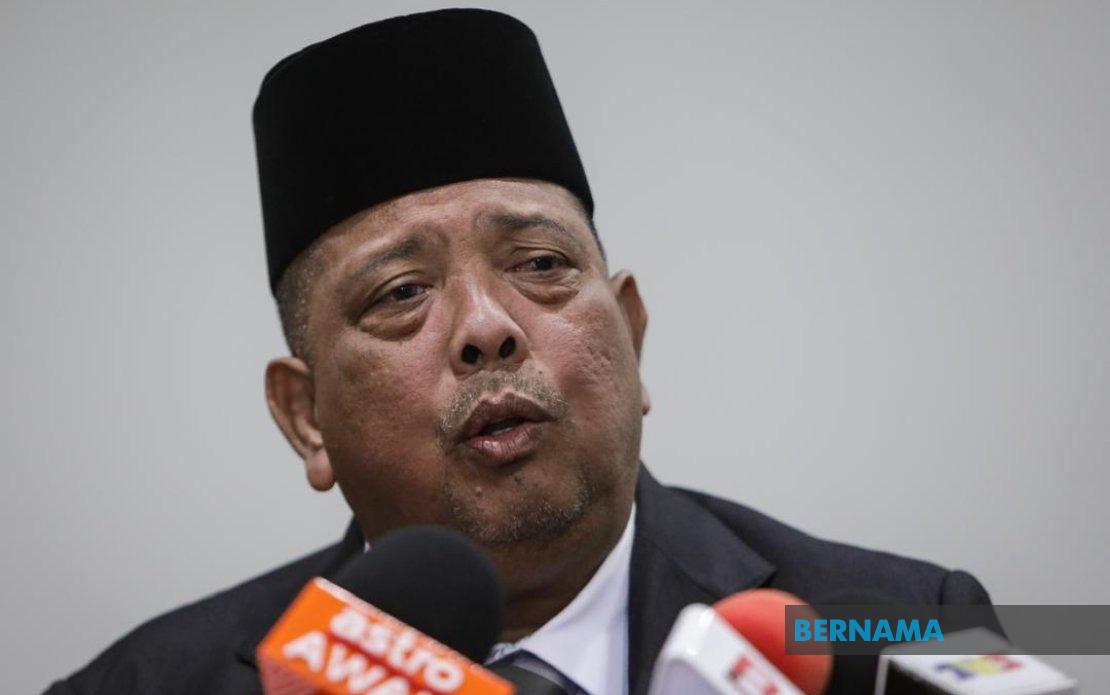
Perlis Menteri Besar Abu Bakar Hamzah has stepped down from the Parti Pribumi Bersatu Malaysia (Bersatu) Supreme Leadership Council, marking a significant shift in his political focus as the state government enters its final phase before elections. The resignation was formally submitted to the party's central leadership last week, though Abu Bakar continues in his capacity as Perlis Bersatu state chief and Kangar division chief, maintaining his party standing at the grassroots level.
The decision, announced during a reception for a Thai delegation visiting Kangar, reflects the mounting pressures of steering Perlis through what remains of the current state legislative assembly term. Abu Bakar emphasised that the demands of his executive role as Menteri Besar have become incompatible with active participation in national party structures, leaving him unable to dedicate adequate attention to the Supreme Leadership Council's responsibilities. With approximately one year remaining before the state elections, he has determined that his political capital is best invested in advancing Perlis's economic agenda rather than navigating the complexities of party management at the national level.
The timing of Abu Bakar's resignation carries particular significance in the context of Perlis's administrative timeline. The Raja of Perlis, Tuanku Syed Sirajuddin Jamalullail, had previously decreed during the June 3 state legislative assembly opening that Abu Bakar should be afforded the operational space to continue governing without interference, effectively endorsing an approach that prioritises state-level delivery over party machinery involvement. This royal blessing appeared to anticipate and validate Abu Bakar's subsequent withdrawal from higher party responsibilities, suggesting a deliberate recalibration of his political priorities in alignment with palatial expectations.
Critically, Abu Bakar's strategic repositioning centres on three foundational objectives that define the remainder of his tenure. Attracting foreign and domestic investment to Perlis ranks foremost, representing a crucial economic imperative for a relatively less-developed northern state seeking to diversify its revenue base. Alongside this, achieving the key performance indicators established for his administration serves as the measurable benchmark against which his stewardship will ultimately be judged. These twin goals collectively constitute the legacy Abu Bakar intends to build before the state transitions to new leadership, making them incompatible with the competing demands of party council work at the national tier.
The resignation also suggests strategic clarity about the political landscape Abu Bakar faces. Rather than attempting to juggle responsibilities that have proven incompatible, his decision prioritises institutional delivery in Perlis, where he maintains direct accountability to voters and the ruling establishment. This represents a pragmatic acknowledgment that attempting to serve both sets of masters simultaneously would likely result in suboptimal performance in both domains—a calculation increasingly common among state executives who find their energies dispersed across multiple demanding portfolios.
Indications emerged that Abu Bakar was not alone in this recalibration of Bersatu party commitments. Datin Marzita Mansor, who represents the Sena state assembly seat and serves on the Perlis state executive council, reportedly submitted a similar resignation from the Supreme Leadership Council membership. Though Marzita could not be reached for immediate confirmation, this parallel move by another senior Bersatu figure in Perlis suggests a broader reassessment within the state party leadership about allocating limited political bandwidth and maintaining focus on state governance priorities.
The backdrop to these resignations involves the resumption of the Kuala Perlis-Satun cross-border ferry service, which had been suspended since the onset of the COVID-19 pandemic. This milestone event symbolises Perlis's broader recovery and reconnection with neighbouring Satun province in Thailand—precisely the type of economic and logistical achievement that Abu Bakar appears intent on catalysing during his remaining tenure. The Thai delegation's visit underscores the state's commitment to cross-border cooperation and regional integration, initiatives requiring sustained executive attention that may be compromised by competing national party obligations.
For Malaysian political observers, Abu Bakar's move reflects a mature understanding of the constraints facing state-level politicians in federal party structures. The Bersatu party, like its counterparts, maintains extensive governance demands at the national level that inevitably compete for the time and strategic focus of senior figures who also hold executive positions in states. The decision to withdraw from the Supreme Leadership Council essentially privileges the electoral accountability Abu Bakar faces to Perlis voters over the institutional responsibilities owed to the national party hierarchy—a choice that implicitly prioritises democratic legitimacy derived from state elections over party organisational obligations.
Looking ahead, Abu Bakar's departure from the Supreme Leadership Council may also reflect calculations about positioning for the forthcoming state elections. By demonstrating singular devotion to Perlis's development and economic advancement, he can present himself as a leader whose priorities remain unambiguously aligned with the state's interests rather than being divided between competing power centres. This positioning could strengthen his political narrative as elections approach, emphasising results-oriented governance over party machinery involvement.
The resignation also carries implications for how Bersatu manages its relationships with state-level leaders who find themselves balancing executive responsibilities with national party obligations. As federal structures evolve and state governments increasingly assert their administrative autonomy, similar tensions will likely emerge among other state leaders holding dual responsibilities. Abu Bakar's decision to clearly demarcate these spheres and prioritise state governance may establish a precedent that acknowledges the practical impossibility of delivering excellence across both domains simultaneously.
From a regional Southeast Asian perspective, the Kuala Perlis-Satun ferry service resumption and the Thai delegation visit signal Perlis's determination to rebuild cross-border economic networks disrupted by the pandemic. Abu Bakar's focused investment of political energy into such initiatives—rather than dispersing effort across national party structures—potentially positions the state as a more reliable partner for cross-border collaboration. This has implications for broader Malaysia-Thailand cooperation frameworks that increasingly depend on functional state-level relationships alongside federal government commitments.

