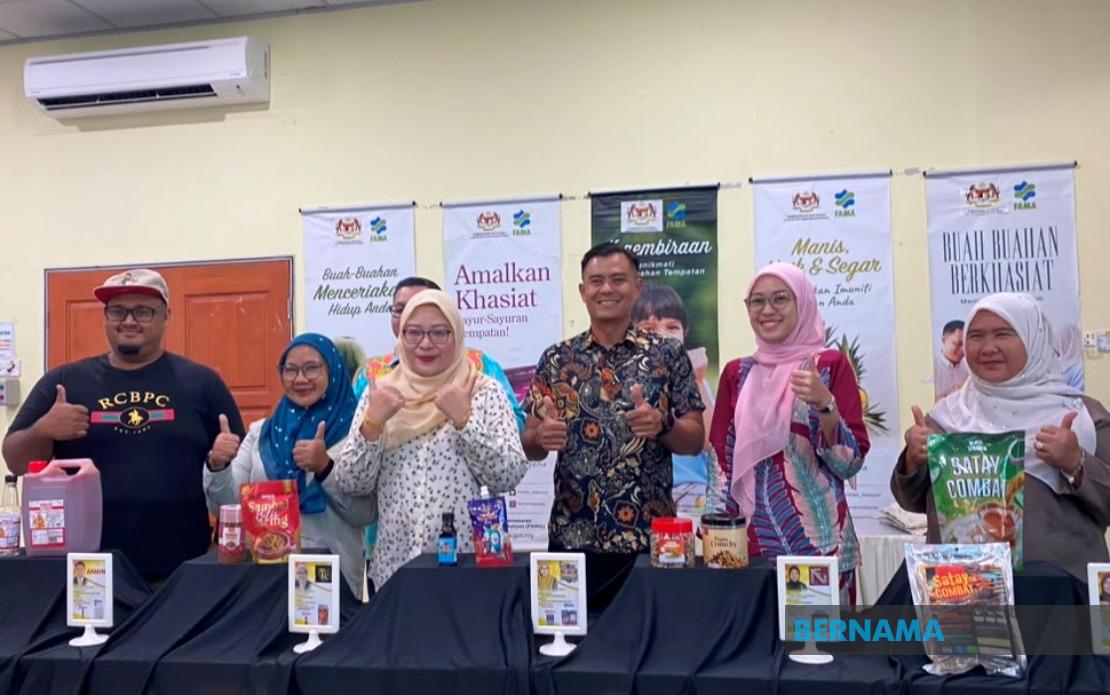
The Perlis branch of the Federal Agricultural Marketing Authority (FAMA) has rolled out a substantial package of financial support for the state's agro-food sector, distributing RM510,500 in grants to nine entrepreneurs as part of its ongoing drive to nurture competitiveness within the Agro-Food and Agro-Based Industry (IMAT). This latest tranche of funding reflects FAMA's commitment to bolstering small and medium enterprises operating at various stages of development, from early-stage ventures to those ready for market expansion.
According to Mohd Anzara Azizan, director of FAMA Perlis, the grant allocation was structured across four distinct support programmes, each targeting different operational needs. The largest component, amounting to RM392,000, was earmarked for agro-tourism development, enabling entrepreneurs to diversify revenue streams by integrating tourism experiences into their agricultural operations. A further RM83,500 was dedicated to product image and packaging improvement, recognising that visual presentation and branding are critical factors in consumer purchasing decisions. Smaller allocations of RM25,000 went towards KSHOPPE outlet enhancements, while RM10,000 was reserved for marketing equipment support, reflecting FAMA's multi-pronged approach to enterprise development.
The push to enhance product packaging and visual identity carries particular strategic significance in today's marketplace. As agro-food products increasingly compete not just locally but across regional platforms, the ability to project a professional, attractive brand identity has become essential for market penetration. FAMA's Product Image and Packaging Improvement Grant operates under the broader IMAT Market Development and Product Matching Project, which deliberately targets enterprises classified as Stage One through Stage Three SMEs. This segmented approach ensures that support is calibrated to the specific maturity level of each business, providing early-stage operators with foundational assistance while enabling more established players to undertake more sophisticated market positioning initiatives.
The impact of FAMA's support mechanisms is evident in the sales trajectory of Perlis-based IMAT entrepreneurs. Collectively, 319 registered entrepreneurs in the state recorded combined sales of RM4.8 million as of the latest reporting period, representing a robust 30 per cent increase compared with the equivalent period in the previous year. This performance metric carries significance beyond mere numbers, suggesting that FAMA's assistance programmes are translating into tangible commercial outcomes for participants. The growth trajectory indicates that entrepreneurs are successfully leveraging the guidance and financial support provided to capture larger market shares and expand their customer bases.
Mohd Anzara emphasised that FAMA's role extends beyond simple fund distribution. The authority actively monitors the marketing strategies and pricing decisions of participating entrepreneurs, ensuring that products remain competitively positioned while maintaining reasonable price points that reflect genuine value. This oversight function is particularly important in the agro-food sector, where price volatility and market distortions can undermine both consumer confidence and producer sustainability. By maintaining oversight of these critical variables, FAMA helps create a balanced market environment that benefits both sellers and consumers.
The breadth of FAMA's support offerings underscores the authority's recognition that modern agro-food businesses require multifaceted assistance. The organisation currently offers nearly nine distinct grant and support service categories tailored to IMAT entrepreneurs, ranging from financing solutions to technical guidance and market development initiatives. This diversified portfolio reflects an understanding that different enterprises face different bottlenecks—some may struggle primarily with production efficiency, others with market access, and still others with brand positioning and consumer awareness.
For Malaysia's broader agro-food development strategy, the Perlis initiative illustrates how targeted state-level interventions can drive sector-wide improvements. Perlis, while smaller than many Malaysian states, possesses a significant agricultural base and considerable potential for agro-tourism development given its location and cultural characteristics. By concentrating resources on enhancing entrepreneurial capabilities within the region, FAMA is effectively building local economic resilience and creating employment opportunities that extend beyond primary production into value-added processing and hospitality services.
The emphasis on agro-tourism grants warrants particular attention, as this category represents the largest single allocation. Agro-tourism has emerged as a strategic growth area for Malaysian agriculture, offering farmers and agro-processors opportunities to capture premium pricing by linking their products to experiential offerings. Tourists visiting agro-tourism facilities typically exhibit higher willingness to pay for locally-produced goods, and such experiences generate repeat purchases and word-of-mouth marketing that conventional advertising struggles to match. For Perlis specifically, the development of agro-tourism infrastructure could complement existing tourism offerings and provide rural communities with diversified income sources.
Mohd Anzara's call for greater entrepreneur participation in FAMA's programmes suggests that awareness and uptake remain areas for continued improvement. Many small agro-food operators, particularly those in rural areas or operating at subsistence scales, may lack information about available support or possess limited capacity to navigate application processes. Addressing these barriers through simplified application procedures, outreach campaigns, and capacity-building workshops could unlock further economic potential within the state's agro-food sector.
The RM4.8 million sales figure achieved by 319 entrepreneurs provides context for understanding the state's agro-food industry scale. Extrapolating these figures, the average Perlis IMAT entrepreneur generates roughly RM15,000 in annual sales, indicating that most remain micro or small enterprises. The 30 per cent year-on-year growth rate, if sustained, would suggest that FAMA's interventions are catalysing genuine sectoral expansion rather than merely redistributing existing demand. This growth trajectory aligns with national efforts to modernise agriculture and enhance rural incomes, objectives that have grown increasingly important as Malaysia seeks to balance urban-centric development with broad-based prosperity.
The distribution of grants across different business development stages reflects sophisticated programme design. By supporting enterprises at various maturity levels simultaneously, FAMA creates an ecosystem where newer ventures can learn from more established players, while mature enterprises can access resources for expansion that prevents market saturation from destructive price competition. This ecosystem approach contrasts with simpler models that treat all enterprises identically regardless of their development stage or market position.
Looking forward, the success of FAMA's Perlis initiatives may inform expanded programming across other Malaysian states, particularly those with significant but underdeveloped agro-food sectors. The detailed breakdown of grant categories and their respective allocations provides a replicable model that other regional agricultural authorities could adapt to local contexts. As Malaysia's agricultural sector faces structural challenges including labour shortages, climate variability, and international competition, such targeted entrepreneurship support becomes increasingly valuable for sustaining rural livelihoods and maintaining domestic food security.

