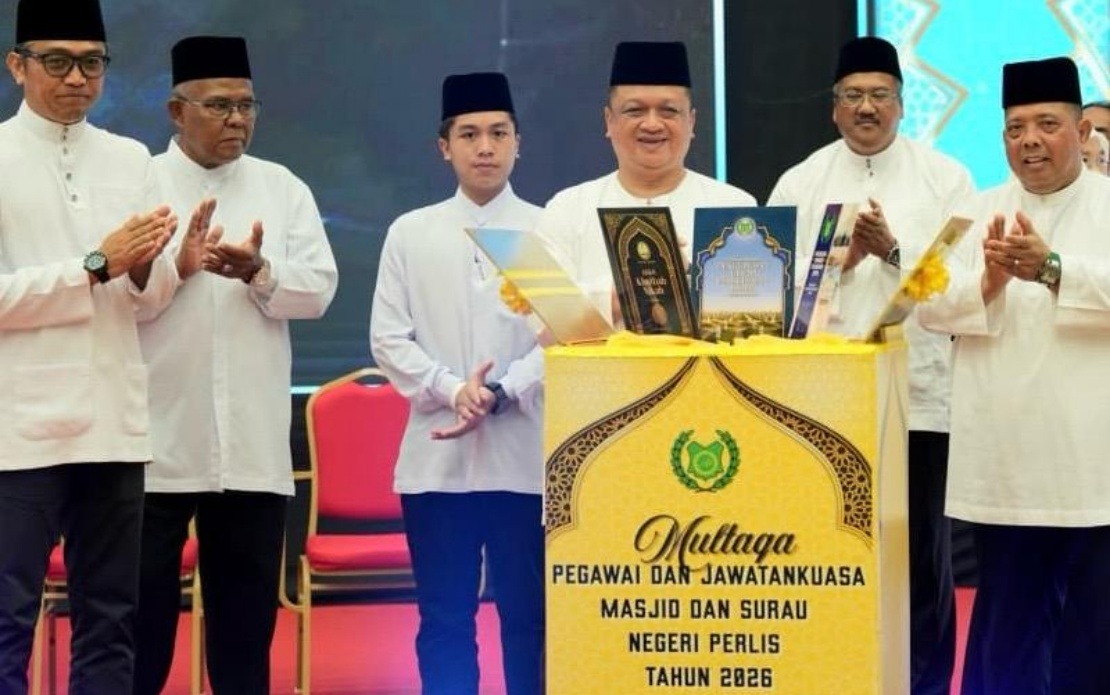
Tuanku Syed Faizuddin Putra Jamalullail, the Raja Muda of Perlis, has called on religious institution leaders across the state to prioritize integrity and professional conduct in managing mosques and surau, emphasizing that public trust depends on transparent and systematic administration. Speaking at the 2026 Perlis State Mosque and Surau Officers and Committees Multaqa Programme in Kangar, the royal official stressed that committees bear a significant responsibility to uphold standards that reflect both Islamic principles and state regulations.
The Raja Muda's intervention reflects broader concerns about governance in religious institutions across Malaysia, where mosque and surau committees operate as crucial intermediaries between faith communities and religious authorities. In Perlis, these institutions manage not only worship spaces but also administer cemeteries, facilitate marriages, and serve as social anchors for their constituencies. The caliber of their management therefore has tangible consequences for community confidence in religious administration, particularly when financial resources, record-keeping, and ceremonial responsibilities are involved.
During the programme, Tuanku Syed Faizuddin Putra outlined three focal areas guiding this year's training initiative: the standardized guidelines for Muslim cemetery management throughout Perlis, operational procedures for mosque administrative divisions, and protocols governing marriage registration and the role of marriage officials, known as jurunikah. These topics collectively address some of the most sensitive touchpoints where communities interact with religious bureaucracy, making competent and honest management essential to institutional credibility.
The Raja Muda emphasized that all personnel and committee members must familiarize themselves thoroughly with directives issued by the Perlis Islamic Religious and Malay Customs Council (MAIPs) and the Perlis Islamic Religious Affairs Department (JAIPs). Compliance with these guidelines, he noted, ensures that community matters are handled both efficiently and in accordance with Islamic jurisprudence and applicable state legislation. This dual framework—religious law intersecting with civil administration—requires knowledge and discipline from committees often composed of volunteers or part-time officials with varying levels of formal training.
A key theme in the Raja Muda's address centered on the evolving expectations Muslims hold for their religious institutions. Modern worshipping communities increasingly expect mosques and surau to function as professionally managed entities demonstrating transparency in financial dealings, clarity in decision-making processes, and responsiveness to congregational needs. This expectation represents a departure from historical models where religious trust alone sufficed; today's communities demand both piety and professional competence from their institutional leaders.
The expansion of the multaqa programme to include surau committees alongside mosque representatives signals recognition that these two institutional types serve complementary functions within Perlis's religious ecosystem. Surau, typically smaller community prayer spaces often managed by neighborhood committees, frequently operate with less formal oversight than major mosques yet handle similar administrative responsibilities. By bringing both into a unified training framework, state authorities aim to establish consistent standards and ensure that governance quality does not vary based on institutional size or prominence.
The Raja Muda described the multaqa as a vital channel for communicating state religious policies directly to those implementing them on the ground. This approach acknowledges a common implementation gap in decentralized systems: guidelines formulated at the state level sometimes fail to reach local committees clearly or are interpreted inconsistently across different municipalities. By convening officers and committee members for intensive training and dialogue, Perlis seeks to minimize such gaps and ensure coherent administration statewide.
For Malaysian and Southeast Asian observers, this initiative reflects broader trends in how Muslim-majority societies are professionalizing religious administration. As societies modernize and communities become more aware of governance standards applied elsewhere, religious institutions face pressure to adopt transparency and accountability measures once considered the domain of secular organizations. The challenge lies in implementing such reforms while maintaining the spiritual integrity and community trust that give these institutions their essential character.
The focus on cemetery management, marriage administration, and institutional procedures also reveals which domains demand particular attention in Perlis. Cemeteries carry profound spiritual and family significance, making their upkeep and record-keeping matters of genuine emotional weight for communities. Marriage registration, meanwhile, intersects with civil law and family status, creating interfaces where religious and secular authority meet. Jurunikah serve both religious and administrative functions, requiring training in Islamic ritual knowledge as well as legal procedures.
Tuanku Syed Faizuddin Putra's call for systematic work culture and integrity represents an implicit acknowledgment that maintaining community confidence requires more than good intentions. Committees must develop documented procedures, maintain organized records, and establish transparent communication with their constituencies. This professionalization effort does not diminish the spiritual dimensions of mosque and surau work; rather, it creates an administrative foundation that allows spiritual functions to flourish without distraction or controversy.
The implications for Perlis extend beyond religious governance alone. When citizens observe their faith institutions operating transparently and professionally, confidence in other state institutions benefits from association. Conversely, lapses in religious administration can erode broader institutional trust. The Raja Muda's emphasis on adhering to MAIPs and JAIPs guidelines thus serves both immediate institutional purposes and wider governance objectives within the state.
Looking forward, the success of initiatives like the 2026 multaqa programme will depend on sustained implementation and follow-up. Training alone proves insufficient without subsequent monitoring, support mechanisms for committees facing practical difficulties, and periodic refresher sessions as personnel change. The Raja Muda's intervention provides political backing for such efforts, signaling that state leadership takes religious institutional governance seriously and expects comparable commitment from those managing mosques and surau throughout Perlis.

