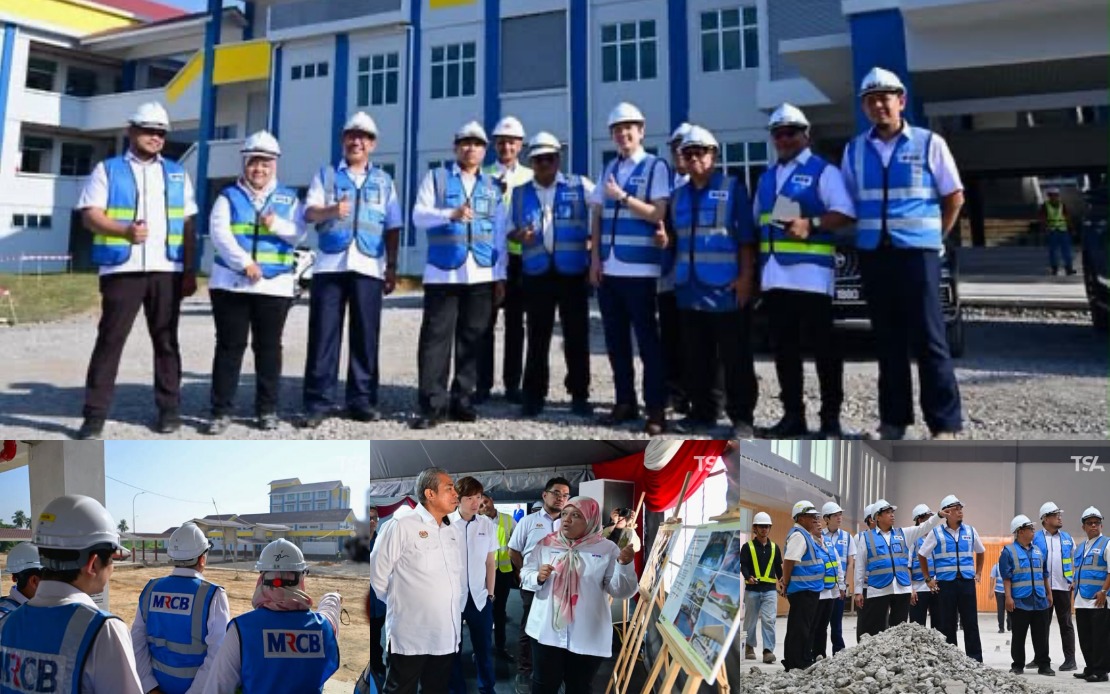
The Perlis Malaysia Sports School in Bukit Chabang, Padang Besar is expected to welcome its first cohort of students by January 2027, marking the end of a 14-year construction hiatus that has left the ambitious facility incomplete. Chief Secretary to the Government Tan Sri Shamsul Azri Abu Bakar expressed confidence in the accelerated timeline during a visit to the project site, noting that the first phase has progressed significantly to reach between 85 and 90 per cent completion.
The project's resurrection represents a critical turning point in Malaysia's long-standing commitment to developing sporting talent at the grassroots level. What was once an embarrassing symbol of abandoned infrastructure development has become a test case for improved government project management. The sports school was initially conceived to provide elite training facilities and academic excellence to young athletes, but numerous implementation obstacles caused work to stall more than a decade ago.
Responsibility for the project's revival rests on a decisive intervention by Prime Minister Datuk Seri Anwar Ibrahim, who in April 2024 transferred the construction to a capable government-owned company. This move was designed to circumvent the bureaucratic and contractual complications that had plagued earlier phases. According to Shamsul Azri's assessment following his site inspection, the majority of obstacles that previously stalled progress—including labour shortages and contractor reliability issues—have been successfully resolved through improved oversight and project coordination.
The completion of the Perlis facility addresses a longstanding regional disparity in sports infrastructure within Malaysia. Perlis, being one of the smaller and less densely populated states, has traditionally lagged behind Selangor, Kuala Lumpur, and Penang in terms of world-class training amenities. A fully operational sports school in the state would significantly enhance opportunities for young athletes from the northern region to pursue professional sporting careers without necessitating relocation to the Klang Valley or other established sporting hubs.
Beyond the immediate benefits for athletic development, the successful completion of this project carries symbolic weight for public sector reform. Shamsul Azri used the occasion to highlight the Government Service Efficiency Commitment Act 2025 (Act 867), which took full effect on December 1, 2025, as a legal framework designed to eliminate bureaucratic inefficiencies within the civil service. Rather than functioning merely as administrative guidance, the Act serves as binding legislation that enforces accountability and transparency throughout government operations.
The efficiency reform agenda extends across multiple fronts within the public sector. The Bureaucratic Red-Tape Reform programme, implemented under the broader Public Service Reform Agenda since 2024, has already yielded measurable results. To date, 439 distinct red-tape reduction projects have reached completion, generating an estimated compliance cost savings of RM2.95 billion for the general public and business community. These figures underscore a deliberate governmental effort to streamline procedures that previously created friction in service delivery and business operations.
For Malaysia's business environment, these efficiency improvements translate into reduced transaction costs and faster approval timelines. Entrepreneurs and investors have historically cited slow government processing and unclear bureaucratic procedures as impediments to doing business in the country. By quantifying savings and demonstrating measurable progress, the government is attempting to rebuild confidence in the public administration system and position Malaysia as more investment-friendly relative to regional competitors.
The Perlis sports school project illustrates how institutional reform and dedicated project oversight can salvage previously stalled infrastructure initiatives. The transition to a government-owned entity with clearer mandate and accountability structures has apparently enabled faster decision-making and resolution of implementation bottlenecks. For other languishing government projects nationwide—particularly those in less-developed regions—this case study provides a template for rehabilitation and completion.
Shamsul Azri also addressed concerns regarding civil service neutrality ahead of electoral cycles, reaffirming that government employees remain bound by regulations prohibiting political engagement. The government maintains that no complaints regarding civil servant political involvement have been formally lodged to date, though the emphasis on this point reflects broader sensitivity around maintaining administrative impartiality during periods of heightened political activity.
The January 2027 completion timeline, if achieved, would represent a significant achievement in Malaysia's infrastructure development trajectory. The sports school will serve not merely as a facility but as validation of reformed government processes and improved project execution. For Perlis specifically, the facility promises to unlock the sporting potential of the state's youth population and contribute to a more geographically balanced development of national sporting capabilities. The project's success or failure will likely influence how subsequent stalled infrastructure initiatives are approached and managed within the broader public sector reform framework.

