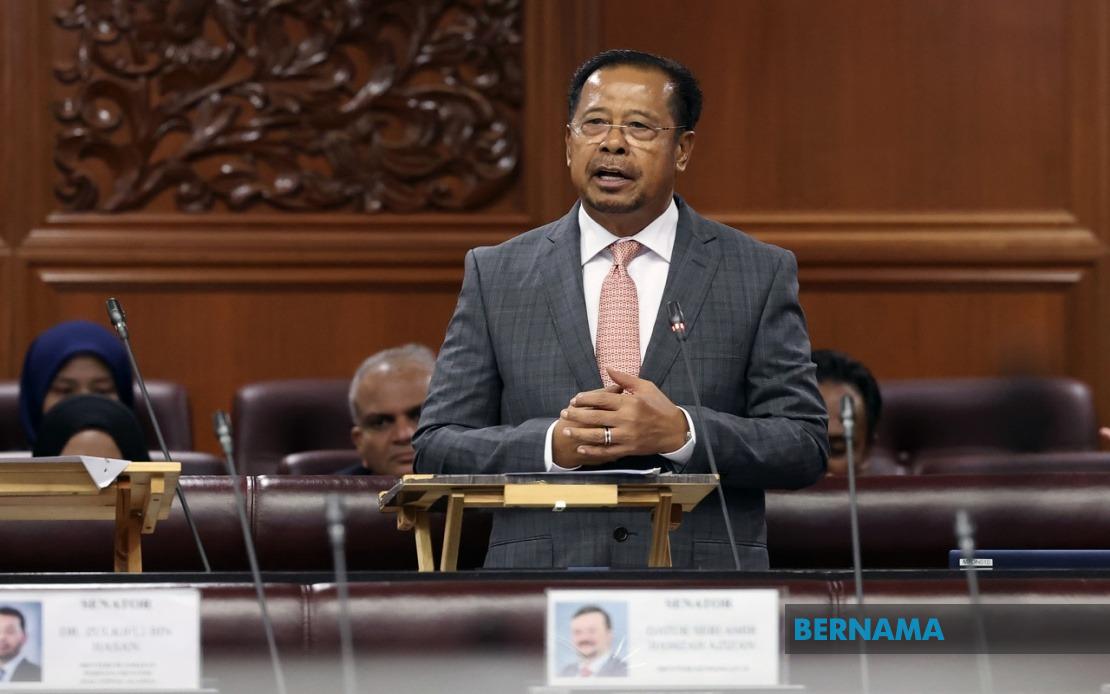
Malaysia's water sector is entering a critical phase in its transformation, with the Ministry of Energy Transition and Water Transformation announcing plans to develop a comprehensive Industrial Water Reclamation Policy through a year-long investigation that will fundamentally reshape how the nation approaches treated water reuse in manufacturing and service sectors. The initiative, disclosed during parliamentary proceedings in Kuala Lumpur, reflects growing government recognition that traditional freshwater extraction is insufficient to meet spiralling industrial demand, particularly as the country positions itself as a global hub for technology and manufacturing.
Deputy Minister Datuk Seri Abdul Rahman Mohamad outlined the strategic rationale for the ambitious policy framework, emphasising that recycled water represents a viable solution for industrial applications that do not demand potable-quality standards. This distinction is crucial for Malaysia's economic trajectory, as numerous industrial segments—from semiconductor fabrication to data centre operations—consume vast quantities of water for cooling and processing purposes where conventional drinking-water standards prove unnecessarily expensive and wasteful. The reclamation approach would free up premium freshwater supplies for domestic consumption and essential uses whilst satisfying legitimate industrial needs through alternative means.
The comprehensive examination will transcend simple technical assessments, instead weaving together regulatory, financial, and economic dimensions that collectively determine policy viability. Government planners recognise that effective implementation requires more than engineering solutions; it demands robust legal frameworks governing water quality standards, financially sustainable operational models for recycling infrastructure, and economic incentives encouraging industrial adoption. The study team will methodically evaluate infrastructure requirements needed to support large-scale reclamation networks, identify existing capacity gaps, and project investment requirements for systems expansion across major industrial zones and manufacturing clusters.
Government positioning underscores alignment with broader objectives around national water supply resilience, particularly vital given Malaysia's geographical vulnerabilities to periodic droughts and increasing freshwater stress from competing demands. By diversifying water sources through reclamation programmes, policymakers aim to establish redundancy within the supply system, reducing crisis risk when precipitation patterns fluctuate or freshwater aquifers face temporary depletion. This strategic buffering becomes increasingly important as urbanisation accelerates and industrial expansion concentrates water demand in specific geographic corridors.
The policy will specifically address priority industrial sectors including food and beverage manufacturing, semiconductor production, data centre operations, and public cleaning services. These sectors represent both significant water consumers and candidates for successful reclamation integration. Data centres, particularly those hosting regional cloud infrastructure, present compelling opportunities for recycled water deployment in cooling systems, whilst semiconductor manufacturing similarly demands substantial volumes for fabrication processes tolerant of recycled sources. The food and beverage industry, despite requiring some high-quality water for direct product contact, can substantially reduce freshwater consumption through strategic recycling in ancillary operations.
Crucially, the ministry recognises that successful implementation depends on collaborative frameworks spanning state governments, water utilities, and major industrial operators. PETRA is systematically engaging Indah Water Konsortium, primary water operators, state authorities responsible for water management within their jurisdictions, and industry representatives to build consensus around practical implementation pathways. This stakeholder engagement phase proves essential for identifying regional variations in water availability, existing infrastructure capabilities, and sectoral priorities that inevitably differ across Malaysia's diverse geographical and economic landscape.
Reclaimed water quality represents perhaps the most technically and politically sensitive component of the policy architecture. Regulatory mechanisms must establish credible standards ensuring recycled water meets application-specific requirements whilst maintaining environmental and public health safeguards. The study will examine existing global best practices, particularly from water-stressed developed nations, whilst adapting frameworks to Malaysian regulatory contexts and industrial capabilities. Quality assurance systems must balance rigorous monitoring with operational feasibility for adopting industries, avoiding standards so demanding that economic viability collapses.
The 12-month timeframe, whilst appearing extended, reflects genuine complexity involved in synthesising technical knowledge, building stakeholder alignment, and constructing viable regulatory frameworks. Accelerated timelines risk producing policies that falter upon implementation when unforeseen technical or operational obstacles surface. Conversely, extended delays perpetuate water inefficiency in industrial operations, squandering national resources and postponing competitive advantages that water-efficient industries gain through reduced operational costs.
For Malaysian industries, the emerging policy carries significant implications. Organisations adopting recycled water systems early may access government incentives or preferential regulatory treatment, creating competitive advantages. Data centres and semiconductor manufacturers—increasingly price-sensitive to operational costs including utilities—could achieve substantial expense reductions through reclamation integration. Conversely, industries resisting adoption face potential future restrictions on freshwater allocations as government prioritises domestic supply security.
Regionally, Malaysia's policy development carries implications for Southeast Asian water management paradigms. As the region confronts collective freshwater stress from population growth, industrial expansion, and climate variability, successful Malaysian frameworks may influence neighbouring nations' approaches toward water security. The policy represents institutional commitment to treating water as strategically managed national infrastructure rather than infinitely renewable resource, a mindset shift increasingly necessary across the developing world.
The government's initiative ultimately signals recognition that past water management approaches—characterised by supply expansion through new reservoirs and extraction schemes—cannot indefinitely meet future demand. Demand-side efficiency, particularly industrial water reclamation, constitutes an essential component of sophisticated water security strategy alongside supply augmentation. Successful implementation of the emerging Industrial Water Reclamation Policy would position Malaysia as a regional model for sustainable industrial water management whilst strengthening long-term domestic water security.

