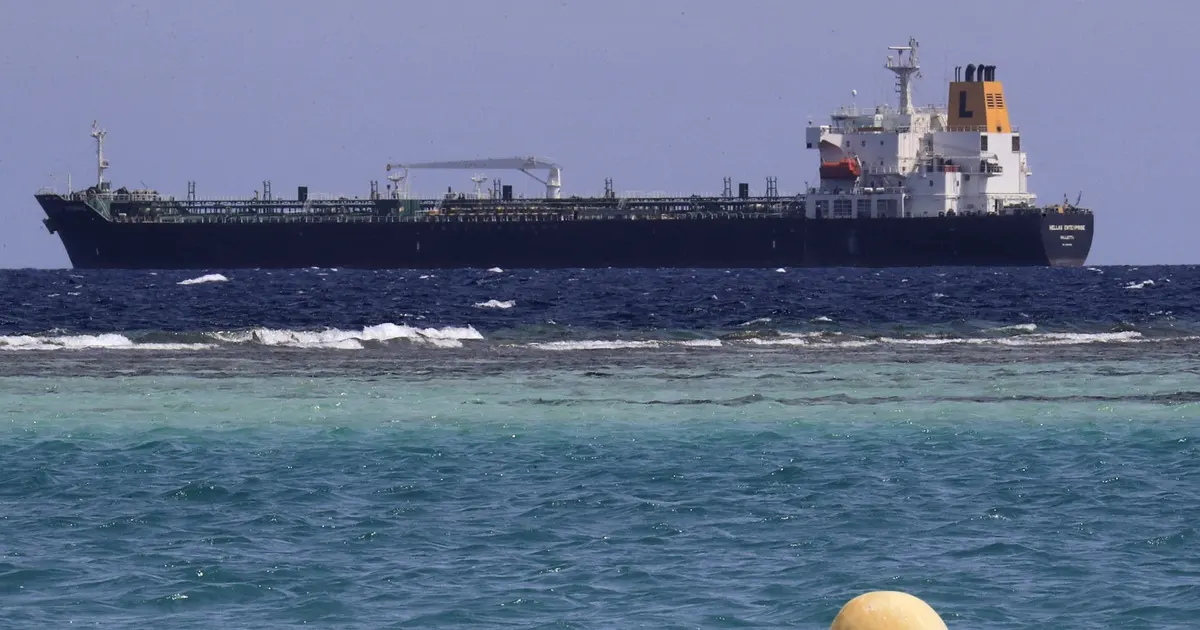
A Malaysian-operated energy sector vessel has obtained authorization to navigate through the strategically significant Red Sea waterway, marking a noteworthy moment for the country's maritime commerce at a time when regional shipping routes face considerable uncertainty. The Petronas ship is expected to complete its voyage and arrive at the Port of Melaka within approximately one month, representing continued commercial activity through one of the world's most contested maritime passages.
Prime Minister Anwar Ibrahim has characterized this clearance as an affirmation of Malaysia's commitment to pursuing a balanced and pragmatic foreign policy approach. The statement carries particular weight given Malaysia's geographical proximity to the Red Sea crisis zone and its established role as a regional diplomatic voice. By framing the vessel's passage in terms of national foreign policy, Anwar has signalled that Malaysia views such maritime movements not merely as routine commercial operations but as indicative of the country's broader positioning in an increasingly fractious geopolitical environment.
The Red Sea has emerged as one of the world's most precarious shipping corridors following escalations in regional conflict, with multiple parties asserting control and imposing restrictions on merchant vessels. For Malaysia, which depends heavily on maritime trade for economic vitality, maintaining access to critical sea lanes remains a paramount concern. The clearance of a Petronas vessel through this waterway demonstrates that despite tensions in the region, commercial shipping has not been entirely halted, though it continues under constrained and unpredictable conditions.
Petronas, as Malaysia's state-owned petroleum company, carries particular symbolic significance in national and regional narratives. The corporation's operational capacity to maintain supply chains and commercial activities through contested waters reflects both Malaysia's resilience and its ability to sustain energy sector operations despite external pressures. For a country that plays a crucial role in regional energy markets and maintains strategic energy partnerships across Southeast Asia, such continuity holds implications extending beyond immediate commercial interests.
Anwar's invocation of prudent foreign policy likely references Malaysia's deliberate efforts to maintain diplomatic neutrality and constructive engagement across multiple international stakeholders. Unlike some nations that have taken explicit stances on regional conflicts, Malaysia has historically prioritized dialogue, mediation, and principled non-alignment. This approach has allowed the country to preserve relationships with diverse partners while advancing its economic interests, a balancing act that becomes increasingly delicate when maritime security and geopolitical tensions intersect with commercial imperatives.
The arrival of the Petronas vessel in Melaka carries logistical importance for Malaysian ports and the broader regional maritime infrastructure. Melaka, a port city with historical significance dating back centuries as a global trading hub, continues to serve as a critical node in contemporary Southeast Asian commerce. Ensuring that vessels can reliably reach Malaysian ports sustains employment, supports port operations, and maintains the country's competitive positioning within global supply chains for energy commodities.
For Malaysian policymakers, incidents of vessels receiving clearance to transit contested waterways require careful diplomatic management. Publicly celebrating such developments risks appearing to take sides in regional disputes, while remaining silent could suggest weakness or diminished influence. Anwar's measured framing—emphasizing foreign policy prudence rather than military capability or conflict positioning—reflects an attempt to acknowledge the achievement while maintaining Malaysia's carefully calibrated diplomatic stance.
The broader context of Red Sea instability has forced shipping companies and nations worldwide to recalculate route security, insurance costs, and supply chain resilience. Some vessels have been rerouted around the Cape of Good Hope, adding weeks to journeys and considerable costs to operations. That Petronas can continue utilizing the direct route demonstrates either improved security circumstances or successful navigation of complex regional arrangements, both of which carry significance for Malaysian commercial interests and international confidence in regional stability.
Southeast Asian nations collectively face shared interests in maintaining maritime security and freedom of navigation. Malaysia's experience with Petronas vessels transiting contested waters may provide relevant precedent or practical lessons for regional counterparts managing their own shipping concerns. The approach emphasizing diplomatic prudence rather than military assertion may reflect an emerging Southeast Asian consensus that engagement and dialogue offer more sustainable solutions than confrontational stances in managing global maritime challenges.
Looking forward, the successful passage of Malaysian vessels through the Red Sea will likely remain contingent on Malaysia's continued cultivation of diplomatic relationships across multiple regional and international actors. The country's positioning as a trader and mediator, rather than a protagonist in regional conflicts, may provide distinct advantages in securing access to vital shipping corridors. This approach validates the government's emphasis on balanced foreign policy as not merely an abstract diplomatic principle but a practical tool for safeguarding national economic interests and maritime commerce in an increasingly contested global environment.

