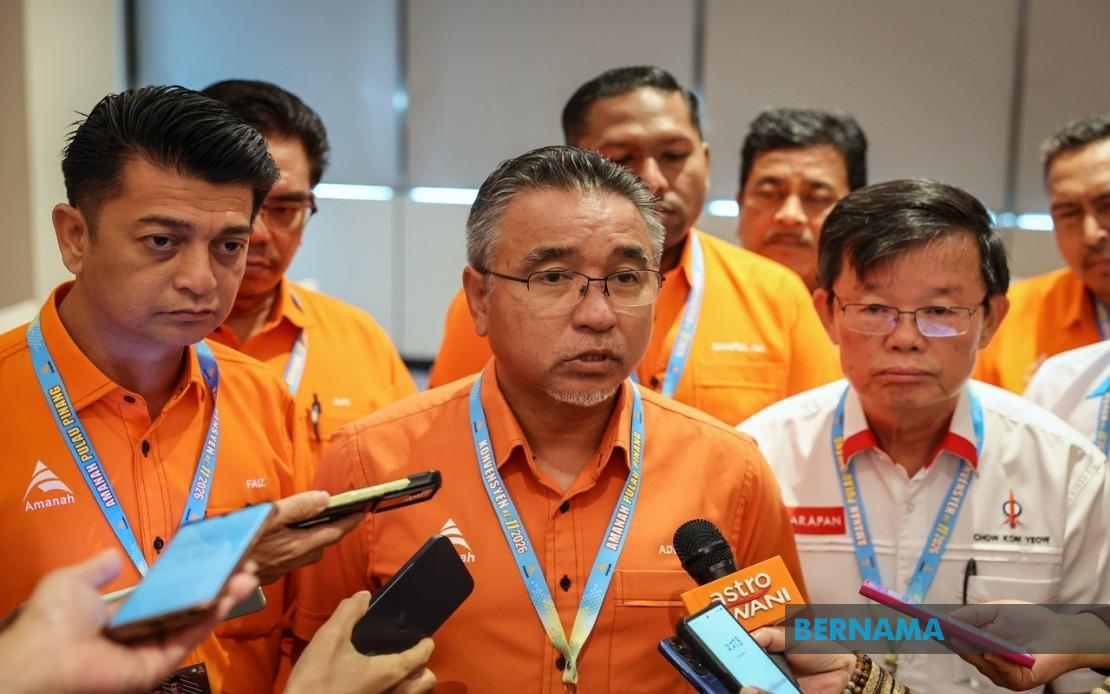
Pakatan Harapan's senior figures have doubled down on the coalition's commitment to principles-based governance and administrative capability, even as the bloc grapples with disappointing results from recent state elections. Speaking at the Penang Amanah Convention in Bukit Mertajam on August 2, Amanah vice-president Adly Zahari emphasised that the coalition's political philosophy—centred on integrity, transparency, and effective service delivery—remains non-negotiable regardless of electoral outcomes. This reaffirmation comes at a critical juncture for the coalition, which faces mounting pressure to demonstrate its effectiveness to Malaysian voters increasingly preoccupied with bread-and-butter concerns.
Adly's remarks suggest PH recognises a fundamental challenge confronting governing coalitions across Southeast Asia: the gap between legislative competence and popular perception. While the coalition continues to champion principles of good governance, voters assess political performance through the lens of immediate impact on their households. Adly acknowledged this reality directly, noting that citizens ultimately evaluate parties based on tangible outcomes affecting their financial wellbeing, access to quality education, and the efficiency of government services. This analysis reflects a sobering recognition that institutional integrity, however desirable, cannot substitute for measurable improvements in citizens' material conditions and quality of life.
The electoral landscape shifted notably in yesterday's Negeri Sembilan state election, where Barisan Nasional secured a commanding plurality with 18 of 36 seats, while Pakatan Harapan managed only 11 seats and Perikatan Nasional captured seven. These results underscore the volatile nature of Malaysian electoral politics and the constant recalibration required by ruling coalitions. For PH specifically, the outcome highlights the political costs of governance, where the responsibility of managing state and federal administration often attracts voter frustration even when macro-economic indicators improve.
Crucially, Adly signalled that PH intends to conduct a rigorous post-election analysis to identify strategic shortcomings and operational inefficiencies. This commitment to self-examination distinguishes the coalition's current approach from passive acceptance of electoral defeat. Rather than attributing poor performance solely to external factors, the acknowledgment of areas requiring improvement suggests internal leadership recognises specific communication and policy-implementation gaps that may be addressable through organisational adjustment.
One particularly significant gap identified by PH leadership concerns the communication of government achievements to the electorate. Adly highlighted the coalition's need to strengthen its messaging apparatus to effectively convey economic policies, social initiatives, and employment-creation efforts to ordinary Malaysians. This diagnostic observation—that substantive policy accomplishments remain underappreciated by voters—reflects a common predicament facing competent but politically vulnerable administrations. In an era of fragmented media consumption and competing information sources, the failure to control the narrative surrounding government performance can prove as electorally damaging as policy failures themselves.
Penang Pakatan Harapan chairman Chow Kon Yeow announced that the coalition would convene on August 8 to dissect results from both the Johor and Negeri Sembilan elections and devise revised strategic approaches. This scheduled review reflects recognition that Malaysia's political terrain has shifted materially, requiring recalibration of PH's operational playbook. The timing of this meeting suggests urgency, particularly given widespread speculation regarding the possibility of a snap federal election called before the constitutionally mandated 2026 deadline.
For Malaysian observers and regional analysts monitoring democratic governance in Southeast Asia, PH's predicament illustrates tensions inherent in any coalition juggling competing priorities. The coalition must simultaneously maintain ideological coherence around principles of good governance while delivering visible improvements in economic conditions and public service efficiency. This balancing act grows increasingly difficult when global economic headwinds, fiscal constraints, and inherited structural problems complicate the implementation of populist policies attractive to voters.
Chow's emphasis on refocusing voter attention on government performance and service delivery reveals PH's strategic calculation that its best path forward involves emphasising comparative competence and tangible benefits rather than moral arguments about institutional rectitude. This pragmatic pivot acknowledges that Malaysian voters, like citizens elsewhere confronting economic uncertainty and inflation pressures, prioritise materialist concerns over abstract governance principles. For PH to regain electoral momentum, it must demonstrate that its administration translates principles into palpable improvements in employment opportunities, wage growth, and cost-of-living relief.
The implications of PH's current positioning extend beyond Malaysian borders, as the coalition's experience offers instructive lessons for other ruling coalitions across Southeast Asia navigating similar challenges. In Thailand, Indonesia, the Philippines, and Vietnam, governing coalitions face analogous tensions between administrative responsibility and electoral viability. The premium voters place on material improvements over governance quality—observable across the region—constrains the political space for technocratic or principle-based governance models divorced from immediate popular benefit.
PH's commitment to continue pursuing value-based politics while simultaneously acknowledging strategic shortcomings represents a mature response to electoral adversity, though one that raises uncomfortable questions about whether principled governance can survive indefinitely without electoral rewards. The coalition's August 8 meeting will provide crucial insight into whether PH leadership plans incremental refinements to existing strategies or more fundamental repositioning ahead of potential snap elections. The stakes extend beyond any single coalition's fortunes; they implicate the broader trajectory of democratic governance in Malaysia and the region's capacity to sustain institutions that balance popular responsiveness with sustainable policymaking.

