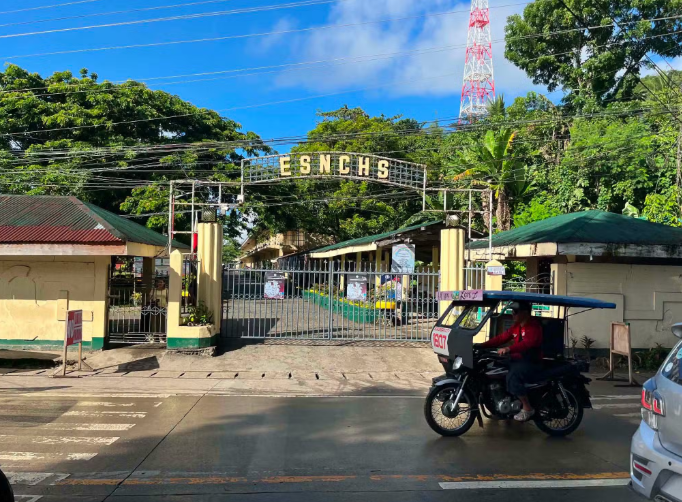
A major public secondary school in the Philippines shut its doors on Friday following circulation of an online post that made credible-sounding threats of bombings and armed violence. The closure of Eastern Samar National Comprehensive High School in Borongan City underscores how quickly social media posts can disrupt school operations and trigger security lockdowns across the region, even when the threats later prove unfounded.
The school administration took decisive action after discovering the threatening content allegedly originating from students in the Grade 11 Kitchen Operations programme. Acting School Head Dean Ernest Paul Hermano issued a formal suspension order in consultation with local police, the city's schools division leadership, and the regional education ministry office. The decision prioritised protecting the institution's several thousand students and staff members across multiple facilities serving Borongan City and surrounding municipalities.
Local law enforcement responded with significant resources to assess the genuine level of danger. The Borongan City Police Station dispatched its Special Weapons and Tactics team to systematically inspect areas where the threatening photographs had allegedly been captured and shared. This comprehensive security sweep, which occupied much of Friday morning, was designed to identify any actual explosives, weapons caches, or other physical evidence supporting the online claims.
By mid-morning, PLTCOL Silver Cabanillas, the acting station chief, formally declared the campus secure at 8:35 a.m., indicating that officers found no credible basis for the threats. The all-clear allowed authorities to confirm that students and staff faced no imminent danger from bombs or firearms. Yet the mere fact that such a thorough mobilisation occurred highlights how seriously Philippines law enforcement now treats such incidents, regardless of whether they prove genuine.
The timing of this incident reflects heightened anxiety about school safety across Eastern Visayas and nationally. Just two weeks earlier, on June 22, a devastating shooting had unfolded at San Jose National High School in nearby Tacloban City. That incident killed three students and wounded twenty others, making it one of the deadliest school violence episodes in recent Philippine history. The shooting shattered the assumption that secondary schools represented safe spaces and prompted immediate reviews of security protocols across the region.
In response to the Tacloban tragedy, schools and local government units throughout Eastern Visayas initiated emergency security upgrades. These measures included increased police presence on campuses, revised evacuation and lockdown procedures, coordination between educators and law enforcement, and efforts to improve threat assessment capabilities. Against this backdrop, the circulation of any school-related security threat—whether credible or not—now triggers maximum precautionary responses rather than initial scepticism.
Eastern Samar National Comprehensive High School holds particular significance as the province's flagship secondary institution and Eastern Samar's largest public high school by enrolment. Its closure therefore affected thousands of learners and their families. The school's statement, issued through Acting Principal Hermano, emphasised the institution's commitment to taking all security concerns seriously and its determination to maintain a safe learning environment. School administrators also highlighted their active cooperation with ongoing police investigations aimed at identifying whoever posted the threatening content.
Authorities have yet to determine definitively whether the online post originated from a single individual or involved multiple persons. The fact that the alleged source lay within the student population—specifically among Grade 11 vocational students—raises questions about motivation, whether the threat was meant as a misguided prank or represented something more serious. The investigation continues as police attempt to trace the digital origins of the post and interview relevant individuals.
The incident reflects a broader pattern emerging across Philippine schools in the aftermath of recent violence. Security threats, whether substantiated or not, now provoke immediate administrative responses, closure orders, and law enforcement deployment. This reactive posture, while understandable given tragic recent events, creates recurring disruptions to the school year and leaves communities anxious about campus safety. The region's educational sector faces a difficult balancing act between protecting students and maintaining continuity of learning.
Beyond the immediate Visayas region, this incident carries implications for how Southeast Asian nations manage campus security in an era of social media. The speed at which unverified online posts can cascade into large-scale institutional responses demonstrates both the power and peril of digital communication. In Malaysia and other neighbouring countries with similar school populations and social media penetration, comparable vulnerabilities exist.
Authorities have appealed to the public to refrain from sharing unverified threat information online and to report genuine concerns directly to police rather than amplifying them through social platforms. This message reflects recognition that social media amplification can transform minor incidents into major security events. The Borongan City Police Station urged residents to exercise responsibility when encountering suspicious online content related to schools or public safety.
The Philippines continues grappling with how to prevent future school violence while maintaining normal educational operations. The San Jose National High School tragedy demonstrated that such incidents can occur despite existing security measures, yet each new threat—credible or not—prompts escalating precautions. For Eastern Samar National Comprehensive High School, Friday's closure represented both a necessary safety response and a reminder of the region's vulnerability to security disruptions in the post-Tacloban environment.

