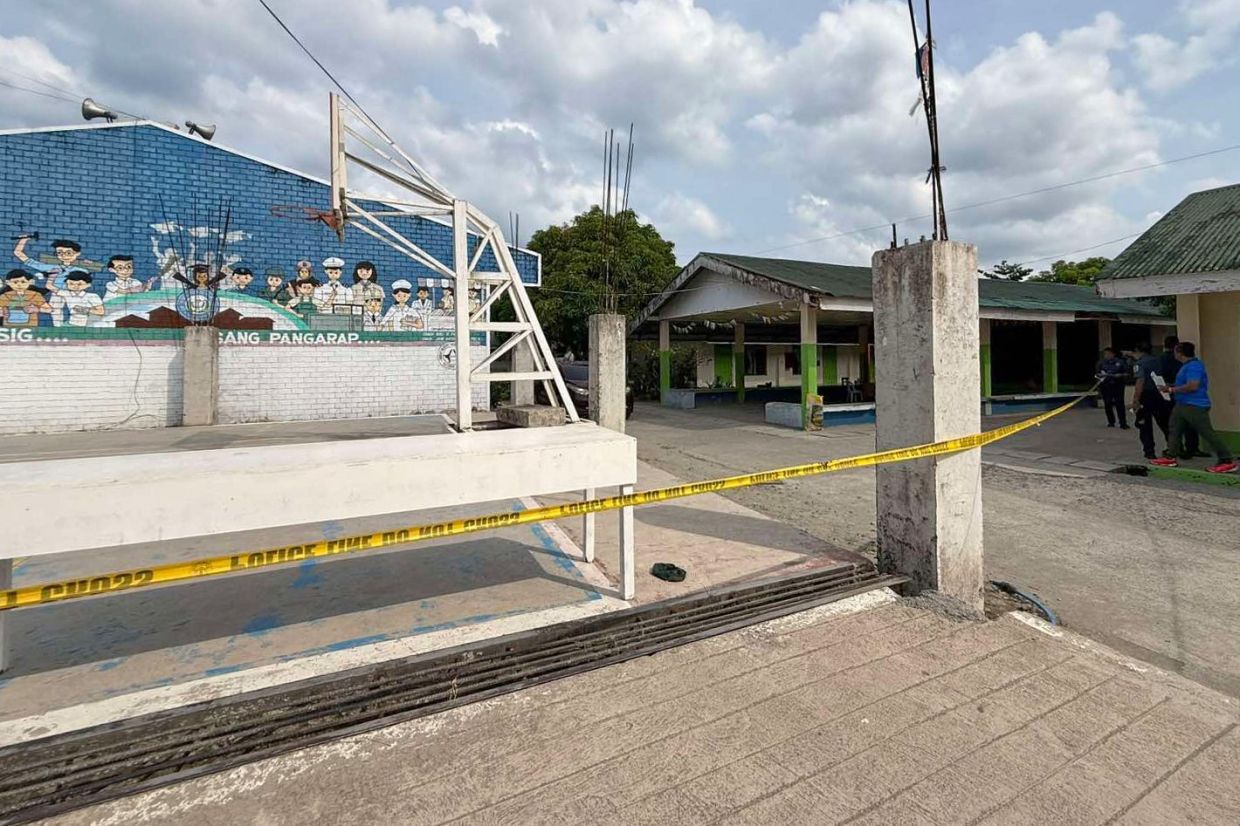
A 14-year-old female student from Tolosa National High School in the Philippines was detained by police after allegedly posting violent threats against her school on social media, authorities announced on Thursday. Interior Secretary Jonvic Remulla revealed at a briefing in Camp Crame that the Philippine National Police Criminal Investigation and Detection Group apprehended the minor following information provided by Senator Bam Aquino regarding the threatening social media posts made Wednesday night. The student, identified as a Grade 10 pupil, allegedly used the platform to warn her classmates of an impending attack, raising alarm among school authorities and law enforcement in a climate of heightened tension following a tragic mass shooting at another Leyte institution.
The threatening messages posted by the student contained explicit warnings directed at her peers. According to Remulla's account of the posts, the student wrote threatening language including "Yo, from Tolosa, prepare yourselves, especially to you, as you owe me" and promised to "disrupt the school." The messages escalated in severity, stating "There is no time nor day. Be prepared for whoever gets shot or stabbed. We don't care. Good luck to you at Tolosa National High School." The posts, designed to reach a wide audience among fellow students, sparked immediate concern given that they came just days after an actual school shooting at San Jose National High School in Tacloban City, where two teenage shooters killed three students and wounded at least twenty others on Monday.
Investigators determined that the Tolosa student had created multiple Facebook accounts to spread her threatening messages, demonstrating a deliberate effort to amplify the threat across social media platforms. The police relied on digital forensics and information from concerned members of the public to establish her identity definitively. However, once authorities became aware of the situation and began their investigation, the minor quickly removed the offensive content from all her accounts. When confronted by law enforcement, the student exhibited reluctance and an unwillingness to cooperate, citing fear of the consequences of her actions. Her parents similarly refused to engage with investigators from the Tolosa Municipal Police Station when approached, further complicating the inquiry.
Under Philippine law, the minor could not face formal criminal charges due to her age and the protections afforded by Republic Act No. 9344, the Juvenile Justice and Welfare Act. Consequently, the police transferred custody of the student to the Department of Social Welfare and Development, which subsequently released her into her family's care. This legal framework, designed to prioritize rehabilitation over punishment for minors, meant that despite the severity of her threats, traditional prosecution remained unavailable to authorities. The case illustrates the complex intersection of juvenile justice protections and public safety concerns in an era of social media-enabled threats.
Remulla's investigation revealed that personal and family difficulties likely motivated the threatening posts rather than any serious intent to commit violence. During subsequent discussions with the student's family, authorities came to believe the threat had been neutralized and was no longer active. The inquiry found no evidence suggesting the minor had developed an organized plan to carry out an actual attack, nor did investigators discover any indication that others were involved in coordinating the threat. Critically, neither the student nor any member of her household had access to firearms, a factor that substantially reduced the credibility of the threat from a law enforcement perspective.
Detectives identified a possible connection between the Tolosa student's posts and the deadly Tacloban shooting that had occurred just days earlier. Remulla suggested that the minor may have been influenced by extensive media coverage of the San Jose National High School incident, which had dominated local news cycles since Monday. The timing and the specific nature of the threats—mentioning shooting and stabbing—appeared to echo elements of the recent attack, raising questions about how media reporting and social media amplification of school violence can influence vulnerable adolescents.
The Tacloban City shooting itself represents a tragic escalation in school violence within the Philippines. Two teenage perpetrators, aged 14 and 15 years old, opened fire at San Jose National High School on Monday, resulting in three confirmed deaths and injuries to at least twenty others. The incident shocked the nation and prompted immediate calls for investigation into how minors accessed firearms and what warning signs may have been missed. The case drew international attention and reignited debates about school safety protocols and youth mental health support across the archipelago.
A particularly notable finding in both the Tacloban shooting and the Tolosa threat case was the connection to the online game GoreBox, a title that simulates graphic violence. Police investigations indicated that the two Tacloban shooters and the Tolosa student were all enthusiastic players of the game. Following the Monday school shooting, the Cybercrime Investigation and Coordinating Centre moved to temporarily ban GoreBox in response to concerns that the game may have desensitized young players to violence or served as an ideological catalyst for real-world attacks. The decision highlights growing anxieties among Philippine authorities regarding the psychological effects of violent video games on adolescent behavior, though researchers continue to debate the causal relationship between gaming and actual violence.
The cases underscore significant challenges facing Philippine law enforcement in the social media age, where threats can be disseminated instantly to hundreds or thousands of peers. The speed with which the Tolosa student deleted her posts once authorities became aware of the situation demonstrates the difficulty of preserving digital evidence and establishing the full scope of what was shared. Additionally, the reluctance of both the student and her parents to cooperate with investigators reflects a broader cultural dynamic in which some families perceive police involvement as punitive rather than protective, potentially hampering efforts to identify genuine threats early.
For schools and communities across the Leyte region, the Tolosa incident has reinforced awareness that threats can originate from within student populations themselves, not merely from external actors. The incident prompted heightened vigilance at educational institutions and likely contributed to increased parental anxiety about school safety. Educators now face the delicate task of maintaining secure learning environments while respecting students' digital privacy and avoiding overreach that might criminalize typical adolescent social media behavior. The case also highlights the need for improved mental health services and counseling resources within schools, particularly in the aftermath of high-profile violent incidents that can traumatize young people and distort their perceptions of threat and safety.
The incident raises important questions for the broader Southeast Asian region regarding how countries can balance youth protection under juvenile justice frameworks with public safety imperatives in an increasingly digital world. As social media penetration deepens across Southeast Asia and gaming becomes more central to youth culture, other nations in the region may face similar challenges in responding to school-based threats originating from online platforms. The Philippine approach—combining swift digital investigation with social welfare intervention rather than criminal prosecution—offers one model for handling such cases, though its effectiveness in deterring future threats remains uncertain.

