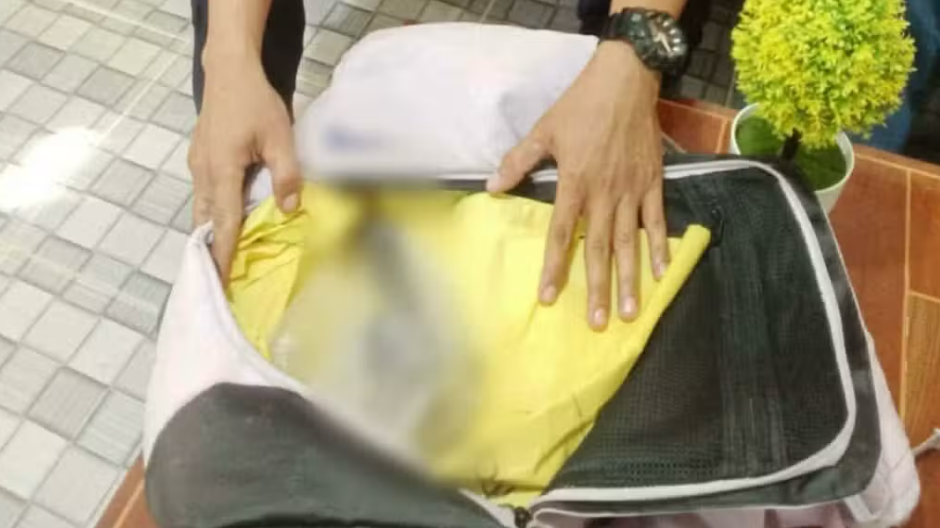
A loaded .357-calibre revolver was discovered inside the school bag of a 14-year-old student during a random security inspection at a school in Pinamungajan, Cebu, on Thursday afternoon, triggering immediate intervention by police and school authorities in an incident that underscores ongoing safety concerns affecting educational institutions across the region.
The discovery occurred at approximately 3.50pm when a teacher conducting a precautionary bag inspection as part of routine safety protocols identified the firearm among the student's belongings. The revolver was later identified as a .357 Smith & Wesson Magnum, and was found to be unloaded at the time of recovery. School officials did not delay in alerting law enforcement, and responding police officers secured the weapon and documented the incident according to standard procedures.
Initial police inquiries revealed that the firearm had belonged to the student's grandfather, who had kept it stored inside a cabinet at the family residence. The minor, acting without parental knowledge or consent, removed the weapon from its storage location and carried it to school on the day of discovery. This development raised critical questions about firearm safety practices within households, particularly in environments where children have unsupervised access to residential storage areas.
The boy's parents were engaged in work outside their home municipality at the time of the incident, leaving the teenager under the supervision of his grandparents. This family arrangement, common across the Philippines and Southeast Asia where extended family care for school-age children, created a supervisory gap that allowed the unauthorized removal of the firearm. Following established protocols for cases involving minors, police transferred the student to the Municipal Social Welfare and Development Office pending the arrival of his parents or authorized guardians.
The incident occurred within a heightened security environment created by earlier violence in regional educational settings. Just weeks prior, a shooting at a senior high school in Zamboanga had claimed two lives, prompting Cebu Governor Pamela Baricuatro to issue comprehensive directives aimed at strengthening school security measures across both public and private institutions in the province. These instructions emphasized the need for increased police visibility, regular systematic security inspections, and enhanced communication channels between law enforcement and school management.
In response to the governor's directive, the Cebu Police Provincial Office, under the leadership of Provincial Director Police Colonel Abubakar Udang Mangelen Jr, implemented a structured deployment strategy known as the one-police-to-school scheme. This approach, developed in coordination with municipal government units and educational administrators, assigned dedicated police personnel to individual schools to provide continuous on-site security and to conduct or supervise safety inspections. The program represents a significant commitment of police resources to school-based security across the province.
The discovery of a functioning firearm within an educational setting, even in an unloaded state, demonstrated that the heightened security measures initiated following the Zamboanga incident were proving effective in identifying and neutralizing potential threats. The systematic bag inspection that yielded this recovery illustrated how routine, consistent security protocols can intercept dangerous items before they pose harm to students or staff. For Malaysian observers of regional security developments, the incident highlighted both the vulnerabilities that exist in school environments and the tangible results that structured preventive measures can produce.
The case has prompted fresh reminders from law enforcement authorities regarding responsible firearm ownership practices, particularly in domestic settings where minors reside. Police have emphasized that firearm owners bear a legal and moral obligation to secure weapons in locations that are genuinely inaccessible to children, utilizing locks, safes, or other effective containment methods that prevent unauthorized handling. This messaging extends across Southeast Asia, where varying legal frameworks around civilian firearm ownership create different risk profiles in different jurisdictions.
As of Friday, the investigation remained active, with appropriate protective and rehabilitative interventions for the minor being coordinated between school authorities, the MSWD Office, and the student's family. The psychological and developmental dimensions of why a 14-year-old would remove a loaded firearm from home and transport it to school remained subjects of ongoing inquiry. The case underscores how school safety incidents frequently intersect with broader family circumstances, mental health considerations, and supervision challenges that require multidisciplinary responses beyond purely enforcement-oriented approaches.
The incident carries implications for education policy and school safety planning across Southeast Asia, where school shootings remain rare compared to some other regions, but where firearm access within residential settings and the security of educational institutions remain ongoing policy discussions. The effectiveness of the Cebu security response demonstrates the potential of coordinated provincial-level initiatives that combine visible police presence with systematic inspection protocols. For Malaysian policymakers and school administrators monitoring regional best practices, the Cebu experience offers practical insights into how emergency security measures can be rapidly implemented and operationalized at scale.

