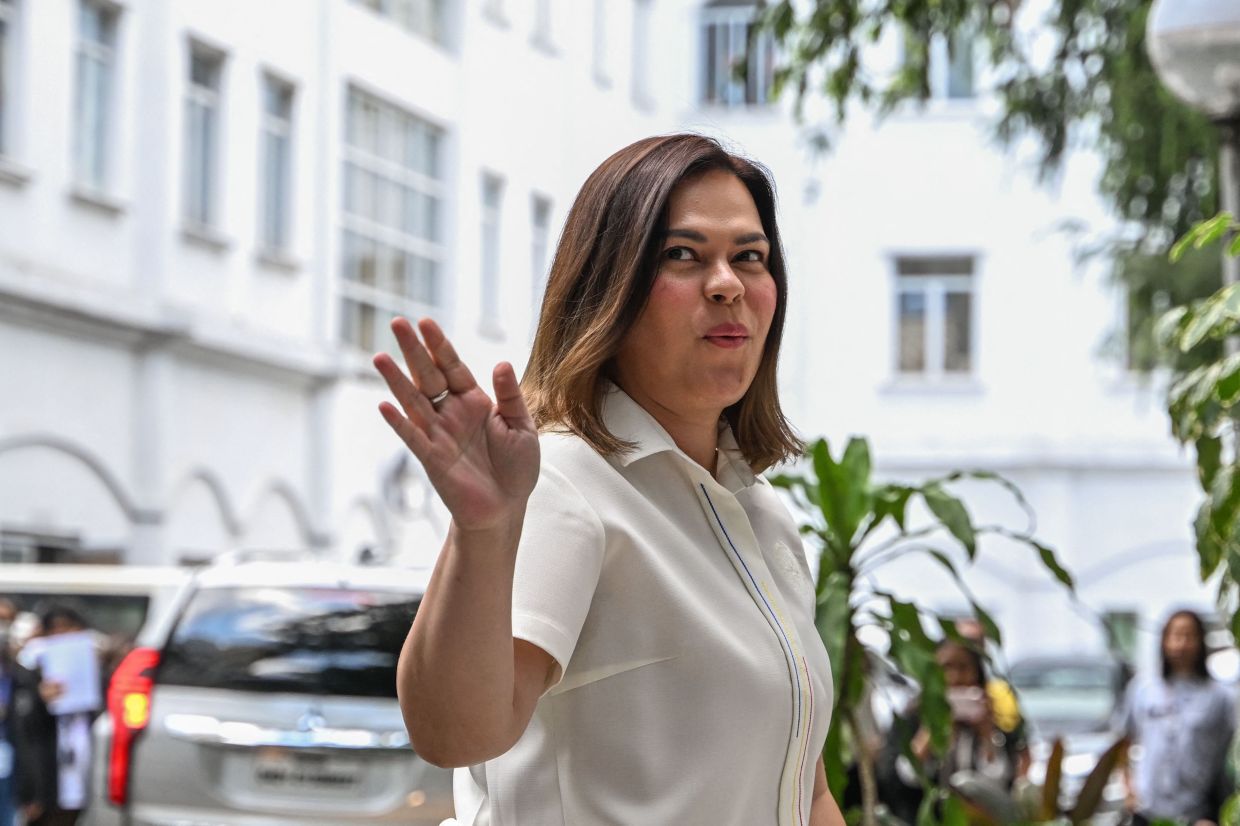
The Philippine Palace officially confirmed on Tuesday that Vice President Sara Duterte is currently outside the country on an authorized personal trip extending through July 31, marking a significant development as impeachment proceedings against her continue in absentia. Palace press officer Claire Castro revealed at a media briefing that President Ferdinand Marcos Jr approved the vice president's foreign journey through the Office of the Executive Secretary, with travel authorisation dating from July 16.
The approved itinerary encompasses five nations across Europe and the Middle East: Qatar, Germany, the United Kingdom, Northern Ireland, and the Netherlands. Duterte's defence spokesperson, lawyer Michael Poa, confirmed during Tuesday's impeachment trial that she is currently based in The Hague, the Netherlands, while assuring observers that she would return to the Philippines in due course. The timing of the overseas journey has drawn scrutiny given that it coincides with active legal proceedings against the vice president, whose impeachment trial began this week.
Duterte's presence in The Hague is understood to be connected to her father, former President Rodrigo Duterte, who has been held in a Philippine detention facility since March 2025 following an arrest order from the International Criminal Court. The elder Duterte faces prosecution before the ICC, with trial scheduled for November 30, on charges related to crimes against humanity during his tenure as Davao City mayor and later as Philippine president. The charges centre on allegations of indirect co-perpetration in extrajudicial killings conducted as part of anti-drug and anti-criminal operations spanning 2011 to 2019.
The arrest of the former president in March 2025 represented a dramatic legal escalation, coming after the ICC formally issued an arrest warrant based on crimes against humanity allegations. International human rights organisations and advocacy groups have cited what they characterise as systemic violence linked to the drug war conducted during Duterte's presidency, which resulted in thousands of deaths that remain contested in terms of their legality and justification. The ICC's involvement marks the Philippines' first case before the international court, highlighting the gravity that the international body attributes to the allegations.
Vice President Duterte's impeachment trial commenced this week in the Philippine Congress, with multiple articles of impeachment filed against her by a coalition of opposition lawmakers. The articles centre on allegations including betrayal of public trust, culpable violation of the constitution, and other charges related to her administration and public statements. Her absence during the trial's opening sessions has sparked debate among political observers regarding the appropriate conduct expected of a sitting vice president during such serious legal proceedings.
The approval of her foreign travel by President Marcos Jr during this period suggests either coordination between the two offices or an interpretation of constitutional procedures permitting such travel even during impeachment. Under Philippine constitutional law, impeachment trials proceed regardless of the defendant's physical presence, though convention and political expectations have historically favoured the defendant's participation in their own defence. Duterte's defence team appears to be managing her case through legal representatives and formal filings rather than direct courtroom participation.
The Duterte family's international legal entanglements have created unprecedented diplomatic and legal complexity for the Philippines. With the former president facing ICC prosecution, his daughter navigating impeachment, and broader questions about accountability for the anti-drug campaign, the nation's political establishment and civil society face difficult reckoning with historical events. The ICC process is distinct from the impeachment proceeding, with international jurisdiction applying to the former president's case and domestic processes applying to the vice president's trial.
For Malaysian and Southeast Asian observers, the Philippine developments underscore broader regional tensions surrounding human rights accountability, the role of international courts, and the intersection of domestic politics with international law. The case represents a test of whether international legal mechanisms can function effectively in Southeast Asia, where several nations have historically resisted external judicial scrutiny. The ICC's involvement has already generated diplomatic responses from various governments and commentary from human rights bodies globally.
The vice president's foreign journey also reflects the political complexities surrounding the Duterte family legacy in the Philippines. While the former president's supporters maintain that the drug war addressed serious criminal challenges, critics argue it violated fundamental human rights. This ideological divide continues to shape Philippine politics, with the impeachment of the vice president partly reflecting this broader contestation over the Duterte administration's record and its ongoing political influence.
The timing and approval of Duterte's travel raise procedural questions about executive prerogatives and legislative oversight. Political analysts note that while the executive possesses authority to approve official and personal travel by government officials, the context of active impeachment proceedings introduces additional considerations about political propriety and public perception. The Palace's straightforward confirmation suggests the administration views the travel as unproblematic under existing legal frameworks.
As the impeachment trial progresses, the vice president's defence strategy appears focused on legal argumentation through counsel rather than high-profile courtroom presence. Her anticipated return before July 31 suggests coordination with the trial schedule, though significant portions of the proceedings will have occurred during her absence. The resolution of both the impeachment case and the ICC prosecution of her father will likely shape Philippine politics significantly in coming months.

