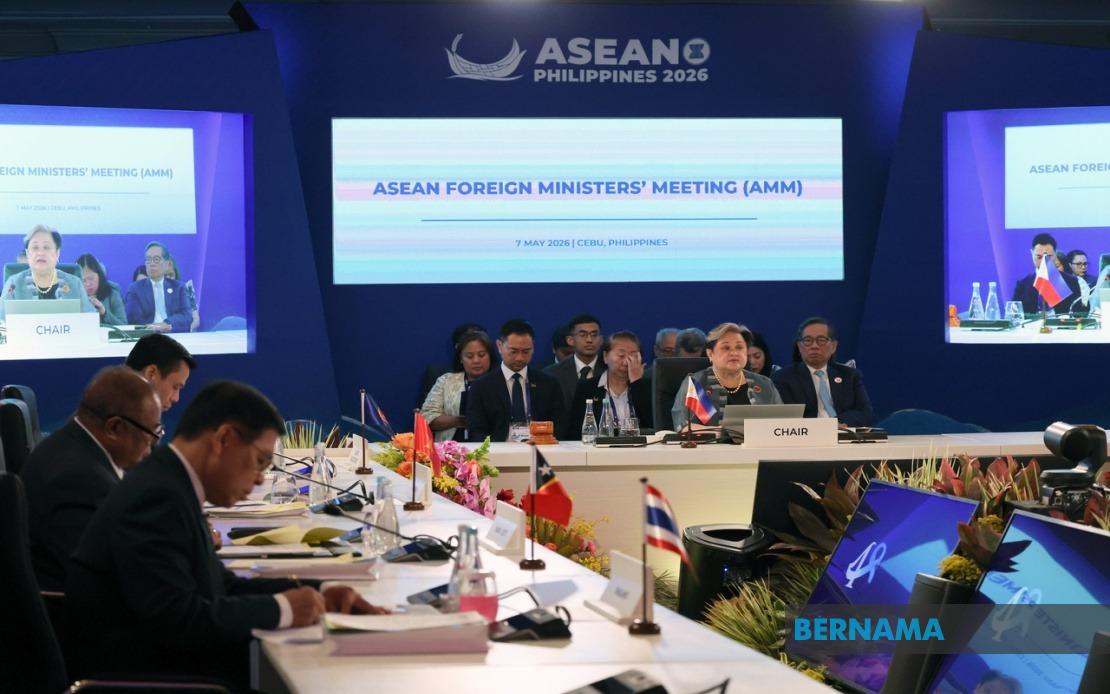
The Philippines has reaffirmed its backing for ASEAN's Five-Point Consensus as the cornerstone framework for addressing the Myanmar crisis, yet simultaneously championed a more pragmatic and flexible methodology for putting the plan into action. Speaking during a written interview, Philippine Foreign Affairs Secretary Ma. Theresa P. Lazaro acknowledged that several ASEAN member governments have recently suggested revisiting how the framework is deployed and executed to generate more substantial results and impact.
Lazaro stressed that the Philippines' position does not constitute any retreat from the Five-Point Consensus in principle or substance. Rather, she argued, ASEAN's leadership and collective initiatives must be deliberately calibrated to respond to the genuine circumstances developing on the ground in Myanmar. This signals a subtle but significant shift in how the regional bloc approaches what has become one of its most intractable policy challenges since the military's seizure of power in February 2021.
The Five-Point Consensus, formally adopted in April 2021, encompasses five pillars: halting all violence immediately, facilitating comprehensive discussions involving every relevant actor, designating an ASEAN Special Envoy to shepherd mediation efforts, channeling aid to affected populations, and ensuring the envoy maintains active engagement with all stakeholders involved in the Myanmar situation. For nearly three years, this framework has served as ASEAN's official roadmap, yet implementation has proved frustratingly difficult amid deepening conflict and humanitarian deterioration.
Regarding Myanmar's standing within ASEAN, Lazaro indicated that any restoration of full diplomatic participation hinges on demonstrable advancement across three critical dimensions: tangible de-escalation of violence, meaningful engagement in constructive dialogue among conflicting parties, and measurable delivery of humanitarian assistance to civilians. This conditionality establishes benchmarks that observers say remain distant given the military junta's current trajectory and the continued resistance of opposition forces.
The Philippines, operating as this year's ASEAN Chair, intends to establish dedicated forums enabling member states to collectively evaluate Myanmar's trajectory and determine ASEAN's strategic direction. Lazaro noted that the annual ASEAN Leaders' Review and Decision mechanism provides the institutional platform for such assessment, allowing each member to gauge whether substantive progress is occurring in violence reduction, dialogue expansion, and aid delivery. This procedural approach attempts to balance ASEAN's commitment to consensus decision-making with the need for regular accountability measures.
Since the 2021 coup, ASEAN has restricted Myanmar's participation by barring senior military figures from attending summit meetings while permitting only non-political representatives to participate in high-level forums. This middle-ground approach reflects the bloc's endemic tensions between principles like national sovereignty and the imperative to respond to humanitarian and democratic concerns. The restriction has frustrated both the junta and various opposition movements, each viewing ASEAN's constraints as insufficient.
Malaysia's Foreign Minister Datuk Seri Mohamad Hasan articulated complementary perspectives in late June, indicating that ASEAN was actively exploring alternative methodologies to strengthen the Five-Point Consensus implementation while maintaining it as the supreme framework. Malaysia's position underscores recognition across the bloc that current strategies require recalibration, though consensus remains elusive regarding what those adjustments should entail. The divergence reflects deeper disagreements within ASEAN about how assertively to pressure Myanmar's military establishment.
Malaysia has committed to sustained engagement with Myanmar's full spectrum of political actors, including the military government, the National Unity Government representing opposition interests, the People's Defence Force comprised of armed resistance fighters, and the various ethnic armed organisations operating in border regions. This comprehensive outreach strategy acknowledges that durable resolution requires negotiating with actors whose interests fundamentally conflict, a reality that complicates ASEAN's consensus-based approach to regional diplomacy.
For Southeast Asian observers, the Philippines' emphasis on practical flexibility rather than rigid adherence to established frameworks signals growing recognition that the Myanmar crisis has metastasized beyond what traditional ASEAN mechanisms were designed to address. The humanitarian toll has mounted substantially, with thousands killed and millions displaced. The conflict has generated regional destabilisation affecting neighbouring Thailand and Laos, while refugee flows have impacted Bangladesh and other countries beyond ASEAN's borders.
The tension between maintaining procedural consistency and responding to operational realities reflects ASEAN's broader institutional vulnerabilities. The bloc's cornerstone principle of non-interference in member affairs increasingly clashes with the magnitude of Myanmar's internal chaos and its cross-border consequences. The Philippines' formulation—remaining loyal to the Five-Point Consensus while fundamentally reimagining its execution—attempts to navigate between abandoning ASEAN's founding doctrines and adapting to circumstances those principles never contemplated.
As ASEAN Chair, the Philippines faces pressure to produce tangible progress before transferring the rotating leadership position next year. The call for strategic flexibility likely reflects frustration with the military junta's intransigence and recognition that unchanged approaches will produce unchanged results. Whether ASEAN member states can converge on revised implementation mechanisms remains uncertain, particularly given historical divisions over how to balance principle with pragmatism in Myanmar policy.
The broader implications extend throughout Southeast Asia, where the Myanmar crisis functions as a test case for ASEAN's capacity to address major intraregional crises in the twenty-first century. Malaysia's emphasis on engaging all stakeholders mirrors the Philippines' flexibility argument, suggesting potential consensus may emerge around revised operational strategies even if the fundamental framework endures. The coming months will clarify whether this rhetorical flexibility translates into substantive policy changes that move beyond incremental adjustments.

