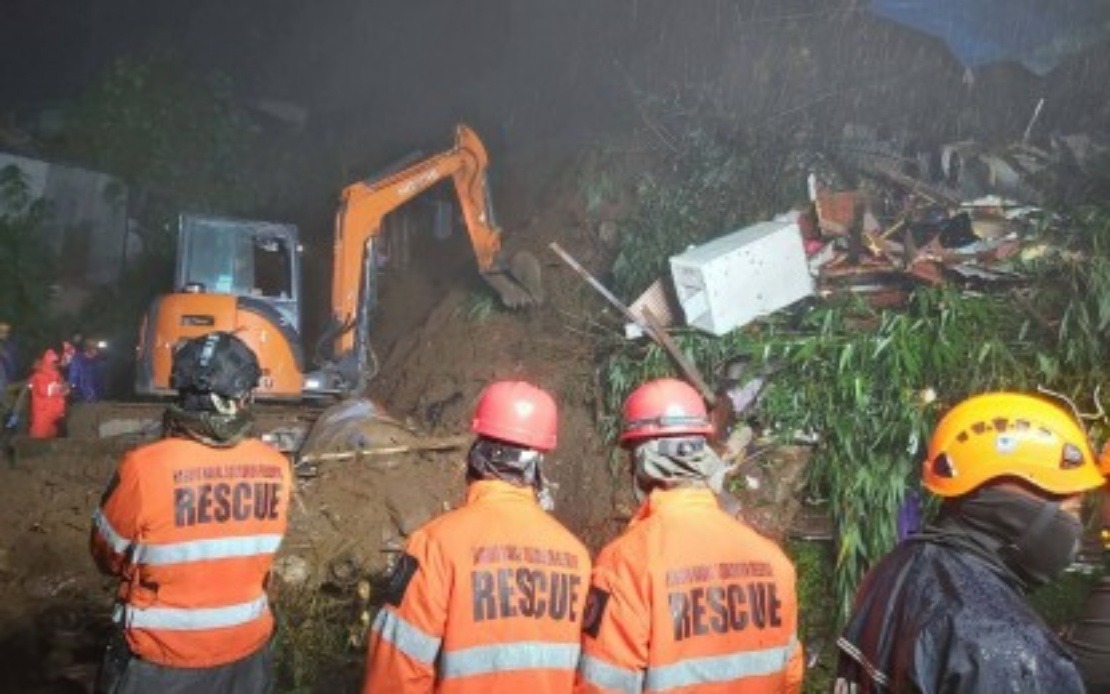
The Philippines continues to grapple with the destructive aftermath of consecutive tropical weather systems that have left a mounting humanitarian toll across the archipelago. According to the Office of Civil Defence (OCD), the combined impact of Tropical Depressions Luis and Maymay alongside the southwest monsoon has claimed 19 lives, while approximately 2.2 million people have been forced to contend with the consequences of these severe weather events. The scale of the disaster underscores the vulnerability of the Philippine population to the region's increasingly active storm systems and the strain such disasters place on national disaster response infrastructure.
The geographical distribution of casualties reveals a concerning concentration of fatalities in the mountainous northern regions. The OCD confirmed that 12 of the 19 deaths occurred in Benguet, a highland province frequently susceptible to landslides and flooding due to its steep terrain and high precipitation levels. Four additional fatalities were documented in Rizal Province, located east of Metro Manila, while three deaths were recorded in Batangas, situated south of the capital region. This pattern reflects how tropical depressions disproportionately impact areas with challenging topography and limited infrastructure resilience, a dynamic increasingly familiar to disaster management officials across Southeast Asia as monsoon intensification continues.
Beyond the confirmed fatalities, the disaster has left additional casualties requiring medical intervention and several individuals unaccounted for. The OCD reported 15 injured persons distributed across multiple regions, with the majority again concentrated in Benguet where 12 of these cases were recorded. Additional injuries were reported in Ilocos Sur, Rizal, and Cavite, indicating that the weather disturbances affected not merely localized areas but swept across geographically dispersed provinces. Compounding these immediate health impacts, four persons remain missing following the tropical depressions, three in Benguet and one in Batangas, creating additional anxiety for families and adding complexity to ongoing search and rescue operations.
The displacement statistics illustrate the extraordinary breadth of the disaster's human impact across the nation. Nearly 650,000 families comprising 2.27 million individuals have been affected across ten major regions spanning the country from north to south. These regions include the Ilocos Region and Cagayan Valley in the north, the densely populated Cordillera Region and National Capital Region, extending through Central Luzon and the Bicol Region, and reaching into Western Visayas, Mimaropa, Calabarzon, and the Zamboanga Peninsula. For Malaysian observers, this geographic spread underscores how tropical weather systems in the western Pacific generate impacts far beyond single administrative boundaries, a consideration relevant to understanding regional climate vulnerability patterns.
The emergency response apparatus has mobilized substantially to address the immediate humanitarian crisis. Approximately 919 evacuation centres have been established nationwide, currently sheltering roughly 26,000 families or nearly 95,000 individuals. These facilities represent the front line of disaster response, tasked with providing temporary shelter, food, water, and medical care to those displaced by flooding and landslides. The scale of evacuation centre operations reflects both the severity of the situation and the logistical challenges inherent in coordinating emergency services across such a vast and geographically diverse nation during a period of active weather disturbance.
Physical infrastructure has sustained considerable damage throughout the affected regions. A total of 639 residential structures sustained damage of varying degrees, while an additional 45 houses were completely destroyed. These statistics represent more than mere property loss; destroyed and damaged homes translate to prolonged displacement for families already stressed by economic uncertainty and the immediate trauma of natural disaster. The reconstruction of residential infrastructure typically extends months or years beyond the initial emergency phase, creating extended periods of vulnerability for affected communities and straining household resources already depleted by emergency response expenses.
The damage toll extends significantly into the productive sectors of the economy. Infrastructure damage has been provisionally assessed at PHP1.46 million, equivalent to approximately RM97,000, impacting roads, bridges, utilities, and other public assets essential for regional functioning and economic activity. Far more substantial, however, has been the agricultural impact, with preliminary estimates placing losses at PHP135.33 million. This magnitude of agricultural damage carries particular significance for the Philippine economy, as rural communities dependent upon farming face immediate threats to food security and income. For a nation where agricultural exports constitute a meaningful component of foreign exchange earnings, such losses reverberate beyond individual farming families to impact regional supply chains and food availability.
The southwest monsoon component of this weather system deserves particular analytical attention, as it represents a seasonal climatic phenomenon distinct from the tropical depressions themselves. The monsoon brings sustained moisture and wind patterns that interact with tropical cyclonic systems to amplify rainfall and extend the duration of severe weather conditions. This interaction between seasonal wind patterns and discrete storm systems illustrates how compound weather events can produce impacts exceeding what individual systems might generate independently, a phenomenon increasingly recognized by climate scientists as climate patterns shift.
From a regional perspective, the Philippine experience with these consecutive tropical disturbances provides sobering context for other Southeast Asian nations. The Philippines' geographic position directly in typhoon alleyways and its growing population density in vulnerable coastal and lowland areas create conditions where tropical systems consistently generate significant humanitarian consequences. Malaysia, while generally positioned south of the primary typhoon belt, nonetheless experiences enhanced rainfall and flood risks during monsoon transitions, and the Philippine experience illustrates the importance of maintaining robust disaster preparedness infrastructure and early warning systems.
The disaster response coordination across multiple government agencies and the scale of evacuations underscore the institutional demands imposed by large-scale natural disasters. The Office of Civil Defence's role in verifying casualty figures, tracking displacement statistics, and estimating infrastructure damage represents the institutional scaffolding upon which disaster response depends. For developing nations with limited budgets and competing infrastructure priorities, maintaining such institutional capacity presents constant challenges, yet remains essential for protecting populations in a region where tropical weather systems represent a recurring and intensifying threat.
Looking forward, the reconstruction phase will extend across months, requiring sustained government resources, international humanitarian assistance, and community-level recovery efforts. The psychological impacts upon affected populations, the disruption to agricultural livelihoods, and the infrastructural deficits created by this disaster will shape regional conditions well beyond the immediate emergency period. These realities underscore why disaster risk reduction, climate adaptation investment, and resilience-building have become central to development discussions throughout Southeast Asia.

