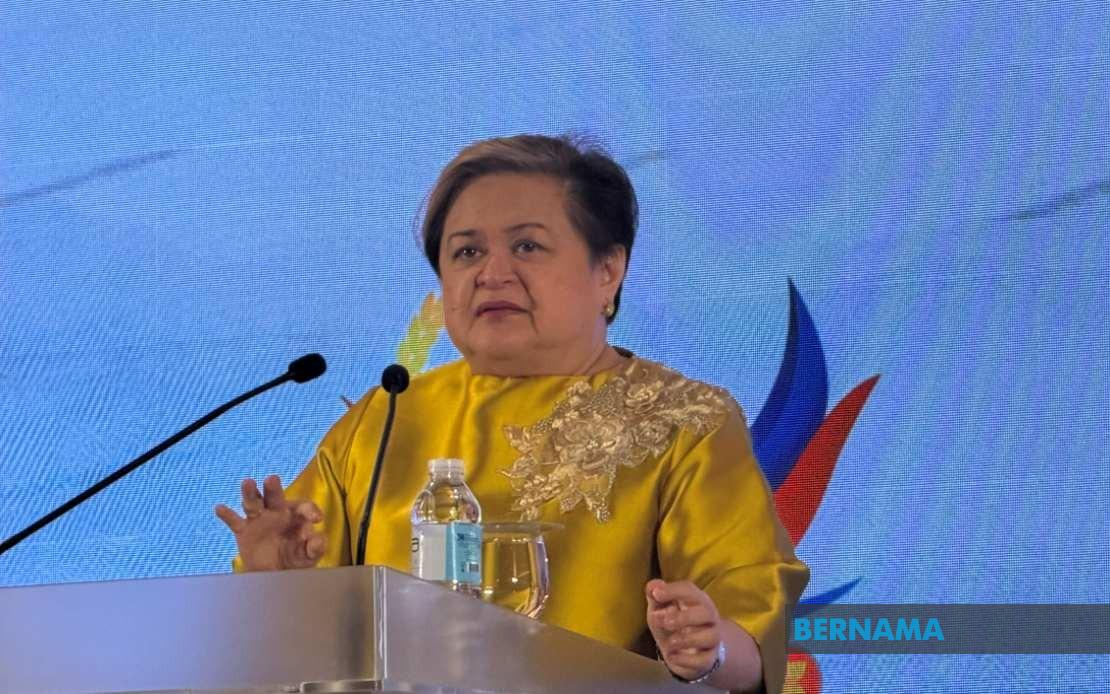
The Philippines has made an urgent appeal to ASEAN member states to fortify maritime infrastructure and operational resilience across the region's most strategically vital waterways, signalling deepening concern about how external shocks could cascade through Southeast Asia's deeply interconnected economies. Foreign Affairs Secretary Ma. Theresa P. Lazaro underscored the vulnerability facing the bloc, pointing to recent instability in the Strait of Hormuz as a cautionary example of how maritime disruptions can reverberate globally, driving energy costs upward, triggering inflationary pressures, destabilising food supplies, and fracturing the intricate web of global supply chains that sustains modern commerce.
For ASEAN nations, this threat takes on particular weight. The region has woven itself tightly into the fabric of worldwide trade networks, making it simultaneously prosperous but exposed. The Strait of Malacca, through which a substantial portion of the world's seaborne petroleum passes, and the contested waters of the South China Sea remain linchpins in regional and global commerce. Any meaningful disruption to these corridors would impose tangible costs on Southeast Asian economies—elevated shipping expenses would squeeze profit margins across manufacturing sectors, production schedules would slip, and competitive advantages carefully cultivated over decades could erode rapidly in the face of logistics bottlenecks.
Lazaro articulated the philosophical underpinning of Manila's push during discussions at the highest diplomatic levels, framing maritime security not as a military issue but as an economic necessity. She argued that ASEAN's collective response must pivot toward practical, measurable cooperation centred on three interlocking priorities: maintaining unobstructed passage through critical sea lanes, building redundancy and flexibility into regional supply chains so that shocks in one area do not paralyse the entire system, and working collaboratively to safeguard the energy and food security that underpin social stability across the bloc's member states.
Beyond these foundational pillars, Lazaro proposed a suite of institutional innovations designed to enable faster, more coordinated responses when crises emerge. She advocated for the development of enhanced crisis communication frameworks that would operate at the foreign minister level, allowing capitals to communicate and coordinate swiftly without the delays and friction that often characterise emergency diplomacy. Such protocols would create pathways for rapid information exchange, shared situational awareness, and unified decision-making when events unfold with little warning.
During the Special ASEAN Foreign Ministers' Meeting convened to discuss the situation in West Asia, Lazaro introduced a concrete proposal for improved technical cooperation mechanisms among ASEAN members. These would encompass structured information-sharing arrangements, early warning systems that could alert the region to emerging threats before they fully materialise, and joint capacity-building initiatives designed to strengthen individual member states' ability to monitor maritime activity and respond to incidents. The logic here is straightforward: a threat perceived and communicated early is more manageable than one that explodes into a full-blown crisis.
The theoretical benefits of such transparency and predictability extend into the psychological and commercial realm. Businesses making decisions about where to invest, which supply chains to develop, and how much inventory to maintain are fundamentally motivated by confidence in the stability of the operating environment. When traders and manufacturers perceive that a region is actively managing risks and responding coherently to threats, they are more inclined to route capital and commerce through that space. Conversely, perceptions of chaos or ad hoc responses can drive investment and trade flows toward perceived safer alternatives, a dynamic that could gradually erode ASEAN's attractiveness as a commercial hub.
Moving beyond dialogue and protocols, the Philippines has embedded a concrete institutional proposal within its 2026 chairmanship agenda. The establishment of an ASEAN Maritime Centre on Philippine soil represents a tangible commitment to translating rhetoric into operational capacity. This centre would function as a repository of expertise and a coordination hub for maritime-related initiatives across the bloc, creating a permanent institutional presence rather than relying solely on periodic ministerial meetings or ad hoc crisis responses.
The Maritime Centre's mandate extends across multiple dimensions. It would serve as the primary technical body supporting ASEAN and ASEAN-led mechanisms in addressing maritime challenges, whether those involve piracy, environmental protection, fisheries management, or broader security concerns. Critically, the centre would also facilitate cross-sectoral collaboration—bringing together foreign ministries, defence officials, maritime authorities, environmental agencies, and commercial stakeholders to ensure that maritime policy reflects the full spectrum of interests and expertise within the region.
For Malaysian observers and policymakers, the Philippines' initiative carries direct relevance. Malaysia's own reliance on the Strait of Malacca—through which pass not merely international commerce but also a significant portion of the nation's own trade flows—makes maritime stability a matter of national economic interest. The proposed strengthening of ASEAN coordination mechanisms and early warning systems creates frameworks within which Malaysia can contribute its own maritime expertise and benefit from improved intelligence-sharing with neighbouring states.
The timing of these proposals reflects shifting regional calculations. Geopolitical tensions across the Indo-Pacific, including great power competition and localised maritime disputes, have created conditions in which ASEAN's unity and capacity for coordinated response face genuine tests. Rather than viewing ASEAN's role as primarily political or diplomatic, Manila is reframing the bloc as an institution capable of managing concrete, technical challenges that transcend ideology and serve the material interests of all members.
For businesses operating across ASEAN, the clarification and strengthening of maritime governance frameworks carries immediate implications. Supply chain managers will gain more visibility into risks and more confidence in the region's capacity to manage crises. Insurance costs may moderate if the perceived risk environment improves. Most fundamentally, a more resilient and coordinated ASEAN maritime system supports the continued deepening of intra-regional trade and investment—the flows that have lifted millions across Southeast Asia into the middle class and created the conditions for sustained prosperity.
The broader trajectory suggested by these initiatives points toward ASEAN gradually maturing as a security community, not primarily in military terms but in the realm of functional cooperation around shared vulnerabilities. The Philippines' 2026 chairmanship, anchored in maritime resilience, thus represents an opportunity for the region to move beyond rhetorical commitments and construct the institutional architecture necessary to manage the increasingly complex challenges posed by integration into global systems while navigating geopolitical turbulence beyond the region's immediate control.

