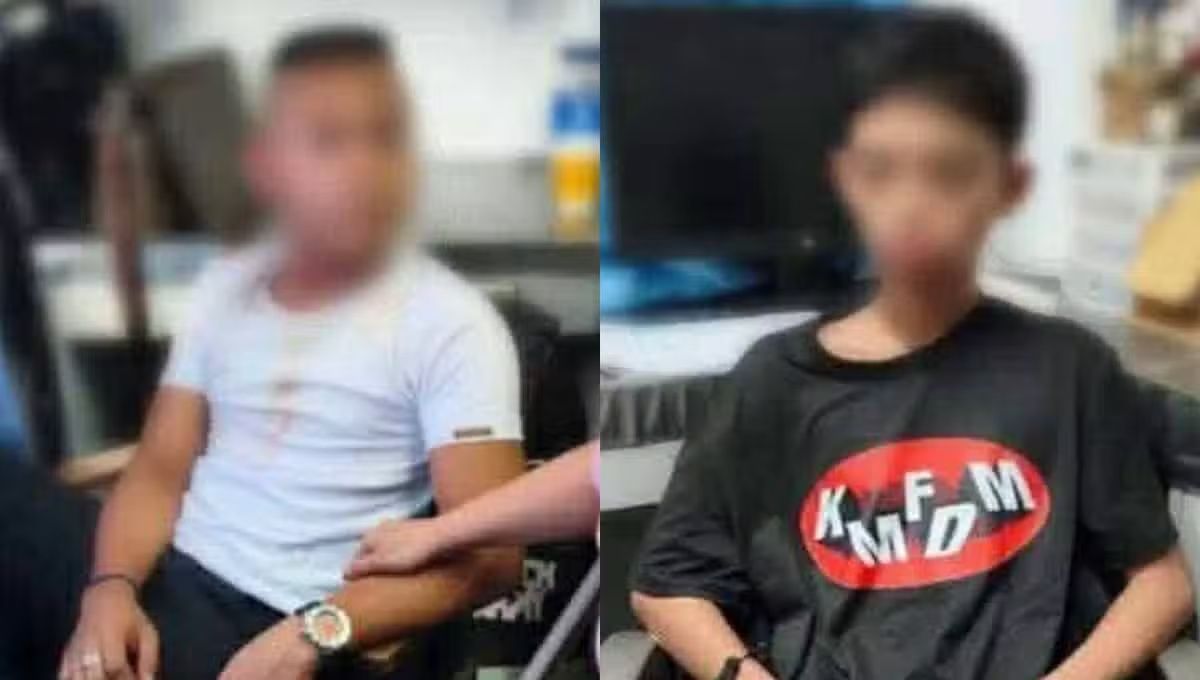
A shooting at San Jose National High School in Tacloban City on June 22 has thrust the Philippines' juvenile justice framework into the national spotlight and exposed a fundamental legal tension surrounding accountability for minors. Two Grade 9 students, aged 14 and 15, allegedly opened fire on their schoolmates following years of bullying, killing three and wounding 20 in what represents one of the deadliest school shootings in recent Philippine history. The incident, rare by regional standards, has fractured public opinion and prompted calls from top government officials to fundamentally overhaul how the country determines criminal responsibility for young offenders.
The immediate aftermath of the shooting revealed a striking disparity in how Philippine law treats the two suspects. While the 15-year-old faces multiple counts of murder and frustrated murder in criminal court, the 14-year-old cannot be formally charged under the Juvenile Justice and Welfare Act of 2006. Instead, he will be referred to a rehabilitation facility known as House of Hope, reserved for children in conflict with the law. This legal distinction has become a focal point of public anguish, particularly for grieving families who perceive the younger suspect's status as a form of impunity.
The families of two victims have emerged as vocal critics of the current legal framework. Erbea Fabian, mother of 15-year-old victim Chris Lorenz, contended that the younger shooter bore primary responsibility for the carnage. "He was the one who did most of the shooting. He was the one who killed Chris," she told the Philippine Daily Inquirer, expressing frustration that he cannot face the same criminal charges as his older accomplice. Jenny Baldoria, whose 16-year-old son Joyancee was killed, posed a rhetorical question that captures the raw emotion surrounding this case: "How can I forgive him when he was the one who killed my Yancee?" These testimonies underscore the moral and legal questions now consuming Philippine society.
The Tacloban shooting has coincided with a broader surge in school-based violence across the archipelago. Authorities intercepted a potential mass shooting at another Leyte school within days of the initial incident, while three separate stabbing attacks occurred on campuses nationwide within the same week. This escalation has galvanised political momentum for legislative change. President Ferdinand Marcos Jr has signalled openness to lowering the minimum age of criminal responsibility, while the Philippine National Police has proposed setting the threshold at 12 years old. Police spokesperson Allen Rae Co justified this position by citing documented cases of children as young as nine engaged in criminal activity, while Interior Secretary Jonvic Remulla highlighted how drug syndicates deliberately exploit minors because they cannot be prosecuted.
Senator Robin Padilla has emerged as a leading voice for reform, filing legislation in July 2025 to lower the minimum age to 10. He invoked comparisons with the United States, where school shootings have become disturbingly routine, to argue that the Philippines faces an emerging public safety crisis that demands urgent legislative intervention. Padilla pressed President Marcos to convene a special session of Congress during the scheduled recess, framing the issue as sufficiently grave to warrant extraordinary parliamentary procedures. His position reflects growing anxiety among lawmakers that the current legal framework leaves a cohort of potentially dangerous youth beyond the reach of criminal prosecution.
Investigations into the shooters' backgrounds have revealed troubling digital dimensions to the violence. One suspect had been posting violent content online and demonstrated heavy consumption of extreme gaming material before the attack. Police discovered that the 14-year-old played GoreBox, a first-person shooting simulator developed by German company F2Games that features graphic combat and extensive weaponry. The government temporarily blocked access to the game while examining its potential contribution to radicalising the young shooter. This discovery has added another layer to the reform agenda, with voices now calling for legislation restricting minors' access to violent digital content and gaming platforms.
The Philippines currently maintains one of Asia's highest minimum ages of criminal responsibility, creating a marked divergence from regional practice. Most neighbouring countries have established the threshold at 14 years old, while Indonesia sets it at 12 and Singapore at 10. Singapore's approach, which allows youth offenders between 10 and 16 to be charged and processed through Youth Court, offers a middle ground between full criminal prosecution and complete immunity. This regional context has animated reform discussions, with policymakers arguing that the Philippines has grown dangerously out of step with peers in addressing juvenile crime.
However, international human rights frameworks present counterarguments to lowering the threshold. The United Nations Committee on the Rights of the Child has explicitly advised states against reducing minimum ages below 14 and regards any threshold beneath 12 as internationally unacceptable. This guidance reflects decades of child development research suggesting that lowering criminal responsibility may harm vulnerable youth without enhancing public safety. Singapore's experience demonstrates that setting the bar at 10 does not prevent serious offences, suggesting that age reduction alone proves insufficient as a violence prevention strategy.
Tricia Clare Oco, executive director of the Juvenile Justice and Welfare Council, has mounted a vigorous counterargument to the prevailing reform narrative. She contends that the current law does not permit offenders to escape accountability, as courts retain authority to order involuntary commitment to rehabilitation facilities within 72 hours, with mandatory structured programming and parental civil liability. More fundamentally, Oco argues that lowering the age would address symptoms rather than underlying causes of youth violence. The real drivers—family instability, bullying, peer influence, and media normalisation of harm—remain untouched by criminal code amendments. She pointed to evidence from the United States, where harsh juvenile justice policies have coexisted with persistent school shootings, suggesting that statutory age reductions cannot substitute for deeper societal interventions.
The case has triggered formal investigations beyond police channels, with the Philippine Senate and Commission on Human Rights launching separate probes. The Commission on Human Rights framed its inquiry within a rights-based and child-sensitive framework, stating that honouring victims and preventing recurrence requires institutional responses grounded in human rights principles rather than purely retributive measures. This institutional involvement signals that the debate will extend beyond immediate political reactions and into sustained examination of how the Philippines can simultaneously protect children as victims of violence and as offenders requiring rehabilitation.
The unfolding debate reflects deeper tensions within Philippine society regarding childhood, responsibility, and rehabilitation. The cases of the two Tacloban shooters encapsulate a dilemma that no simple legislative fix can resolve: How should a nation distinguish between the culpability of a 15-year-old and a 14-year-old when both participated in identical violence? The legal answer currently hinges on a single year, yet victims' families rightfully question whether biological age captures moral or practical reality. As Congress prepares to reconvene, lawmakers must navigate between the emotional demands of grieving communities, the international human rights framework, and evidence suggesting that criminal age thresholds remain blunt instruments for addressing the complex roots of youth violence.

