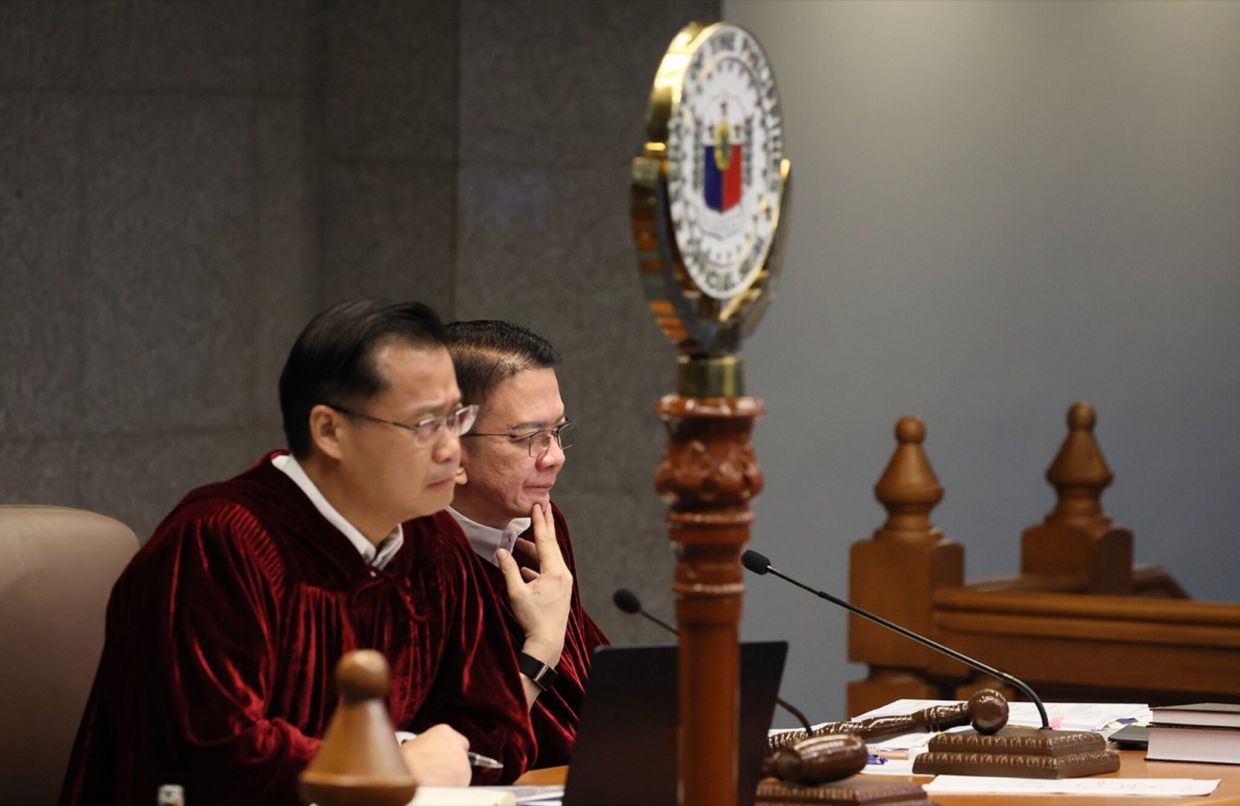
The Philippine Senate impeachment court is set to make a consequential procedural decision on Monday afternoon when it votes on whether to grant House prosecutors' request for a subpoena compelling Vice President Sara Duterte to produce her financial documents. The ruling represents one of the most significant moments in her trial, now entering its second week, with prosecutors contending that access to bank statements, tax returns and Anti-Money Laundering Council records is indispensable to their case that she accumulated wealth beyond her legitimate income sources and violated public trust.
Prosecutors maintain that the financial disclosure would provide critical evidence supporting allegations levelled under Article II of the impeachment articles, which specifically addresses undeclared and unexplained wealth. The subpoena request encompasses Duterte's personal bank accounts alongside tax documentation and AMLC records, and also seeks similar materials from her husband Manases Carpio, a lawyer. Benjamin Tolosa Jr., the prosecution's spokesperson, expressed confidence on Sunday that the Senate would approve the request, citing robust legal justification rooted in established precedent and statutory exemptions.
The prosecution's confidence rests significantly on Republic Act No. 1405, the bank secrecy law, which explicitly carves out impeachment proceedings from its strict confidentiality provisions. This legislative exception reflects a longstanding principle that impeachment proceedings operate at a constitutional level transcending ordinary privacy protections. Tolosa invoked the 2012 impeachment trial of then-Chief Justice Renato Corona, when the Senate similarly compelled disclosure of bank records despite general bank secrecy protections, establishing that such document production is constitutionally permissible in this context.
Prosecutor Chel Diokno articulated a sweeping constitutional argument during Wednesday's oral hearing, contending that the Senate, functioning as an impeachment court, derives authority directly from the Constitution to compel disclosure of otherwise confidential financial information. He argued the Data Privacy Act similarly permits disclosure when issued under valid subpoena authority. Diokno presented an AMLC report indicating Duterte's financial transactions exceeded three billion pesos between 2007 and 2013, suggesting patterns warranting closer scrutiny. He also noted that the Corona precedent involved financial records predating Corona's appointment as chief justice, supporting the notion that documents from Duterte's earlier tenure as Davao City vice mayor and mayor remain relevant to assessing whether she systematically accumulated unexplained wealth while holding public office.
The defence mounted a multifaceted challenge to the subpoena request, framing it as an overreaching fishing expedition lacking proper legal foundation. Lead counsel Michael Poa contested the scope of the request, arguing that documents spanning nearly two decades, including records from her time as Davao vice mayor, exceed reasonable bounds because impeachable offences must occur during tenure in an impeachable office. He cited a recent Supreme Court ruling in Duterte v. House of Representatives to support this argument, contending that liability cannot attach to conduct predating her assumption of the vice presidency.
Poa also questioned whether the bank secrecy law's impeachment exception automatically mandates disclosure, arguing instead that due process considerations must still constrain the Senate's subpoena power. He asserted that the Anti-Money Laundering Act and National Internal Revenue Code contain no explicit impeachment exception permitting release of AMLC reports and tax records, distinguishing them from bank account information covered by Republic Act No. 1405. Additionally, he objected to including Carpio's records on grounds that he holds no impeachable office and therefore disclosure would violate his privacy rights without constitutional justification.
Civil society organisations have mounted a parallel campaign urging the Senate to approve the subpoena, framing the decision as pivotal to institutional integrity and public accountability. The August Twenty-One Movement drew explicit parallels to the controversial "second envelope" vote during President Joseph Estrada's 2001 impeachment trial, warning that suppressing material evidence historically generates public backlash and delegitimises the impeachment process. The group argued that if Duterte is genuinely innocent of accumulating ill-gotten wealth, financial disclosure would vindicate her rather than incriminate her, and therefore withholding documents serves no legitimate defensive purpose.
The Kingdom Keepers coalition, a faith-based advocacy group led by prominent activist priest Fr. Robert Reyes and social anthropologist Dr Melba Padilla Maggay, similarly urged Senate approval. They articulated a principle-based argument that public officials must demonstrate accountability regarding their financial conduct and cannot invoke privacy protections to shield wealth sources from scrutiny. Their framing presented disclosure not as persecution but as a fundamental component of legitimate governance, asking rhetorically why Duterte should fear revealing the truth if her conduct was lawful.
The underlying impeachment case against Duterte encompasses four articles spanning alleged misuse of confidential intelligence funds, accumulation of unexplained wealth, and threats directed toward President Ferdinand Marcos, First Lady Liza Araneta-Marcos, and former Speaker Martin Romualdez. Conviction on these charges would trigger her removal from office and permanent constitutional disqualification from holding any public position, making the stakes exceptionally high for all parties. The financial records dispute thus represents far more than a technical procedural question; it will substantially determine whether prosecutors can effectively prove their most damaging allegations.
The procedural tension reflects a fundamental constitutional dilemma balancing governmental accountability against individual privacy rights. The prosecution emphasises that public officials surrender certain privacy expectations upon assuming positions of trust and that societies must possess investigative tools to detect corruption. The defence conversely insists that constitutional protections remain operative even during impeachment, and that procedural safeguards must constrain expansive government investigative authority. This Monday's vote will signal whether the Senate prioritises accountability over confidentiality.
The Senate's decision will carry implications extending beyond Duterte's immediate situation. It establishes precedent regarding the scope of impeachment authority, the hierarchy between privacy protections and governmental accountability, and the strength of statutory exceptions to confidentiality rules. A Senate vote approving the subpoena would substantially vindicate the prosecution's case, while rejection would force prosecutors to construct their narrative around circumstantial evidence and public financial disclosures. For the broader Philippine political landscape, the decision addresses whether impeachment functions as a genuine accountability mechanism or whether procedural barriers can substantially impede investigations.
Meanwhile, prosecutors continue developing other evidentiary strands. Testimony from National Bureau of Investigation Director Melvin Matibag is scheduled for Tuesday, focusing on the agency's investigation into alleged threats Duterte made against the President and his family. The NBI reportedly concluded that Duterte's remarks reflected not spontaneous outbursts but rather part of a deliberate plan, adding potential corroboration to the impeachment narrative. As the trial progresses through its crucial middle phases, the accumulating evidence and procedural rulings will progressively narrow the contested factual terrain.

