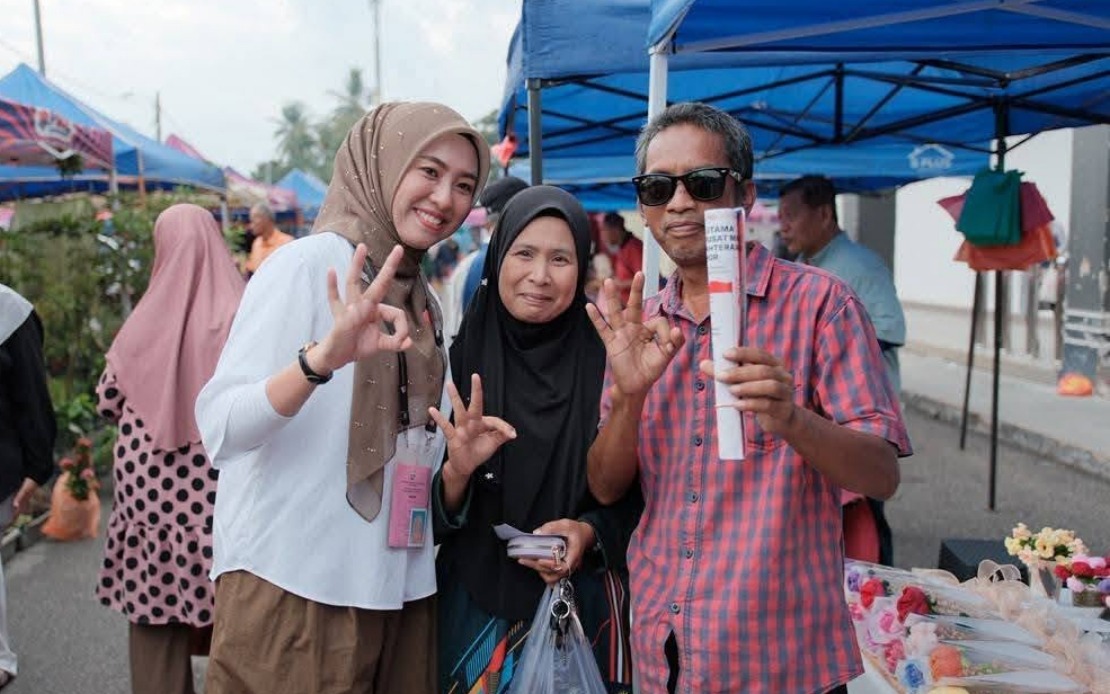
Ayna Soraya Badaruddin, Pakatan Harapan's candidate for the Sungai Balang state seat, has outlined an ambitious vision to reimagine Pantai Seri Menanti as a dedicated youth recreation and economic hub. Speaking via social media on the campaign trail ahead of Saturday's election, the candidate detailed how the coastal location's existing appeal could be harnessed through structured development to serve young people while generating tangible benefits for the surrounding community.
The proposed initiative would capitalize on the beach's established reputation as a fishing destination, particularly among younger residents across the Sungai Balang constituency. Rather than leaving the area's potential untapped, Soraya's plan envisions creating dedicated spaces where youth can engage in healthy recreational pursuits while entrepreneurs establish viable business ventures. The combination of leisure infrastructure and commercial opportunities reflects a strategy to address both social engagement and economic development simultaneously.
At the heart of the proposal lies the concept of establishing what Soraya describes as a "healing spot"—a gathering point designed to provide respite and community connection. This would be complemented by mini-stalls operating on a camping concept, enabling visitors to experience the natural environment whilst accessing services and refreshments. The approach mirrors successful community-driven tourism models seen across Southeast Asia, where authentic local experiences attract visitors seeking alternatives to conventional resort facilities.
Infrastructure improvements form a critical component of the development strategy. Soraya has identified the need for upgraded basic amenities and enhanced fishing facilities, including safer platforms for anglers. These enhancements would not only improve visitor safety but also elevate the overall recreational experience, potentially extending the area's appeal beyond current users and attracting families and tourists from neighbouring regions. Better facilities often translate into increased visitation and longer stays, both of which stimulate local spending.
The plan incorporates dedicated commercial spaces specifically reserved for young entrepreneurs, addressing a common gap in Malaysia's coastal tourism ecosystem. By providing designated areas for local youth to establish recreational businesses—whether food vendors, equipment rentals, or entertainment services—the initiative aims to democratise economic opportunity and retain spending within the community. This targeted approach to youth entrepreneurship aligns with broader efforts to address youth unemployment and underemployment in secondary towns.
Regular fishing competitions operating at zonal or district level represent another revenue-generating mechanism within the proposal. Such events would draw participants and spectators from beyond Sungai Balang, expanding the catchment area for the facility and positioning it as a regional attraction. Competition-based tourism has proven effective in numerous destinations, creating excitement, media interest, and repeat visitation whilst showcasing local talent and community pride.
The comprehensive nature of Soraya's proposal suggests consideration of sustainable, long-term development rather than ad-hoc improvement. By integrating recreational, commercial, and competitive elements, the plan attempts to create a self-sustaining ecosystem where visitor numbers naturally generate revenue that can fund ongoing maintenance and enhancement. For constituencies like Sungai Balang, which may lack major urban amenities, such localized tourism hubs can become significant economic anchors.
The timing of this proposal within the campaign for the 16th Johor State Election reflects broader electoral dynamics in the state. Soraya faces a three-cornered contest against incumbent assemblyman Selamat Takim of Barisan Nasional and Muhammad Amin Sailan representing Perikatan Nasional. In this competitive environment, candidates typically present constituency-specific development visions to differentiate themselves and demonstrate commitment to local concerns. Pantai Seri Menanti's development represents Soraya's tangible offering to voters.
The broader context involves 172 candidates contesting 56 state seats across Johor, with nearly 2.73 million registered voters participating in the election. In a three-cornered contest, voter mobilization and the perceived credibility of candidate proposals can significantly influence outcomes. Soraya's focus on youth engagement and economic opportunity targets demographics and concerns that resonate particularly strongly in constituencies where younger voters and small business owners form significant voter blocs.
From a regional perspective, the proposal reflects growing recognition across Southeast Asia that secondary and tertiary towns require targeted economic development strategies beyond traditional manufacturing or agriculture. Tourism-led development, particularly when focused on youth engagement and local entrepreneurship, offers a more inclusive alternative to capital-intensive industrial investment. Malaysia's federal and state governments have increasingly promoted such models through tourism boards and small business support programmes.
The beach's existing popularity provides a foundation upon which structured development can build. Unlike proposals requiring creation of entirely new attractions, Soraya's vision leverages demonstrated demand and existing social practices, reducing investment risk whilst increasing likelihood of community adoption. This pragmatic grounding in observable behaviour often produces more sustainable outcomes than top-down tourism development initiatives.
Successful implementation would require coordination between state government, local authorities, private sector partners, and community stakeholders. The plan's emphasis on youth participation and local entrepreneurship suggests a collaborative rather than purely commercial approach, potentially attracting government support under existing rural development or youth engagement frameworks. However, realising such visions post-election typically requires political will, sustained funding, and effective project management—challenges that transcend campaign promises.
Looking forward, Pantai Seri Menanti exemplifies the type of underutilized natural asset found throughout Malaysia's coastal regions. Whether this particular proposal advances depends partly on electoral outcomes and partly on the subsequent government's priorities and resources. Nonetheless, the framework Soraya has articulated—integrating recreation, youth engagement, infrastructure improvement, and local economic opportunity—offers a replicable model that communities and policymakers across Malaysia and Southeast Asia might adapt to their specific contexts.

