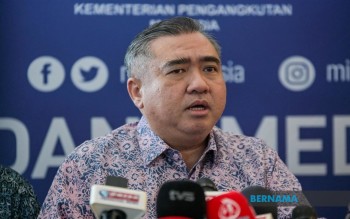
Transport Minister Anthony Loke has announced ambitious plans for the Penang International Logistics Aeropark (PILA), a transformative infrastructure project designed to substantially strengthen air cargo operations in Malaysia's northern region. Speaking at the Ministry of Transport's monthly assembly in Putrajaya on August 13, Loke outlined how this development represents a major leap forward for the country's air logistics infrastructure, positioning Penang as a key strategic hub in Southeast Asia's growing cargo network.
The PILA initiative builds upon the existing Penang air cargo facility by establishing what the minister termed a comprehensive Penang Air Logistics Complex. Rather than a modest upgrade, the project envisions a significantly expanded operation with dramatically increased handling capacity. Loke emphasised that the expansion would substantially elevate the northern region's standing within Malaysia's broader logistics ecosystem, offering shippers and freight operators enhanced capabilities for moving goods through the region.
Construction work has already commenced on the facility, which represents a collaborative effort between Malaysia Airports Holdings Bhd (MAHB) and the Penang Development Corporation (PDC). The government has invited Prime Minister Anwar Ibrahim to formally launch the initiative, underscoring its strategic importance to the nation's infrastructure development agenda. The new facility will be constructed adjacent to Penang's current cargo operations, allowing seamless integration with existing infrastructure and operational expertise.
This project reflects a deliberate policy shift toward leveraging private-sector expertise and capital for major infrastructure development. Rather than government-funded construction, MAHB is driving investment in the facility while the government assumes a facilitative role, establishing regulatory frameworks and removing implementation barriers. Loke clarified that while the government provides essential support, the financial commitment and operational responsibility rest with MAHB, a model increasingly favoured for major infrastructure projects in Malaysia.
MAHB's expansion plans extend beyond Penang alone. The airport operator is simultaneously pursuing comprehensive upgrades to cargo infrastructure at Kuala Lumpur International Airport (KLIA), reflecting a coordinated national strategy to enhance Malaysia's air cargo capabilities. However, Penang's position as the focal point for northern region development suggests a deliberate geographic distribution strategy, preventing over-concentration of logistics infrastructure in the Klang Valley and creating alternative regional hubs.
In May, the boards of PDC and MAHB formally approved establishing a joint venture entity, PILA Sdn Bhd, following an agreement signed on April 13, 2026. This corporate structure enables closer collaboration between the state development authority and the airport operator, combining PDC's local knowledge and development authority connections with MAHB's operational expertise and international airport management experience. The partnership model demonstrates how state and federal entities can cooperate on infrastructure development.
The initial phase of development focuses on constructing a new air cargo warehouse facility designated as a free commercial zone-class operation. This classification confers significant customs and regulatory advantages, allowing expedited cargo handling and reduced procedural delays. The warehouse is expected to become fully operational by 2029, providing shippers with modern facilities that meet international standards for temperature control, security, and handling procedures.
The project's long-term vision extends to 2050, with planners targeting annual cargo capacity of 500,000 tonnes by mid-century. This ambitious target reflects confidence in Penang's growth trajectory and regional demand for air freight services. The supporting warehouse infrastructure will exceed two million square feet, providing ample space for cargo sorting, consolidation, value-added services, and distribution operations. Such scale positions Penang competitively within regional air cargo networks spanning Southeast Asia and beyond.
For Malaysian shippers and logistics service providers, this expansion carries significant implications. Distributed air cargo capacity reduces dependence on KLIA, potentially lowering congestion and improving service reliability for northern-based businesses. Companies engaged in time-sensitive industries, from electronics manufacturing to pharmaceutical distribution, benefit from alternative cargo routing options. The facility's free zone status offers additional competitive advantages for export-oriented enterprises seeking to minimise customs procedures.
Regionally, PILA's development reflects Malaysia's broader positioning within global air cargo networks increasingly critical post-pandemic. Southeast Asian economies compete intensely for logistics investment, with neighbouring countries including Thailand and Singapore advancing their own cargo infrastructure. Penang's expansion helps Malaysia maintain competitiveness in attracting regional and international freight operators seeking alternatives to congested Singapore or Bangkok operations.
The project also aligns with efforts to develop Malaysia's northern economic corridor. Beyond air cargo, the PILA investment signals broader commitment to regional infrastructure development, potentially catalysing additional investment in supporting sectors including warehousing, ground transportation, and value-added logistics services. Port facilities in Penang and Klang complement air operations, creating comprehensive multimodal logistics capabilities.
Loke's emphasis on private-sector participation reflects contemporary infrastructure financing approaches increasingly necessary given government budget constraints. By structuring PILA as a commercially viable operation with revenue-generating cargo fees, the project achieves self-sustaining operations without ongoing government subsidies. This model potentially applies to other planned infrastructure upgrades, offering sustainable alternatives to traditional government funding.
As Malaysia navigates post-pandemic supply chain reconfiguration and growing e-commerce demand, air cargo infrastructure investments like PILA address genuine capacity constraints. The northern region's population growth and industrial development justify the investment, positioning the facility to serve growing regional demand for express cargo services. With operational plans targeting 2029 commissioning, the project timeline appears realistic for meeting anticipated mid-term capacity requirements.

