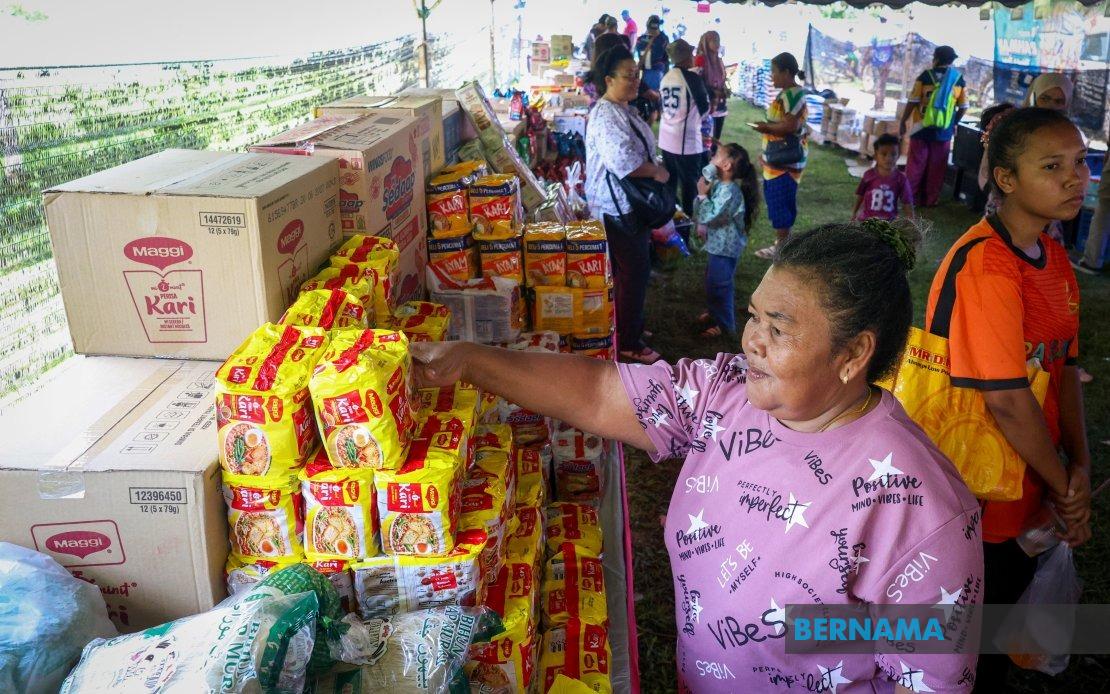
The Rahmah MADANI Sales Programme (PJRM) has arrived at Pasik Resettlement Scheme, marking a significant expansion of the government's cost-of-living relief initiative to one of Peninsular Malaysia's most remote indigenous settlements. The programme now serves more than 1,000 Temiar Orang Asli residents in the Gua Musang district, allowing them to purchase subsidised essential goods using their SARA (Rahmah Basic Contribution) credits held in their MyKad without undertaking gruelling journeys to distant commercial centres.
Previously, purchasing through the PJRM required residents of Kampung Ayong and surrounding villages to embark on expeditions lasting approximately two and a half hours to reach Kampung Jerek, the nearest participating location. This logistical burden translated into substantial financial penalties beyond the cost of goods themselves. According to Ramli Chimbong, a 51-year-old resident, the round trip consumed roughly RM600 when accounting for vehicle rental, meals, and incidental expenses. The cumulative effect meant families in the settlement were forced to either forgo the programme's price advantages or absorb considerable transportation costs that negated much of the intended subsidy benefit.
The arrival of PJRM at Pos Pasik fundamentally alters this equation. Price differentials illustrate the tangible impact on household budgets. A nine-kilogramme bag of rice that commands RM40 in local village shops is now available through the programme for RM29, representing a 27.5 per cent reduction. For communities operating on marginal incomes, such savings accumulate meaningfully across the shopping basket of staple items. The psychological relief of accessing government subsidies without exhausting resources on transport constitutes an equally significant benefit, easing the persistent tension between purchasing necessities and maintaining financial resilience in economically precarious circumstances.
SMS Maju Solution, the company executing the PJRM distribution at Pasik, deployed an initial consignment encompassing 100 different product categories specifically selected for rural consumption patterns. The opening day inventory included 300 bags of rice, 300 trays of eggs, and 300 chickens, reflecting estimates of demand volume informed by previous PJRM operations. The early-morning rush that witnessed residents arriving by 9 am validated these projections and suggested pent-up demand for the programme's services in this geographically isolated population.
Data on SARA credit utilisation reveals substantial purchasing capacity within the community, challenging assumptions about financial depletion among rural Orang Asli populations. Company operator Sabariah Mohamed Sayuti reported that many households maintained balances ranging from RM300 to RM800 in their SARA accounts, with minimal instances of individuals holding only RM100. This pattern suggests either judicious spending behaviour or that the credit allocation mechanism has effectively reached this community. The high incidence of meaningful balances provides reassurance that the subsidy programme is functioning as intended, enabling rather than merely supplementing household consumption.
The logistics of delivering goods to Pasik expose the infrastructural challenges confronting rural service provision. During the initial delivery operation, a supply vehicle experienced a tyre rupture attributable to the deteriorated road conditions characterised by rocky surfaces and muddy patches that become impassable during wet weather. Such incidents underscore the operational friction inherent in serving remote settlements and validate the necessity of programmes that reduce residents' reliance on personal transportation to distant towns. The infrastructure deficit that makes transport to Pasik difficult equally makes infrastructure investment in local service provision economically rational.
Political actors recognise both the humanitarian imperative and electoral logic of expanding PJRM coverage into Orang Asli settlements. Nenggiri assemblyman Mohd Azmawi Fikri Abdul Ghani positioned the PJRM expansion as government action responding to escalating living costs in rural Malaysia. His expressed aspiration to extend similar programmes across all Orang Asli settlements throughout the state reflects understanding that indigenous communities, facing compounded disadvantages of geographic isolation, economic marginalisation, and limited employment opportunities, experience inflation's impact with particular severity. Targeted programmes addressing these communities generate political goodwill while addressing genuine policy objectives.
The Pasik expansion exemplifies how cost-of-living relief programmes can be configured to reach structurally disadvantaged populations. Rather than limiting subsidised goods distribution to urban shopping centres or large town locations, expanding to remote settlements internalises the economic and time costs previously borne by beneficiaries. This orientation aligns with broader policy objectives of improving rural living standards and narrowing urban-rural welfare disparities. The SARA credit mechanism proves particularly effective in rural contexts where banking infrastructure is sparse and cash-based transactions dominate, providing a direct route to subsidy realisation compatible with existing payment systems.
The implications extend beyond immediate price relief for participating families. Access to cheaper staples enhances food security for households vulnerable to nutritional inadequacy, particularly consequential during seasonal income fluctuations common in Orang Asli communities dependent on agricultural or forestry-based livelihoods. Women managing household food budgets gain expanded purchasing power, a consideration relevant to gender-focused development objectives. Children in benefiting families experience improved nutritional outcomes, with long-term developmental and educational implications.
Yet the expansion also highlights the persistence of geographical disadvantage within Malaysia's development landscape. The necessity of special programmes to deliver basic goods at reasonable prices to Malaysian citizens in 2024 reflects underlying infrastructure and economic structure deficits. While PJRM addresses symptoms—high prices due to transport costs and limited competition—it does not resolve the root causes of remoteness-induced economic inefficiency. Sustained development of these communities would require complementary investments in road infrastructure, supply chain development, and economic diversification opportunities reducing reliance on government welfare programmes.
The programme's reception at Pasik suggests receptiveness to well-designed government initiatives reaching marginalised populations directly. The early enthusiasm and substantial SARA credit balances indicate that residents value subsidised goods access when convenient, challenging stereotypes about rural populations and subsidy programmes. This positive engagement provides foundation for expanding similar initiatives, though success will depend on consistent logistics and adequate resourcing.

