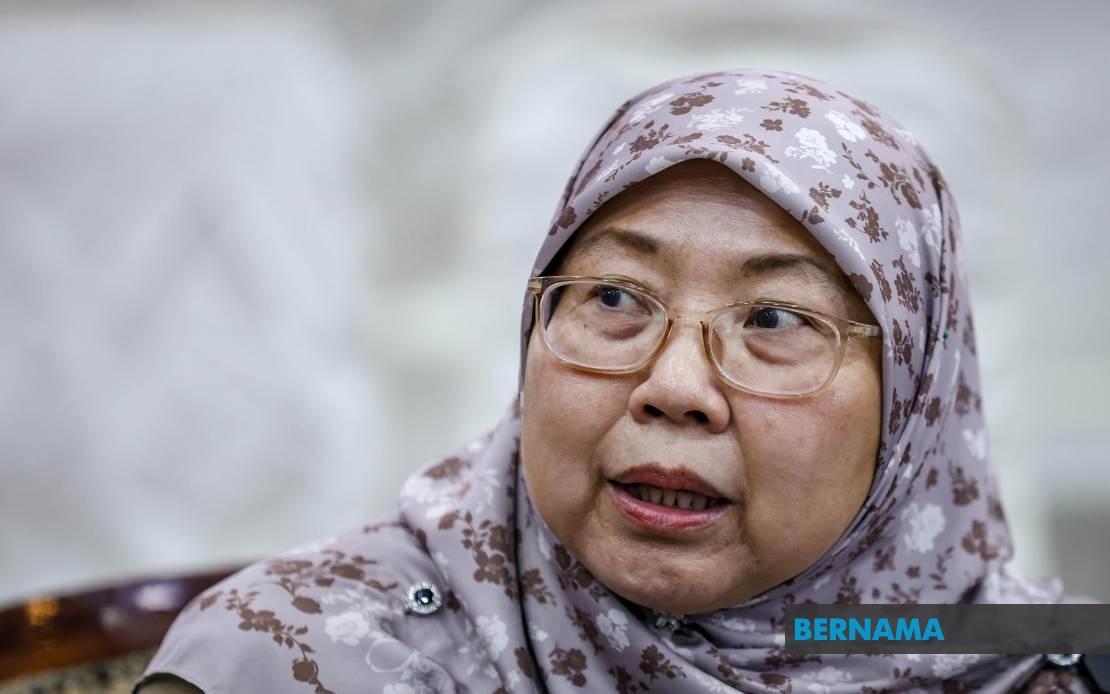
Parti Keadilan Rakyat (PKR) moved swiftly to distance itself from businessman Datuk Seri Nicky Liow Soon Hee on July 26, issuing an official statement clarifying that he does not hold membership within the opposition party. The clarification came after PKR secretary-general Datuk Dr Fuziah Salleh personally verified the party's membership database, citing the need to respond to speculation that had gained traction across social media platforms.
The party's verification process involved a detailed check through the KEADILAN Membership System, the formal registry that tracks all officially registered party members. According to Dr Fuziah, the system returned no record of Liow ever holding active membership status. Moreover, the investigation extended beyond checking existing records to confirm that Liow had never formally applied for party membership at any point in time, effectively ruling out the possibility that his application might be pending approval or in processing stages.
The membership dispute appears to have been triggered by a photograph that circulated widely online showing Liow wearing apparel associated with Angkatan Muda Keadilan (AMK), the youth wing of PKR. The image rapidly gained visibility across various social media channels, leading observers and social media users to assume or assert that the businessman must be a party member. Such associational inferences, while common in the digital age, can swiftly establish false narratives, particularly when involving public figures or individuals with controversial profiles.
The timing of PKR's clarification is notable given Liow's legal circumstances at the time of the statement. He was facing criminal charges filed in the Shah Alam Sessions Court related to his alleged involvement with an organised crime syndicate popularly known as the "Nicky Gang." Additionally, authorities had brought separate money laundering charges against him, matters that would naturally make any political party eager to publicly disassociate itself from his profile. The combination of organised crime allegations and financial crime charges represents the kind of reputational exposure that Malaysian political parties typically seek to avoid.
For PKR specifically, the denial holds particular significance within the broader context of Malaysian opposition politics. The party has positioned itself as a reform-oriented political force and maintains a focus on governance standards and anti-corruption messaging. Any genuine association with an individual facing syndicated crime and money laundering allegations could substantially undermine such positioning and provide opposition figures with ammunition for criticism. The swift and detailed nature of PKR's response suggests the party took the matter seriously enough to warrant immediate action through its secretary-general.
The incident also highlights the broader challenge facing Malaysian political parties in the social media era, where photographs and imagery can rapidly generate misleading narratives about party membership or affiliation. The ease with which such claims can spread, combined with the difficulty of correcting misinformation once it gains traction, places parties in reactive positions where they must expend resources on clarification. For PKR, the need to formally verify and publicly refute the claim demonstrates how party administration must now contend with digital rumour management as part of routine operations.
The circumstances surrounding Liow's legal troubles merit wider consideration. Organised crime syndicates operating within Malaysia's urban centres represent a persistent security challenge, while money laundering cases often involve complex financial networks that authorities must painstakingly unravel. The "Nicky Gang" allegations, if substantiated through court proceedings, would represent significant criminal enterprise. Such cases typically attract substantial investigative resources and can result in prosecution of multiple co-conspirators, suggesting Liow's alleged activities extended beyond individual criminal conduct.
From a Malaysian governance perspective, the incident underscores tensions between online information environment dynamics and institutional fact-checking procedures. A single photograph, ambiguous in its implications without supporting context, was sufficient to generate assumptions about party membership that required official institutional response. This pattern occurs frequently across Malaysian political discourse, where social media claims about political figures or party affiliations proliferate faster than official corrections can circulate. The challenge becomes particularly acute during periods of heightened political competition or sensitivity.
PKR's detailed response, moving beyond simple denial to explain the verification process undertaken, represents an approach oriented toward transparency and institutional accountability. By specifying that checks occurred through the party's formal membership system and that no prior application existed, the party provided a factual framework resistant to easy challenge. Such methodological clarity distinguishes a credible institutional response from mere assertion, though the effectiveness of such clarifications in correcting social media narratives remains empirically questionable.
For Malaysian readers and observers, the incident carries implications for how political party membership and affiliation claims should be evaluated in digital spaces. The ease with which associational inferences can be drawn from photographs or tangential connections suggests that critical evaluation of such claims is warranted before accepting them as established fact. Political parties themselves, meanwhile, face ongoing pressure to maintain clear institutional records and transparent procedures for verifying membership status when challenged, particularly when such claims involve individuals facing serious criminal allegations.

