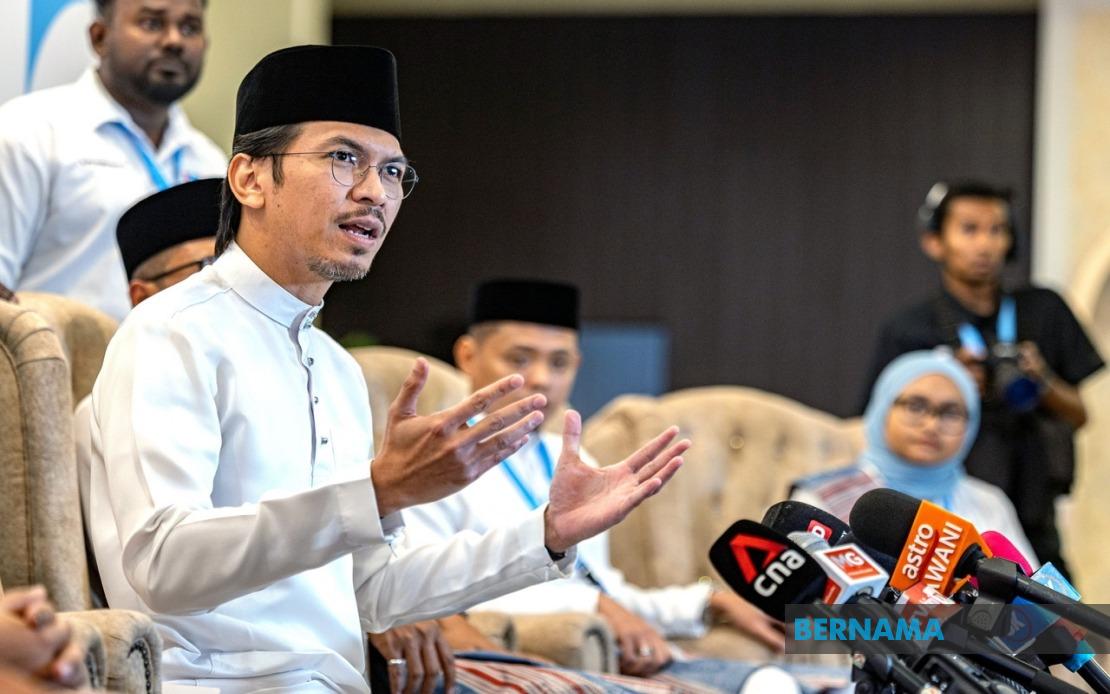
The youth wing of Parti Keadilan Rakyat has moved to reassure members about the party's organisational health, asserting that recent departures to competing political entities represent only a marginal loss that leaves the party's core operations entirely unaffected. Speaking at the 2026 Angkatan Muda Keadilan National Congress in Melaka on Wednesday, youth wing chief Muhammad Kamil Ahmad Munim acknowledged that some members have indeed chosen to depart, but characterised their numbers as too small to warrant serious concern about institutional stability.
The timing of these remarks comes as Parti Bersama Malaysia, the newly formed political vehicle launched by former PKR deputy president Datuk Seri Rafizi Ramli, has reported that approximately one quarter of its founding membership comprises individuals with prior affiliation to PKR. This claim, if accurate, would represent a notable outflow of cadres and suggests some organised movement of party members toward the breakaway entity. However, Muhammad Kamil's response reflects a strategic decision by PKR leadership to frame such departures as isolated instances driven by personal conviction rather than systemic dissatisfaction within the broader membership base.
Muhammad Kamil emphasised that while the exact percentage of departing members remains unclear, the youth wing's internal reporting indicates that attrition figures fall well below any threshold that would compromise operational capacity or membership mobilisation. The assertion appears calibrated to address emerging narratives about PKR's structural vulnerabilities without acknowledging the political significance of members voting with their feet by joining Bersama. He pointed to strong delegate attendance at the National Congress itself as tangible evidence of grassroots commitment, suggesting that those who remain represent a committed core unlikely to be swayed by competing political offerings.
The party's capacity to weather leadership transitions has become a central concern for PKR strategists, particularly given the current absence of deputy president Nurul Izzah Anwar, who is on an extended leave of absence. Rather than treating this absence as a potential vulnerability, Muhammad Kamil framed it as a non-issue for party momentum, emphasising that clear protocols remain in place to ensure continuity of functions. Responsibility for party operations has been distributed among several senior figures, including vice-president Datuk Seri Saifuddin Nasution Abdullah and election director Datuk Seri Amirudin Shari, creating a collegiate structure intended to prevent any single absence from disrupting institutional processes.
This distributed leadership approach carries both tactical and strategic implications for PKR's near-term trajectory. Rather than concentrating authority in any single individual, the party has institutionalised decision-making across multiple senior appointments, a model designed to insulate the organisation from personality-driven vulnerabilities. For Malaysian observers accustomed to personalised political leadership, this structural arrangement represents a deliberate assertion that PKR operates according to institutional logics rather than charismatic dependency. However, whether this model can maintain coherence across the significant state and federal electoral contests ahead remains an open question, particularly if leadership absences extend beyond expectations.
The party's grassroots have been briefed extensively on the leadership adjustments through state and branch-level channels, according to Muhammad Kamil, and have reportedly received these explanations with equanimity. This suggests that PKR's organisational infrastructure has functioned effectively to manage potentially destabilising narratives at lower levels of the party hierarchy. By ensuring that rank-and-file members understand the rationale for leadership changes before external commentators frame them as crises, PKR appears to have mitigated one potential source of internal discord. The acceptance at grassroots level, if genuine, indicates that the party's membership remains primarily focused on electoral preparations rather than speculating about leadership succession dynamics.
The emergence of Bersama as a political alternative has created a new competitive environment for PKR within Malaysia's reformist political spectrum. While Bersama positions itself as a fresh political venture untethered to the historical baggage of longer-established parties, it has simultaneously drawn personnel from PKR's ranks, including high-profile figures like Rafizi. For PKR, the challenge involves retaining sufficient organisational capacity and membership base to remain a significant force in coalition politics while preventing the perception of erosion from becoming self-fulfilling. Muhammad Kamil's public statements appear designed to interrupt this dynamic by normalising departures as inevitable but individually insignificant rather than collectively indicative of institutional decline.
The party's electoral preparations for upcoming state elections and the next general election remain the primary strategic focus, according to Muhammad Kamil's framing. By emphasising that organisational strengthening and electoral readiness continue unimpeded by membership fluctuations, PKR seeks to signal business-as-usual normalcy to its base, potential coalition partners, and the broader electorate. For Malaysian voters assessing which reformist parties warrant support, PKR's assertion of stability despite visible departures invites scrutiny of whether the party's underlying appeal remains intact or whether it is gradually losing political momentum.
The broader context of Malaysian coalition politics adds another dimension to these developments. PKR remains a central component of the Pakatan Harapan alliance framework and a participant in various coalition arrangements across different state governments. Any perception of institutional instability at the national party level could reverberate across these coalition structures, potentially complicating coordination on key policy matters or electoral strategy. Muhammad Kamil's public reassurances thus serve not only internal consolidation purposes but also external signalling to coalition partners that PKR remains a reliable institutional player despite surface-level organisational turbulence.
Moving forward, the trajectory of member retention and recruitment will likely remain under scrutiny as both PKR and Bersama compete for space within Malaysia's political landscape. The coming months will reveal whether PKR's current attrition represents a temporary adjustment as the party recalibrates its position, or whether it signals the beginning of a longer-term decline in institutional capacity. For now, PKR's leadership has chosen a strategy of public confidence-building and internal message discipline, presenting departures as insignificant while simultaneously acknowledging that some members have indeed chosen to leave. This balancing act reflects the delicate position of an established party facing competitive pressure from newer political entities while maintaining coalition relationships that depend on demonstrated organisational stability.

