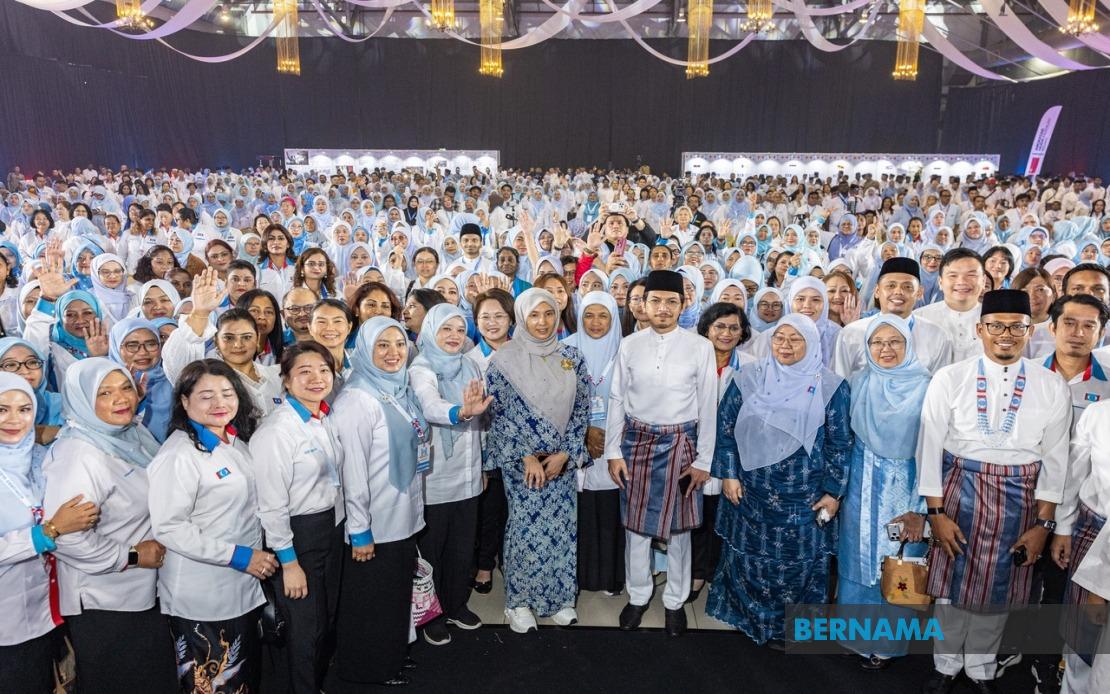
Parti Keadilan Rakyat faces an organisational reckoning ahead of the next general election, with the party's youth wing leadership warning that popular appeal alone will not translate into electoral victory. Speaking at the 2026 AMK National Congress in Melaka on Wednesday, Angkatan Muda Keadilan chief Muhammad Kamil Abdul Munim delivered a sobering assessment of the party's current position, emphasising that PKR must fundamentally reshape how it communicates its vision to voters and how it mobilises supporters at the community level.
The remarks reflect growing anxiety within PKR's ranks following disappointing performances in successive state elections. Recent ballots in Sabah, Johor and Negeri Sembilan revealed significant gaps between the party's public profile and its ability to convert that visibility into tangible electoral gains. Muhammad Kamil's diagnosis points to a core strategic weakness: while PKR remains a familiar name in Malaysian politics, the party lacks the deep organisational structures needed to translate sympathy into votes at the grassroots level.
This challenge represents a fundamental shift from PKR's earlier history. Since its founding in 1998, the party typically rode waves of public discontent and reform sentiment, with voters effectively functioning as an informal campaign apparatus mobilising in the party's favour. That model served PKR reasonably well during periods of opposition and even in the formation of the Pakatan Harapan government. However, the current political environment demands different capabilities. Governing experience carries distinct burdens, and the party now competes not merely on idealism but on administrative track record and institutional effectiveness.
The AMK chief stressed the necessity of overhauling PKR's strategic approach, arguing that the party must develop more disciplined, methodical and outcome-focused methods across all political activities. This represents a departure from the somewhat organic, movement-based character that defined much of PKR's past. Where the party previously succeeded through inspiring widespread enthusiasm, it now requires tighter organisational discipline, better targeting of voter segments, and more systematic deployment of party resources. Such evolution proves difficult for parties built on reform narratives, which often prioritise ideological purity and spontaneous mobilisation over institutional machineering.
The congress, held at the Melaka International Trade Centre in Ayer Keroh, drew PKR's senior leadership including deputy president Nurul Izzah Anwar, who formally opened proceedings, alongside vice-president Datuk Seri Dr Zaliha Mustafa and Wanita PKR chief Fadhlina Sidek. The gathering served less as a celebratory occasion than as a moment for institutional stock-taking. Rather than rehearsing achievements, speakers focused on acknowledging shortcomings and charting a path toward renewal.
Fadhlina's remarks reinforced this introspective tone, framing the congress as an opportunity for comprehensive self-examination. She urged delegates to move beyond merely hearing leadership speeches and instead translate those messages into concrete organisational improvements. Her emphasis on listening to grassroots concerns and converting delegate discussions into actionable recommendations suggests that PKR's leadership recognises a disconnect between party hierarchy and membership sentiment. This gap, if left unaddressed, could widen further as the party prepares for electoral competition.
The challenge PKR confronts carries broader implications for Malaysian politics. As the dominant partner within Pakatan Harapan, the party's organisational health directly influences the coalition's viability. If PKR cannot reconstruct its grassroots machinery, the entire opposition bloc faces potential fragmentation or marginalisation. Conversely, successful reform of PKR's internal structures might provide a template for other reform-oriented parties navigating the transition from movement to institutionalised political force.
Muhammad Kamil's call for party members not to surrender to demoralisation reflects awareness that PKR faces a crisis of confidence both externally among voters and internally among activists. The perception that the party lacks coherent direction or compelling policy positions has eroded support among younger voters and reform-minded citizens who once constituted PKR's natural constituency. Rebuilding that foundation requires not merely personnel changes but fundamental reimagining of how the party articulates its purpose and mobilises supporters.
The distinction between operating in opposition versus government shapes this organisational imperative in crucial ways. Opposition politics rewards ideological clarity, protest symbolism, and the ability to articulate grievances. Governing demands practical competence, administrative accountability, and the capacity to demonstrate tangible improvements in citizens' lives. PKR has struggled to maintain the narrative coherence required for effective governance while preserving the reformist appeal that built its political base.
As Malaysia approaches the next electoral cycle, the work undertaken at this congress and related party gatherings will prove decisive. PKR's capacity to translate Muhammad Kamil's diagnosis into systematic organisational change will determine whether the party emerges strengthened or continues fragmenting. The broader Southeast Asian context adds urgency to this challenge, as political parties across the region grapple with similar questions about sustaining momentum, maintaining internal cohesion, and adapting strategies to changing electoral landscapes.
The path forward demands that PKR develop sharper messaging that resonates with contemporary voter concerns while simultaneously building institutional capacity to execute political activities at every level. Neither element alone suffices. The party must marry ideological clarity with organisational discipline, grassroots energy with strategic direction. Whether PKR's current leadership can engineer that synthesis remains the central question shaping Malaysian politics heading toward the next general election.

